What Thermostat Setting for Winter: A Practical Guide
Learn the best winter thermostat setting to balance comfort and energy savings. This Thermostat Care guide covers baseline temps, setbacks, and smart scheduling for homeowners.


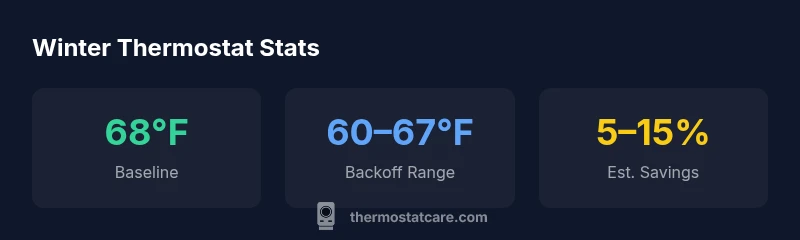
A practical winter baseline is 68°F (20°C) when you’re home. If you’re away or asleep, back it off to 60–67°F (15–19°C) to save energy. Use a smart schedule or adaptive features to optimize comfort, and adjust by room or zone if you have a multi-zone system. Keep a backup manual override handy for extreme weather.
What Thermostat Setting for Winter Means in Practice
According to Thermostat Care, understanding what thermostat setting for winter means starts with a simple baseline and disciplined scheduling. Home comfort is a moving target influenced by insulation, drafts, and daily routines. The core idea is to establish a consistent baseline and then trim back during unoccupied periods without sacrificing wake-time comfort. This approach blends human factors with the physics of heat loss, creating a practical framework for winter thermostats. By aligning your settings with your actual schedule, you can reduce energy waste while preserving comfort across rooms and zones.
For many households, the key is to avoid extremes: setting the thermostat too high wastes energy, while setting it too low can create uncomfortable cold spots or fatigue when you return home. The Thermostat Care team recommends building a routine around your day. A steady baseline—then controlled setbacks—simplifies decisions and yields noticeable savings over a season.
Establishing a Winter Baseline: 68°F as a Starting Point
Setting a winter baseline is less about chasing the perfect number and more about creating a repeatable comfort framework. A common starting point is 68°F (20°C) when you’re awake and at home. This temperature tends to offer a reasonable balance between warmth and energy use for many homes with standard insulation. If your house cools quickly or feels drafty, consider a slightly higher baseline for the first hour after turning on heat, then gradually reduce as your space warms.
When you’re away for work or school, reducing the heat to 60–67°F (15–19°C) minimizes energy waste while keeping pipes safe and inside temperatures closer to comfortable levels upon return. If you live in a colder climate or have drafty windows, small, incremental adjustments can prevent large temperature swings that wake you at night or disrupt morning routines. Thermostat Care’s guidance emphasizes testing your baseline through a week-long pattern and logging how it feels in different rooms.
Sleep and Absence: Smart Backups
Nighttime and absence require intelligent backoffs. A typical winter practice is to drop the temperature by 5–8°F (about 3–4°C) during sleep and longer gaps in occupancy. If you have a smart thermostat or a learning thermostat, use a scheduled setback that aligns with your sleep cycle. For homes with bedrooms on a different axis of heat loss, you may still want to maintain a slightly higher temperature in living areas while bedrooms stay cooler, then reverse the pattern before waking.
In very drafty homes, consider a slightly narrower setback to avoid uncomfortable cold rooms. If you use a zone system, you can target only the rooms you actually use during certain hours, maximizing comfort where it matters most while keeping less-used spaces cooler. Thermostat Care’s data shows that uniform setbacks outperform erratic changes, especially when insulation quality varies between rooms.
Zone Control and Seasonal Comfort
Zone control can elevate winter comfort without multiplying energy use. If you have a multi-zone system, assign each zone a schedule based on occupancy patterns. For example, primary living zones (kitchen, family room) stay near the baseline during active hours, while bedrooms settle into a lower range at night. This approach minimizes the need to heat empty spaces and reduces temperature discrepancies between rooms.
Smart zoning works best with well-tuned dampers and VAV (variable air volume) components. If you’re upgrading a single-zone system, consider a smart thermostat that supports scheduling by occupancy or room-based settings. Thermostat Care recommends testing a few zone configurations over a two-week period to identify the most comfortable and energy-efficient setup for your home.
Insulation, Drafts, and Temperature Perception
Insulation quality and drafts significantly influence perceived warmth. Even a well-chosen baseline can feel chilly if windows leak heat or if doors allow cold air to infiltrate. Before obsessing over a single temperature, seal leaks around doors and windows, insulate exposed pipes, and check attic insulation. A drafty room may require a higher baseline than a well-sealed one, while a well-insulated space may maintain comfort with larger setbacks.
Thermostat settings must reflect both temperature and humidity. Low humidity often makes a room feel cooler, so consider using a humidifier in dry climates. A home that minimizes air leaks and maintains steady humidity often feels cozier at a lower temperature, reducing the need for constant heat. Thermostat Care’s approach integrates both temperature and environmental factors for balanced winter comfort.
Practical Step-by-Step Winter Setup Plan (7 Days)
Follow this week-long plan to tune your winter thermostat settings:
- Day 1–2: Establish baseline at 68°F (20°C) when home; track comfort.
- Day 3–4: Add a nighttime setback to 60–67°F (15–19°C); test sleep quality.
- Day 5–6: If you have zones, apply targeted setbacks to unused rooms; monitor door and window drafts.
- Day 7: Review comfort vs cost; adjust baseline by 1–2 degrees if needed.
Tips:
- Use a smart schedule that aligns with your daily rhythm.
- Keep a manual override handy for weather shifts or guests.
- Document changes to compare comfort and savings over time.
Common Mistakes That Undermine Winter Comfort and Savings
Avoid relying on one temperature for every room. Heat rises and leaks occur, so uniform settings can create cold zones. Relying on constant high heat rather than scheduled setbacks wastes energy. Also, neglecting insulation or failing to seal leaks magnifies heat loss, making nominal setbacks less effective.
Another common error is ignoring humidity. Dry air can feel cooler than humid air, causing occupants to raise the thermostat unnecessarily. Finally, neglecting to update schedules for seasonal changes—like daylight saving or vacation patterns—limits potential savings. Thermostat Care emphasizes aligning climate control with real occupancy and environmental conditions.
How to Test and Validate Your Winter Settings
Testing is an ongoing process. After implementing baseline and setback schedules, observe comfort levels in different rooms across a week. Note any cold spots near windows or doors and adjust insulation or setpoints accordingly. Use a room thermometer to corroborate thermostat readings and adjust zones if needed.
Keep an eye on energy use with your thermostat’s energy dashboard, if available. If your bill remains high despite reasonable setpoints, your home’s insulation, air sealing, or HVAC performance may be the root cause. Thermostat Care recommends an iterative approach: change one variable at a time (baseline, setback, humidity) and track the impact to reach a stable, comfortable, and cost-effective winter setting.
Temperature settings by common winter scenarios
| Scenario | Recommended Temperature | Rationale |
|---|---|---|
| Home (awake) | 68–70°F (20–21°C) | Balanced comfort and energy use |
| Home (asleep) | 60–67°F (15–19°C) | Reduces heat loss during inactivity |
| Away 8+ hours | 60–65°F (15–18°C) | Maximum savings during idle periods |
| Drafty rooms | 64–68°F (18–20°C) | Helps mitigate heat loss in problem areas |
Questions & Answers
What is a good winter thermostat setting for a small apartment?
For compact homes, start with 68°F when you’re home and active. Lower to 60–65°F during sleep or away periods to save energy. The key is consistent scheduling rather than constant high heat.
Try 68°F when you’re home, and lower to 60–65°F when you’re away or asleep.
Should I use the hold function to maintain a constant temperature?
Holding a fixed temperature can be convenient, but it often wastes more energy than a well-designed schedule. Use hold for short trips or special occasions, then resume your normal program.
Hold can be useful for trips, but a good schedule usually saves more energy.
How does insulation affect winter thermostat performance?
Poor insulation makes heat loss greater, so you may need higher baselines or smaller setbacks. Seal drafts and improve attic and window insulation to make setpoints more effective.
Poor insulation means heat escapes easier, so fix leaks first and adjust setpoints accordingly.
Are programmable thermostats worth it for winter?
Yes. Programmables automate seasonal adjustments and reduce manual changes. Smart thermostats learn routines and can optimize energy use over time.
Yes—programmable thermostats save energy by following a schedule.
What should I do if my home is very cold at night?
If nights are consistently cold, consider a modest night-time boost shortly before bed, then revert to the setback. Pair with proper insulation for best results.
If nights are freezing, pre-heat a bit before bed and then back off.
“Setting a winter baseline around 68°F and using scheduled setbacks is a practical, data-driven approach that balances comfort with energy savings.”
What to Remember
- Start with a 68°F baseline when present.
- Back off to 60–67°F during sleep/absence.
- Use smart scheduling to optimize comfort and savings.
- Insulation and drafts shape effective setpoints.
- Revisit settings as seasons and home conditions change