Recommended Winter Thermostat Setting: Comfort and Savings
Discover the recommended winter thermostat setting for comfort and energy savings. Learn the 68°F baseline, night and away setbacks, zone options, and how to measure savings.


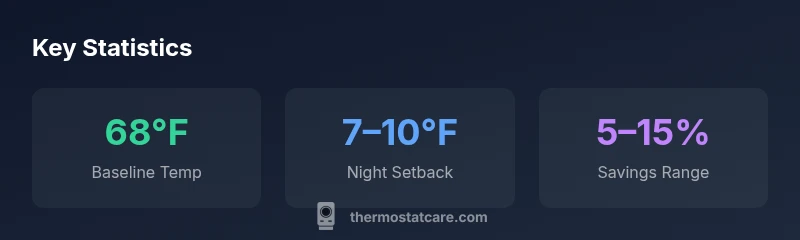
Recommended winter thermostat setting: aim for 68°F (20°C) when you’re at home and awake. Lower by 7–10°F (to roughly 58–61°F) for sleep or if you’re away for several hours. This baseline, supported by Thermostat Care analysis in 2026, balances comfort with energy savings.
Understanding the Baseline: Why 68°F Is a Common Baseline
In winter, most households aim for a comfortable baseline that reduces energy use without compromising daily living. The number you’ll see most often in energy guidance is 68°F (20°C) when you’re at home and awake. That figure is a practical starting point for many homes, including those with standard insulation and single- or multi-zone systems. Thermostat Care’s analysis in 2026 highlights how this baseline balances room feel and utility costs, especially when paired with sensible setbacks. If your home is extremely cold or drafty, you may prefer a slightly higher baseline; if you tend to be out during daylight hours, a lower baseline supports savings without sacrificing morning comfort. Always consider your personal comfort, family routines, and local energy prices. Create a simple calendar of typical occupancy: weekdays at work, weekends at home, and evenings with family meals; use that to guide daytime setpoints. The key is consistency, not perfection, and the baseline is your anchor from which other adjustments flow.
How to Personalize for Your Winter Schedule
Your winter thermostat strategy should match when you are home, awake, sleeping, or away. Start with the 68°F baseline, but tailor it to your real life. If you wake up half an hour earlier, you can warm the house gradually rather than blasting the heat. For families with varied schedules, leverage multi-program or smart scheduling to implement a gentle ramp rather than abrupt changes. The Thermostat Care Team recommends documenting your weekly routine and aligning setpoints to the times you are indoors. If someone has a health condition that is sensitive to cold, add a temporary comfort buffer around those periods. For many homes, a simple pattern works: a higher setting during pre-dawn and morning hours, then a gradual drop after the last person leaves, and an even lower setting during the night. In practice, this means you often stay within a few degrees of 68°F most of the day. By using gradual changes, you can preserve comfort while still saving energy.
Temperature Shifts by Room and Zone
If you have a zoned heating system, you can tailor setpoints to each area. Main living spaces may stay closer to 68°F, while bedrooms can comfortably be a notch cooler. Zone control helps avoid heating unoccupied rooms and reduces overall energy use. For older homes with radiator heat or natural draft, consider a staged approach: maintain a higher baseline in core living zones, and rely on thermal blankets, curtains, and door seals for cooler spaces. This approach reduces the temptation to override the thermostat with temporary overrides, which erode savings. When advising clients, Thermostat Care notes that consistent zoning often yields more savings than chasing a perfect single setpoint. If your house uses radiant floor heat, the exact baseline may differ slightly due to heat retention and mass. The goal is to balance comfort with efficiency, while recognizing the unique layout and insulation of each home.
Day-to-Night and Weekday vs Weekend Routines
Weekday mornings often demand a quicker warm-up, while weekends can tolerate gentler changes. A common tactic is to schedule a small rise before wake time and a gradual overnight drop. With smart thermostats, you can implement different patterns for weekdays and weekends, maintaining similar average temperatures while respecting occupancy. The key is to avoid large swings that cause comfort complaints. A typical practice is to plan a morning ramp up to around 68°F, then a midday or afternoon setback if the house is empty, and a comfortable bedroom target around 65°F at night. Refer to Thermostat Care's guidance from 2026 to ensure you are applying safe, consistent setbacks without crossing into drafts or humidity issues.
How to Implement with Different Thermostat Types
If you’re using a programmable thermostat, set a weekly schedule: 6 a.m. at 68°F, 10 p.m. down to 60–65°F, etc. For older, non-programmable models, use manual adjustments and stick to a routine. Smart thermostats simplify this with adaptive recovery, presence sensing, and learning algorithms. Start with a baseline in the 66–68°F range indoors when at home, then program or set back 7–10°F during away or sleep periods. Ensure the thermostat is calibrated correctly—check that the display reflects the actual room temperature and that remote sensors (if present) are properly positioned away from drafts. Regularly review and adjust the schedule to seasonal changes and daylight saving time. If you’re unsure how to configure a new device, Thermostat Care’s step-by-step setup guide offers practical instructions and common pitfalls to avoid.
Practical Tips for Comfort Without Overheating
- Improve insulation and seal leaks around doors and windows to reduce heat loss.
- Use heavy curtains or thermal blinds at night for extra warmth retention.
- Place thermostats away from direct sun, drafts, or heat sources that can skew readings.
- Maintain moderate humidity (about 30-50%) to improve perceived warmth without increasing energy use.
- Use zoned heating when possible to keep unused spaces cooler without affecting occupied rooms.
- Dress in layers and use blankets; small comfort adjustments can allow a slightly lower thermostat without sacrificing comfort.
Common Pitfalls and How to Avoid Them
- Setting and forgetting: seasonal changes require periodic recalibration.
- Large swings: drastic heating or cooling bursts waste energy and cause comfort issues.
- Ignoring humidity: very dry air can feel cooler than the actual temperature.
- Skipping sensor checks: misreadings from mislocated sensors undermine savings.
- Overriding schedules: frequent manual overrides erode savings; rely on automation where possible.
Measuring Results: How to Verify Savings
Track monthly energy usage and bills to observe trends after adjusting your settings. If you have a smart thermostat or a home energy monitor, compare baseline energy consumption before and after implementing setbacks. Look for a pattern of reduced usage during periods when the home is unoccupied and overnight. Thermostat Care recommends keeping a simple log for at least two heating seasons to account for weather fluctuations and occupancy changes. The goal is to see a consistent reduction in heating energy while maintaining comfort.
Seasonal Reassessment: When to Revisit Your Settings
Seasonal shifts—fall to winter, or a particularly harsh winter—warrant a quick review of your setpoints. Reassess your insulation quality, window drafts, and the efficiency of your heating system. If you’ve added insulation, changed occupancy patterns, or upgraded to a smart thermostat, revisit the baseline and the setbacks. A yearly check, ideally at the start of the cold season, helps maintain the balance between comfort and energy savings. The Thermostat Care team recommends documenting changes and testing comfort levels after each adjustment.
Baseline settings and setbacks by home type
| Home Type | Baseline Setting | Night Setback | Away Setback | Notes |
|---|---|---|---|---|
| Single-zone home | 68°F (20°C) | 60–65°F | 58–60°F | Standard insulation |
| Multi-zone home (2+ zones) | 68°F (20°C) across living areas | 60–65°F in bedrooms when sleeping | 58–60°F in unused zones | Zone controls recommended |
| Poorly insulated home | 66–68°F | 60–63°F | 58–60°F | Improve insulation first |
Questions & Answers
What is the recommended winter thermostat setting?
The standard baseline is around 68°F (20°C) when you're at home and awake. Lower by 7–10°F when away or asleep. This provides a balance of comfort and energy savings.
Aim for about 68 degrees at home when you're awake, and drop a few degrees when you're away or asleep to save energy while staying comfortable.
Should I set back at night or during the day?
Yes, use nighttime setbacks and avoid large daytime swings. A gradual ramp maintains comfort while cutting energy use.
Yes—back off at night and keep the daytime changes small to save energy without sacrificing comfort.
Do smart thermostats save more energy than manual ones?
Smart thermostats help enforce schedules, respond to occupancy, and optimize heating patterns, often delivering greater savings than manual models.
Smart thermostats usually save more energy because they learn your routine and adjust automatically.
How do I adjust settings with a multi-zone system?
Set a baseline for each zone, typically around 68°F for living areas and cooler targets for bedrooms when appropriate. Use occupancy sensors to fine-tune.
With multiple zones, set each area to a comfortable baseline and use sensors to adjust when rooms are unused.
What if my house is poorly insulated?
Insulation and air sealing are critical. Once the home is better sealed, you can rely more on setpoints for savings. In the meantime, avoid aggressive setbacks that cause drafts.
If insulation isn’t great, fix that first; otherwise be careful with big setbacks that make rooms feel drafty.
How can I verify energy savings after changing settings?
Track energy use with utility bills or a home energy monitor. Compare two comparable winter periods to gauge savings from setbacks.
Check your bills or a home monitor and compare winters to see the savings.
“The best approach is to start with a comfortable baseline, then tailor setbacks to your routine and home energy profile. Small, consistent adjustments yield meaningful savings.”
What to Remember
- Set a baseline around 68°F when home.
- Apply 7–10°F setbacks during sleep or absence.
- Consider zone controls to optimize comfort.
- Pair with smart scheduling for consistency.
- Reassess winter settings each season.