Thermostat Temperature for Winter: Optimal Winter Settings
Discover how to set your thermostat for winter to balance comfort and energy savings. Learn recommended ranges, setback strategies, and system-specific tips for homeowners and DIY enthusiasts.


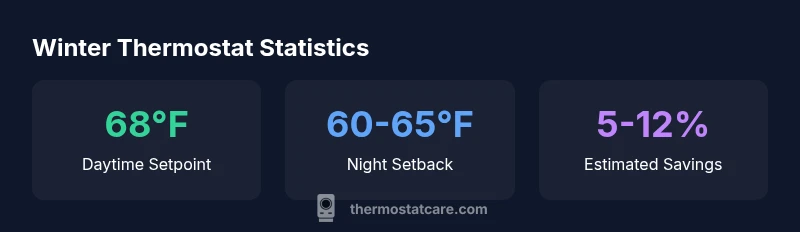
Typically, a winter setpoint of 68°F (20°C) during the day and 60-65°F (15-18°C) at night offers comfort without excessive energy use. If you have good insulation or a heat pump, you can lean toward the lower end; in very cold climates, you may need higher daytime temps to maintain comfort.
Understanding winter comfort and energy physics
The way your home loses heat and how your heating system responds to temperature changes shapes how you should set the thermostat in winter. Aiming for the right balance between comfort and energy use reduces bills without creating cold spots. According to Thermostat Care, the key is setting a stable daytime temperature while using sensible setbacks at night and when rooms are unoccupied. This approach minimizes thermal lag and avoids overworking your furnace or heat pump. In practical terms, think of the thermostat as a control lever: a moderate daytime setting plus a controlled drop at night keeps you warm where it matters and saves energy in empty rooms. The following sections translate physics into actionable targets you can apply this season.
Recommended winter setpoints by scenario
There is no one-size-fits-all number, but most households benefit from a daytime range around 68°F (20°C) and a nighttime range between 60-65°F (15-18°C). In well-insulated homes or with heat pumps running efficiently, you can aim closer to 66-70°F during the day and 60-63°F at night. In older or draftier houses, you may need a higher daytime setpoint to maintain comfort in living spaces while using targeted setbacks in bedrooms. Climate and building envelope matter more than the thermostat brand, so personalize the schedule to your insulation level, window quality, and blower performance.
How to implement temperature schedules
A well-planned schedule reduces energy waste and keeps the home comfortable. Start by mapping typical daily occupancy and room usage. Then create a simple 7-day timetable: set a daytime temperature for waking hours, a slightly lower setting for work hours, and a night setback. Use smart or programmable thermostats to automate the schedule and enable adaptive recovery, so the system warms rooms before you wake. Verify that the thermostat is calibrated and that outdoor sensors (if used) reflect actual conditions. Finally, test adjustments for a week or two and note any rooms that feel chilly, then tweak zones or dampen drafts.
How different heating systems respond to winter temperatures
Heat pumps may require a different strategy than traditional furnaces or boilers. In colder climates, ensure auxiliary heat does not unnecessarily run all day, which erodes savings. For gas furnaces, keeping a steady baseline reduces cycling and helps humidity; for boilers, maintain consistent loop temperature and consider weather compensation if available. Hydronic systems with radiators often benefit from slightly higher setpoints in living zones and lower ones in bedrooms, paired with good insulation. A key takeaway: the type of furnace or boiler influences the ideal winter setting more than you might expect, so tailor the schedule to your equipment and home design.
Practical tips to minimize cold spots and drafts
Drafty doors and windows can undermine even well-planned schedules. Start with weather-stripping, door sweeps, and ceiling or attic insulation improvements to reduce heat loss. Use zoning if possible to keep occupied rooms warmer without heating the entire house. Check radiator or baseboard balance; bleed radiators to remove air pockets and ensure even heat distribution. For homes with single-threshold designs, consider adding a heat-escape path via curtains or window coverings to minimize heat loss when the sun drops. Small changes in insulation and sealing often yield bigger comfort gains than chasing fractional degree adjustments alone.
Measuring savings and adjusting over the season
Track energy use and comfort to determine if your winter temperature strategy pays off. Compare monthly electric or gas bills year over year and note indoor temperatures you actually felt as comfortable. Use a home energy monitor or the thermostat's built-in usage reports to spot patterns: days with unnecessary cycling, nights that are too cold, or rooms that never reach setpoints. If savings are less than expected, consider upgrading to a smart thermostat with more adaptive features, improving insulation, or adding zoned heating. Small iterative tweaks often produce noticeable results over several weeks.
Common myths and pitfalls to avoid
A frequent misconception is that lowering the temperature by 5-10°F will instantly slash energy use. Savings depend on climate, insulation, and system efficiency; excessive setbacks can cause comfort problems and more frequent system starts. Another pitfall is ignoring humidity; drier air at lower temperatures can feel colder and lead to complaints, so monitor humidity and consider a humidifier in dry homes. Finally, be wary of oversized thermostats that chase extreme swings; a steady, moderate schedule usually yields better comfort and efficiency than aggressive temperature chasing. Thermostat Care recommends evaluating every season and adjusting for changes in occupancy and weather.
Thermostat Care recommendations for winter optimization
In winter, a smart approach combines steady daytime settings with intelligent setbacks and zone-aware control. Use a programmable schedule that aligns with your daily routine, confirm the thermostat is calibrated, and ensure your home's insulation supports the desired setpoints. Regular maintenance—filter changes, duct sealing, and checking for draft points—keeps systems efficient and responsive. By prioritizing envelope improvements and proper thermostat setup, homeowners can achieve meaningful comfort without sacrificing energy savings.
Winter temperature strategies by heating system
| Aspect | Winter Setting | Notes |
|---|---|---|
| Furnace-only system | 68-72°F | Base comfort in living areas; may require more heating during peak cold |
| Heat pump with auxiliary heat | 68-72°F | Setback less risky; ensure aux heat doesn’t run constantly |
| Oil boiler | 66-70°F | Balance with zoning to avoid hot rooms and cold spots |
| Hydronic with radiators | 68-72°F | Zoned control improves efficiency |
Questions & Answers
What is the recommended winter thermostat setting for a typical home?
A typical recommendation is 68°F by day and 60-65°F at night. Individual conditions may vary, so adjust as needed.
Aim for about 68 degrees during the day and 60 to 65 at night to balance comfort and savings.
Will lowering the temperature at night save energy?
Yes, setbacks reduce heating load when rooms are unused. Pair with good insulation for best results.
Yes, overnight setbacks save energy, especially with solid insulation.
Should I heat all rooms to the same temperature in winter?
No. Use zoning or targeted heating for occupied spaces to avoid waste.
Usually not; heat only the rooms you use and seal drafts.
Can a smart thermostat help with winter savings?
Yes. Smart thermostats learn routines, optimize schedules, and maintain comfort with fewer manual adjustments.
Smart thermostats can learn your schedule and save energy.
How often should I review my winter schedule?
Review at least once per season and after major weather changes to maintain comfort and savings.
Review it each season or after big weather shifts.
Is 72°F too hot for winter?
72°F is on the higher side for winter energy savings and comfort; consider reducing to 68-70°F if heat loss is high.
72 is a bit warm for winter; try 68 to 70 to save energy.
“Winter optimization is about balancing consistent comfort with disciplined setbacks. Small, gradual changes over a season yield the best long-term energy savings.”
What to Remember
- Set a daytime target around 68°F (20°C).
- Use a 60-65°F (15-18°C) setback at night.
- Tune by insulation and system type for best results.
- Consider a smart thermostat for adaptive scheduling.
- Regularly audit insulation and drafts to sustain savings.