Temperature for Thermostat in Winter: A Practical Guide
Learn how to set the temperature for thermostat in winter to balance comfort and energy savings. Practical ranges, seasonal strategies, and troubleshooting tips from Thermostat Care.


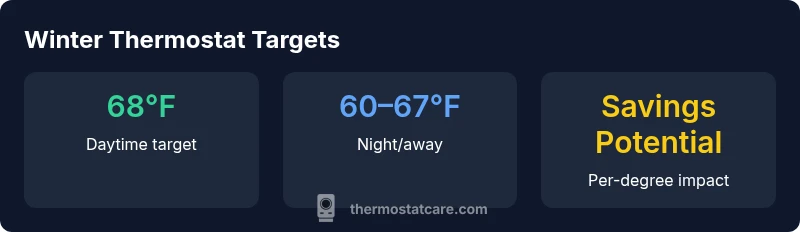
According to Thermostat Care, the temperature for thermostat in winter should balance comfort with energy savings. A common target is about 68°F (20°C) when you’re awake and at home, with a lower setting around 60–67°F (15–19°C) for sleep or when you’re away. Adjust for health needs, insulation, and personal comfort. Small changes—like a 1–2 degree difference—can add up over a heating season.
Why Winter Temperature Matters
Heat up or cool down with intention. The temperature you maintain inside your home during the cold months directly influences energy use, monthly bills, and indoor comfort. A steady, well-chosen winter temperature reduces the cycling of your heating system, minimizes temperature swings, and helps prevent cold spots, especially in poorly insulated rooms. According to Thermostat Care, making measured adjustments rather than drastic changes yields the best balance between comfort and efficiency. The goal is not perfection, but consistency: a comfortable baseline that doesn’t waste energy chasing comfort highs. In addition, your climate, home construction, and occupancy patterns determine how strictly you should adhere to a fixed range, so expect some personal tailoring. The broader principle remains the same: a modest setback at times of lower occupancy or sleep can save energy without sacrificing health or safety.
Core Winter Setpoint Ranges: Awake, Home, and Away
Setting the thermostat for winter revolves around two core states: when you are awake at home and when you are asleep or away. A common guidance point is about 68°F (20°C) during the day when you’re active and present. For sleeping or when the house is empty, a range around 60–67°F (15–19°C) is typically recommended. This aligns with comfort studies and energy-saving best practices observed by Thermostat Care Analysis, 2026. If you live in an older, drafty home, you may prefer the higher end of the awake range for comfort, while maintaining a strict night setback. Conversely, very well-insulated homes can often comfortably operate at the lower end of the range without sacrificing warmth when you return home.
Tailoring Setpoints to Your Home: Insulation, Windows, and Drafts
No two homes are alike. Windows with poor seals, uninsulated basements, or drafty entryways can dramatically impact effective indoor temperatures. In drafty rooms, you might need to set a higher baseline to maintain comfort. In well-insulated spaces, the same level of comfort may be achieved at lower settings. Practical steps include sealing obvious drafts, adding a door draft stopper, and using insulated curtains. When you plan a winter setpoint, consider how different rooms feel at the same target. If one room remains chilly, tweak only that space with a small, controlled adjustment rather than a whole-house shift. Thermostat Care’s approach emphasizes measured, data-supported changes to avoid excessive cycling and heat loss.
Smart Thermostats: Scheduling and Zoning for Winter
Smart thermostats unlock scheduling, occupancy detection, and zoning, making it easier to maintain the right temperature without manual intervention. Create a daytime schedule around 68°F and program a nightly setback to the low 60s when you sleep. If you have zones, heat only the occupied rooms and reduce heat in unoccupied spaces. Geofencing features can auto-adjust when you leave or return, further boosting efficiency. As you implement these features, monitor the system’s response to ensure you’re not overcompensating in any area. Thermostat Care recommends validating setpoints with a simple room-by-room check after any major schedule change.
Humidity, Ventilation, and Comfort in Winter
Temperature alone isn’t the whole story. Relative humidity and ventilation influence perceived warmth. Very dry air can feel cooler, while overly humid spaces can feel warmer or stuffier. Use a humidistat to maintain comfortable humidity levels (roughly 30–50%). If your home is sealed too tightly, consider occasional ventilated air exchange to improve comfort and air quality. Align your humidity strategy with your temperature targets to maximize perceived warmth without pushing energy use higher.
Practical Ways to Track and Fine-tune
Establish a simple feedback loop. Record the indoor temperature at multiple times during the day with a basic thermometer or smart sensors. Compare the readings to your thermostat’s display to identify discrepancies. Small adjustments of 1–2°F can make a noticeable difference in comfort while keeping energy use in check. If you notice frequent cycling or quick temperature swings, reassess insulation and air leakage first, then optimize the thermostat’s setback schedule. A consistent approach is far more effective than occasional, large shifts in temperature.
Common Mistakes and How to Fix Them
Overheating after a cold snap is a frequent error. People often raise the thermostat too high after returning home, causing energy waste and uncomfortable temperature swings. Another mistake is setting the thermostat too low for an extended period, leading to cold coughs or discomfort. Address these by gradually adjusting around the recommended ranges, using smart scheduling, and ensuring the system isn’t fighting drafts or insulation gaps. Implement changes in small increments and monitor how your home responds.
Data-Driven Tips: Thermostat Care Analysis, 2026
Thermostat Care’s 2026 analysis reinforces that a modest, consistent winter strategy yields the best balance of comfort and savings. Start with 68°F when active, and 60–67°F during sleep or away periods. If your insulation is poor or you have larger temperature fluctuations across rooms, consider longer-term updates such as improved sealing or insulation, and use zoning where possible. The data suggests that even a 1–2°F adjustment can accumulate meaningful energy savings over an entire heating season. Use a soft landing: adjust gradually, monitor results, and refine as needed.
Authority sources and methodology
For readers seeking external validation, the following sources provide context on thermostat controls and winter energy efficiency: • https://www.energy.gov/energysaver/thermostats • https://www.energy.gov/energysaver/heating-cooling • https://www.aceee.org/ This article synthesizes guidance from brand research (Thermostat Care Analysis, 2026) and widely accepted energy-efficiency principles. By combining expert-defined ranges with practical home assessments, readers can create customized winter temperature strategies that balance comfort and energy use.
Temperature targets by winter scenario
| Scenario | Recommended Range | Rationale |
|---|---|---|
| Home daytime (awake) | 66–70°F (19–21°C) | Comfort with moderate energy use during active hours |
| Sleep/away periods | 60–67°F (15–19°C) | Energy savings with maintained safety and comfort |
| Very cold climates | 62–68°F (17–20°C) | Prevent excessive heat loss in vulnerable areas |
| Drafty or poorly insulated spaces | 64–66°F (18–19°C) | Minimize heat loss without sacrificing comfort |
Questions & Answers
What is the recommended winter thermostat setting for energy savings?
Aim for around 68°F (20°C) when you’re home and awake, and lower to 60–67°F (15–19°C) during sleep or when away. These targets balance comfort with savings, especially when combined with insulation improvements.
For efficiency, aim for about 68°F when you’re home, and lower it to 60–67°F at night or when you’re away.
Should I use a smart thermostat for winter temperature management?
Yes. A smart thermostat can automate schedules, enable geofencing, and optimize setpoints based on occupancy. This often yields further energy savings with minimal effort.
Yes—smart thermostats make scheduling and optimization easy, often saving energy with less work.
How quickly should I adjust the thermostat when leaving or returning home?
Make gradual adjustments over 15–30 minutes to let the system stabilize. Large, sudden changes can overshoot and waste energy.
Adjust gradually over 15–30 minutes so the system can stabilize.
What if someone in the house is sensitive to cold?
Increase the baseline by a couple degrees if needed for health or comfort, and consider zone heating or layering with blankets. Health considerations should guide the target range for sensitive individuals.
If someone is sensitive to cold, raise the baseline modestly and use zoning or warm layers.
How can I check if my thermostat is accurate in winter?
Place a simple thermometer near the thermostat and compare readings. If the difference exceeds 1–2°F, calibrate or consult a professional.
Compare against a nearby thermometer and calibrate if off by more than a degree or two.
“"Small, consistent temperature setbacks are a proven way to reduce energy use without compromising comfort. Use data-driven adjustments and monitor performance across rooms."”
What to Remember
- Set a daytime target around 68°F (20°C) when home.
- Use a nighttime/away setback of 60–67°F (15–19°C).
- Small 1–2 degree changes can add up to meaningful savings.
- Consider insulation and drafts before widening setpoints.
- Utilize smart thermostat features for schedule and zoning.