Average Thermostat Setting in Winter: Comfort, Savings, and Practical Tips
Explore the average thermostat setting in winter and how to optimize for comfort and energy savings. Thermostat Care analyzes habits, climate, and smart controls to help homeowners find the right winter heat strategy.


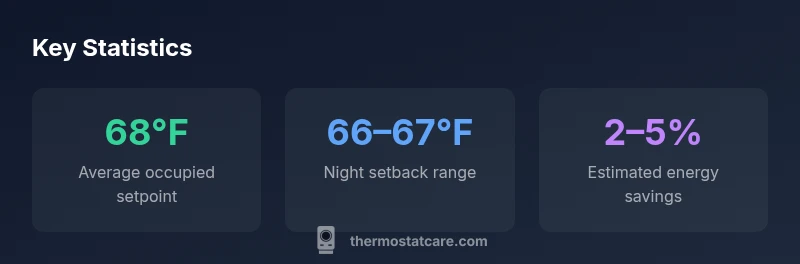
Typically, the winter thermostat setting for an occupied home is around 68°F (20°C). Thermostat Care Analysis, 2026 shows comfort ranges from roughly 66°F to 72°F depending on occupancy and climate. For energy savings, many homeowners reduce the setpoint by 1–2 degrees at night or when the house is empty. Individual preferences, clothing insulation, and local climate can shift the optimal setting.
Understanding the average thermostat setting in winter
In winter, heating needs vary by climate, construction, and occupancy. The average thermostat setting in winter reflects a balance between comfort and energy use. The most common starting point for many households is around 68°F (20°C) when someone is home. This target aligns with safety and energy-efficiency guidance, but it is not a universal number. Factors such as insulation quality, window drafts, and the presence of children or elderly residents can shift the ideal setting. The Thermostat Care team suggests using a data-driven approach: establish a baseline, then adjust gradually while monitoring both comfort and energy bills. In colder climates or well-insulated homes, you might tolerate tighter ranges; in milder environments, you may prefer a slightly warmer baseline. The key is to avoid overheating and to use scheduling to minimize waste. According to Thermostat Care, this baseline serves as a practical starting point for most homes, adapting to individual needs over time.
Factors that influence the winter setpoint
Several variables determine the best winter setpoint for a given home. Climate plays a major role: a northern, highly insulated house may feel comfortable at a lower setting than a hot-humid dwelling exposed to winter sun. Building envelope quality—insulation in walls, attic, and floors, plus draftiness around doors and windows—determines how quickly heat is lost. Occupancy patterns influence the chosen target: if you’re home all day, you may prefer a higher baseline; if you’re away at work or school, a lower baseline with an offset schedule makes more sense. The size and efficiency of your heating system also matter; older furnaces or boilers may run less efficiently at higher setpoints. Finally, health and comfort considerations—such as arthritis, breathing conditions, or sensitivity to cold—should influence adjustments. A balanced approach blends comfort with energy efficiency, without relying on guesswork or constant manual changes. Thermostat Care analysis indicates that most households drift toward the 66–72°F band when climate and home performance align.
How to determine your personal comfort-and-energy balance
Begin by measuring how your current settings feel day to day and how much energy your bills show. Start with a baseline around 68°F when you’re at home, and track how you feel in different rooms. Use a simple 2–3 week trial to test small adjustments, increasing or decreasing by 1°F at a time. Record comfort, drafts, and humidity, since dry air can feel cooler even at the same temperature. Humidity and air movement influence perceived warmth, so consider a humidifier or better airflow if rooms feel stuffy. If you live with others, poll their comfort ranges to identify a consensus. Finally, run a quick comparison of your energy use before and after adjustments to quantify savings. The result should be a personalized winter target that minimizes energy waste while keeping your family comfortable. Thermostat Care recommends documenting each change and evaluating results before moving again.
The role of schedules and zoning in winter comfort
A fixed temperature 24/7 rarely delivers the best balance between comfort and energy use. Programs, schedules, and zoning allow different temperatures by time of day and by room. For example, a common strategy is to set a higher temperature in the morning and during the evening, then lower it during the night. Zoning, when available, uses multiple thermostats to maintain different temperatures in living areas, bedrooms, and unheated spaces. This approach reduces energy waste by cooling unused spaces and focusing heat where it’s most needed. Modern thermostats offer learning schedules and occupancy detection, which can automatically adjust setpoints based on your routines. If you have a programmable or smart thermostat, upload or create a schedule that mirrors your weekly pattern, and allow the device to optimize around weather forecasts. Thermostat Care notes that smart features can yield meaningful savings without sacrificing comfort.
Weather compensation and smart thermostat benefits
Smart thermostats can adjust setpoints based on outside weather data, predicting heating demand before you feel a chill. Weather-based compensation helps prevent overshooting comfort by accounting for solar gains and wind chill. In winter, a smart thermostat may raise or lower temperatures in anticipation of a cold snap or a sunny day. Combined with learning algorithms, occupancy sensing, and remote control, these devices reduce routine manual adjustments and can improve overall energy performance. If you’re upgrading, ensure you choose a model that supports weather data integration and zone control. Thermostat Care suggests pairing a smart thermostat with a well-sealed home to maximize results, especially in older houses prone to drafts. The goal is a steady, comfortable environment without wasteful heating.
Practical steps to adjust your heating without sacrificing comfort
- Establish a baseline: begin with 68°F when at home and consider a 1–2°F nighttime setback. - Use a programmable schedule that matches your routine; avoid large, constant swings. - Seal leaks around doors, windows, and attic hatches to reduce heat loss before moving the thermostat. - Improve air distribution by cleaning filters and ensuring vents aren’t blocked. - If you have a multi-zone system, create a comfortable warm zone for living areas and a cooler zone for unused spaces. - For homes with humidifiers, maintain humidity around 30–50% to keep perceived warmth comfortable without drying air. - Document changes and recheck bills after each adjustment to confirm savings. Following these steps helps you get closer to the optimal winter setpoint for your home.
Common mistakes that waste energy in winter
Common issues include leaving the thermostat at a high constant setting, especially when weather is mild or there is little occupancy. Another mistake is ignoring drafts and leaks that allow cold air to infiltrate living spaces, making higher setpoints feel necessary. Skipping maintenance, such as dirty filters or a malfunctioning furnace, can increase energy use and reduce comfort. Over-reliance on single-room thermostats without proper zoning may cause uneven heating, leading to overheating in some rooms while others remain cold. Finally, failing to use scheduling features or to update settings with seasonal changes can cause phantom energy usage as devices heat unnecessarily. Thermostat Care emphasizes that small changes, consistently applied, can yield larger savings over time.
How to measure savings after adjusting your setpoint
To quantify the impact of changing winter setpoints, start by recording your energy usage for several weeks before and after adjustments. Compare monthly bills, meter readings, and HVAC run times, if available. For a more precise view, track nights when you’ve implemented a setback and compare to similar nights without setback. You can also use a home energy monitor if your system supports it. Another approach is to monitor indoor comfort via a simple daily survey—note whether you felt too cold or too warm and how drafts or humidity affected your comfort. The goal is to identify a balance where energy savings are real but comfort remains high.
When to consult a professional
If you notice persistent cold rooms, frequent cycling, or a sudden jump in energy bills after adjusting setpoints, it may be time to call a professional. A licensed HVAC technician can check your insulation, ductwork, and furnace or heat pump efficiency, and calibrate your thermostat to ensure accurate readings. A tune-up can also reveal whether zoning or smart-thermostat configurations are aligned with your home’s heat load. For most homeowners, a quick assessment and a few targeted fixes can yield better comfort and lower energy costs. The Thermostat Care team recommends consulting professionals when you suspect a system imbalance or air leaks that go beyond simple thermostat adjustments.
Winter setpoint ranges and notes
| Factor | Winter Setpoint Range (Occupied) | Notes |
|---|---|---|
| Average occupied setpoint | 66-72°F | General guidance |
| Night setback range | 66-67°F | Evening schedule |
| Climate influence on setpoint | 66-72°F depending on climate | Climate-dependent |
| Energy savings potential from setback | 2-5% | Estimated savings |
Questions & Answers
What is the recommended winter thermostat setting for energy savings?
For most homes, 66-68°F when at home; lower at night. Savings depend on climate and insulation.
Set it to the mid-60s during sleep or when away to save energy.
Can I safely drop temperature while away for long vacations?
Yes, but avoid dropping below 60°F to protect pipes. Use smart thermostats for gradual adjustments.
Yes, you can lower it when away, but don’t go too low.
Do smart thermostats automatically optimize winter settings?
Many models offer learning schedules, occupancy detection, and weather-based adjustments. Check your device’s features.
Smart thermostats can learn and adjust automatically.
How can I tell if my thermostat is contributing to high bills in winter?
Verify that the reading matches room temperature; look for drafts and check for incorrect calibration.
If bills are high, verify thermostat accuracy and check for drafts.
What should I do if my house is consistently too cold or too hot?
Investigate insulation, ventilation, and system efficiency; consider a professional tune-up and zoning checks.
If it’s too cold, check insulation and vents; consider a tune-up.
“The best winter comfort comes from tailoring your setpoint to occupancy and climate, then using a programmable schedule to maintain efficiency.”
What to Remember
- Start with a baseline around 68°F
- Use a programmable schedule for evenings
- Consider climate and insulation
- Test savings after adjustments
- Smart thermostats can optimize automatically