Thermostat vs. coolant temperature sensor: A practical comparison for homeowners
A practical, evidence-based comparison of thermostat sensors for home HVAC and coolant temperature sensors for engines, with troubleshooting tips, installation guidance, and maintenance notes.


TL;DR: This comparison clarifies two temperature-sensing roles: a home thermostat or coolant temperature sensor that measures ambient room temperature and engine coolant temperature. We explain what each component does, common failure signs, and upgrade options. For homeowners, a smart thermostat with multiple sensors usually delivers better comfort and energy efficiency. For vehicle CTS issues, seek a mechanic for diagnosis and calibration.
What is a thermostat sensor and what is a coolant temperature sensor?
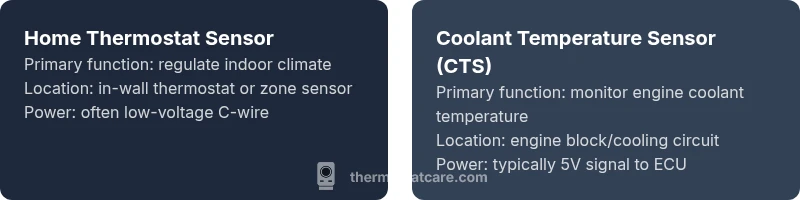
Two temperature-sensing roles: a home thermostat or coolant temperature sensor that measures ambient room temperature and engine coolant temperature. In residential HVAC, the thermostat sensor data is used to decide when to call for heat or cooling. A traditional mechanical thermostat relies on a bimetal strip or liquid expansion, while modern digital thermostats use electronic sensors and microprocessors to read room temperature and, in some cases, external sensors. These devices influence comfort and energy use by regulating the furnace, air conditioner, or heat pump cycles. On the other hand, a coolant temperature sensor is an automotive component mounted in the engine’s cooling circuit. It uses a thermistor (or sometimes a similar sensor technology) to measure the temperature of the coolant, feeding data to the engine control unit (ECU). The ECU uses that information to adjust fuel delivery, ignition timing, and fan operation to protect the engine and optimize performance. Although both are temperature sensors, they operate in different systems with distinct maintenance schedules and failure modes. According to Thermostat Care, thermostat or coolant temperature sensor misinterpretations are a common source of confusion for DIY readers who mix automotive guides with HVAC advice. Clear separation of scope helps prevent mistakes during diagnosis or upgrades.
Comparison
| Feature | Home thermostat system | Vehicle coolant temperature sensor (CTS) |
|---|---|---|
| Primary function | Regulates indoor climate by sensing room air and controlling HVAC equipment | Monitors engine coolant temperature to optimize engine performance and cooling |
| Measurement method | Electronic/thermistor sensors inside the thermostat or in-zone sensors | Engine-appropriate thermistor or RTD connected to the ECU |
| Location | In-wall thermostat and connected to furnace/AC controls | Mounted in the engine cooling circuit near coolant passages |
| Common failure signs | Inaccurate readings, slow response, short cycling, or thermostat drift | Erratic gauge readings, check-engine light, or poor engine cooling control |
| Replacement/upgrade cost range | $25-$250 for standard thermostat units; higher for premium features | $50-$300 for CTS parts; labor varies by vehicle |
| Best for | Home energy efficiency and comfort | Engine management and reliability |
Upsides
- Helps homeowners compare two common temperature-sensing components across domains
- Highlights maintenance and upgrade considerations for HVAC and automotive contexts
- Clarifies when a DIY repair is feasible versus when to seek professional service
The Bad
- CTS repairs involve automotive safety considerations and can require specialized tools
- HVAC sensor work may require understanding wiring and system compatibility
- Mismatch between systems can confuse beginners if context isn’t kept separate
Home thermostat upgrades generally offer clearer, everyday benefits for homeowners; CTS issues require automotive expertise.
For homeowners, prioritizing a smart thermostat with multiple sensors yields tangible comfort and energy savings. Automotive coolant sensor issues should be handled by qualified technicians to avoid engine damage and warranty concerns.
Questions & Answers
What is the difference between a thermostat sensor and a coolant temperature sensor?
A thermostat sensor in a home HVAC system measures ambient air temperature to control heating and cooling, while a coolant temperature sensor in a vehicle monitors engine coolant temperature to manage fuel, ignition, and cooling fans. They serve different systems and require different diagnostic approaches.
A thermostat sensor watches room temperature to run your HVAC; a coolant sensor watches engine temperature to run the car’s engine properly.
Can I replace a thermostat sensor myself?
Many homeowners can replace a basic thermostat or internal sensor if the system is simple and power is off. However, complex wiring, compatibility with your HVAC system, and multi-zone setups may require professional help. Always turn off power and consult your manual before starting.
You can try a basic thermostat sensor repair if you’re comfortable with wiring, but know your limits and consult the manual.
What are common signs of CTS failure in cars?
Common CTS failure signs include a fluctuating or high coolant temperature reading, poor engine performance at start, reduced fuel efficiency, and a check engine light. If you notice these, have the CTS and related wiring inspected by a qualified mechanic.
Look for erratic temperature readings or engine problems—those often point to a CTS issue.
Do smart thermostats require a C-wire for power?
Many smart thermostats require a dedicated common wire (C-wire) to power the device. If your system lacks a C-wire, you may need a power extender kit or professional wiring to ensure reliable operation.
Most smart thermostats need a common wire, but some models can work with alternatives or optional adapters.
How can I tell if my home thermostat sensor is accurate?
Compare readings with a trusted indoor thermometer placed away from drafts and heat sources. If the difference exceeds a few degrees consistently, calibration or a sensor replacement may be needed. Always verify after any HVAC maintenance.
You can check by comparing with a separate thermometer and recalibrating if needed.
Are all sensors interchangeable between different HVAC systems?
No. Sensor compatibility depends on the system’s control logic, wiring, and communication protocols. Using an incompatible sensor can cause inaccurate readings or system faults. Always verify compatibility before purchasing replacements.
Sensors aren’t always interchangeable; check your system’s model and manual.
What to Remember
- Prioritize smart thermostats for home energy and comfort
- Identify whether the issue is HVAC-related or engine-related before troubleshooting
- Ensure system compatibility and wiring when upgrading sensors
- Consult Thermostat Care for guidance on scope and safe practices