Thermostat Is On But No Heat: Troubleshooting Guide
Learn how to diagnose why your thermostat is on but no heat. This Thermostat Care guide walks homeowners through safe checks, a diagnostic flow, and a step-by-step fix to restore warmth quickly.


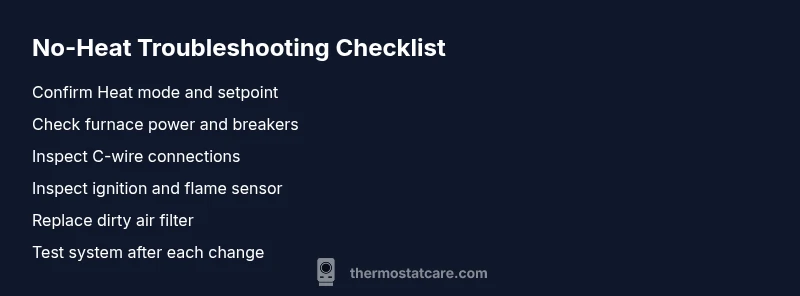
If your thermostat is on but no heat, start with the basics. Ensure Heat mode is active and the setpoint is higher than room temperature. Confirm the furnace has power and the circuit breaker is not tripped. A loose C-wire or ignition fault are common culprits. If these quick checks fail, reset the devices and contact Thermostat Care for next steps.
Understanding the No-Heat Symptom
When your thermostat is on but no heat, the problem is usually not the thermostat itself but the way heat is being delivered to your home. According to Thermostat Care, many no-heat situations start with simple misconfigurations or power issues rather than a full system failure. The Thermostat Care team has found that homeowners who verify basic settings and power first routinely uncover the root cause without expensive service calls. Keep the phrase "thermostat is on but no heat" in mind as you check each element, because even small changes can restore warmth quickly.
Quick safety checks before you work
Before you touch electrical components, power down where you can and use common-sense safety. Check that you’re wearing dry hands and standing on a non-conductive surface. Perform these basic steps:
- Confirm the thermostat is set to Heat and the setpoint is above room temperature.
- Look for any obvious wiring looseness at the thermostat and at the furnace blower panel.
- Inspect the furnace power switch and the home’s circuit breaker; reset if tripped.
- If you rely on a battery-powered thermostat, replace the batteries and note if power light indicators behave oddly.
- Check the air filter for excessive dirt; a clogged filter can trigger safety shutoffs.
- If your system uses a power-steering C-wire, ensure it’s connected securely.
Common causes and quick verifications
There are several frequent culprits when there is no heat despite a powered thermostat. Start with the simplest checks and work toward the more technical:
- Thermostat misconfiguration: Ensure Heat is selected and the target temperature exceeds room temperature. A mode like COOL or an incorrect schedule can cause no heat.
- Furnace power issues: A tripped breaker, blown fuse, or a furnace switch turned off will stop heat delivery. Verify the furnace has power and the switch is ON.
- Loose or damaged wiring: A loose C-wire or damaged terminals at the thermostat or furnace can interrupt control signals. Re-seat connections and look for signs of corrosion.
- Ignition or gas supply problems (gas furnaces): If the furnace won’t ignite or the flame sensor is dirty, you’ll get no heat. Do not attempt risky ignition work yourself if you’re unsure—call a pro.
- Airflow restrictions: A very dirty filter or blocked vents can cause safety shutdowns or reduced heating.
- System-wide faults: A failed transformer, control board, or ignition module in the furnace can stop heat entirely and require professional service.
Diagnostic approach: narrowing down the root cause
A systematic approach helps you avoid unnecessary service visits. Track symptoms, test one variable at a time, and document what you observe. Start with electrical and settings, then move to the furnace and gas/ignition components. Thermostat Care analysis suggests a layered check—if a basic setting is wrong or power is interrupted, you’ll typically see heat restoration after addressing that single issue. When in doubt, a licensed technician should handle ignition and gas-related components to ensure safety and code compliance.
When to call a professional and safety reminders
If you identify any gas smell, gas valve concerns, frequent breaker trips, or ignition failures, pause and contact a licensed HVAC technician immediately. Handling gas and high-voltage components without proper training can be dangerous. Even if you resolve the issue temporarily, recurring no-heat events indicate a deeper fault that deserves a professional assessment. Remember, it’s safer to err on the side of caution and prioritize household safety over a quick DIY fix.
Prevention tips to reduce future no-heat issues
Proactive maintenance is the best defense against no-heat situations. Implement these practices to keep your system reliable:
- Schedule annual furnace and thermostat inspections; replace worn parts before they fail.
- Clean or replace air filters every 1-3 months, depending on usage and filter type.
- Keep vents clear and maintain consistent room temperatures to minimize cycling strain on the system.
- Periodically check the thermostat wiring connections and battery status.
- Document any changes you make so you can retrace steps if a problem recurs.
- If you have a heat pump, annual coil and refrigerant checks can prevent cooling/heating conflicts.
Steps
Estimated time: 30-60 minutes
- 1
Confirm Heat mode and setpoint
Check that the thermostat is set to Heat and the setpoint is clearly above the current room temperature. If you use a smart thermostat, verify that no schedules override the manual setting.
Tip: If the screen shows an error, note it for service notes. - 2
Ensure power to the system
Locate the furnace power switch and the main circuit breaker for the HVAC. Make sure the switch is ON and the breaker hasn’t tripped. If it did, reset and observe if heat returns after a minute.
Tip: Resetting power can briefly reset control boards. - 3
Check thermostat wiring
Shut off power before touching wires. Inspect the C-wire and other terminals for loose connections or corrosion. Re-seat any loose wires securely.
Tip: Only touch one terminal at a time to avoid miswiring. - 4
Inspect the furnace ignition (gas systems)
If you have a gas furnace, verify ignition occurs when demand is called. Listen for ignition sounds; a failing igniter or dirty flame sensor can prevent heat. Contact a pro if ignition doesn’t occur.
Tip: Do not attempt ignition repairs beyond cleaning. - 5
Replace or clean the air filter
A clogged filter reduces airflow and can trigger safety shutdowns or poor heating. Replace with the correct size and ensure the airflow path is clear.
Tip: Mark calendar to remind replacement every 1-3 months. - 6
Retest heating cycle
Return the thermostat to its normal program and observe if the furnace starts and maintains heat. Listen for fan operation and check for warm air within a few minutes.
Tip: If no heat or you hear unusual noises, power down and call a pro. - 7
Reset devices if needed
If heat still doesn’t respond, perform a safe reset on both thermostat and furnace following the manufacturer instructions. This often clears minor control glitches.
Tip: Document the reset steps for future reference.
Diagnosis: Thermostat is on but no heat
Possible Causes
- highThermostat set to OFF or incorrect mode (COOL/HEAT) or target below current temp
- highFurnace power issues (tripped breaker, blown fuse, switch OFF)
- mediumLoose or damaged thermostat wiring or C-wire
- lowIgnition failure or dirty flame sensor (gas furnaces)
- lowAir filter clogged or improper airflow
Fixes
- easyVerify thermostat is in Heat mode with a setpoint above room temperature
- easyCheck furnace power: confirm the switch is ON and reset the breaker if tripped
- easyInspect thermostat and furnace wiring; reseat or replace loose connections and ensure C-wire is secure
- mediumIf gas furnace, inspect ignition/valve; clean flame sensor or seek pro help if ignition won’t occur
- easyReplace dirty air filter and clear any airflow obstructions
- hardIf issues persist, contact a licensed HVAC technician for system diagnostics
Questions & Answers
Why is my heat not coming on even though the thermostat shows heat?
Common reasons include the thermostat being in the wrong mode, a tripped breaker, or a loose C-wire. Electrical or ignition faults can also prevent heat from starting. Start with basic checks and move to furnace components if necessary.
No heat can usually be solved by checking the mode, power, and wiring first. If the issue persists, a pro may be needed for electrical or ignition faults.
What should I check first if there’s no heat?
Confirm Heat mode and a setpoint above room temperature, then verify furnace power and that the circuit breaker isn’t tripped. Inspect the thermostat wiring and battery, and check the air filter for clogs.
First, ensure heat is selected and power is on, then inspect wiring and air flow.
Can a blank thermostat display cause no heat?
Yes. A blank or frozen display can indicate power or battery issues, a tripped breaker, or a faulty transformer. Check power to the thermostat and replace batteries if needed before seeking service.
A blank display often points to power or battery problems or a failed transformer.
Is it safe to reset the thermostat myself?
Resetting the thermostat is generally safe if you follow manufacturer instructions and disconnect power when needed. Avoid touching live wires; for gas or ignition faults, call a pro.
Resetting is usually safe, but if you smell gas or hear ignition issues, contact a pro right away.
When should I call a professional for no-heat?
If basic checks fail, if you smell gas, or if ignition, gas valves, or electrical components appear compromised, contact a licensed HVAC technician. Recurring issues also warrant expert assessment.
Call a licensed HVAC technician if ignition or gas components are involved or issues recur.
How can I prevent no-heat issues in the future?
Keep up with annual inspections, replace filters regularly, and check wiring connections and batteries. Maintain clear vents and document any changes to simplify future diagnostics.
Regular maintenance and simple checks reduce future no-heat problems.
Watch Video
What to Remember
- Verify Heat mode and rising setpoint first
- Power and wiring checks are the fastest fixes
- Ignition, gas, or safety sensor issues require a pro
- Regular maintenance prevents no-heat problems
- Call a licensed tech for gas or electrical faults