Should Thermostat Be Turned Down at Night? A Practical Guide
Learn why turning down your thermostat at night can save energy, how to set back safely, and when not to. Practical steps, expert tips, and common myths debunked by Thermostat Care.


Yes — turning down the thermostat at night is a practical way to save energy and cut heating bills. A common approach is to set back by about 3-4°F (roughly 2-3°C) from daytime levels and use a programmable schedule to return to comfort before wake time. If you live in extreme climates or have sleeping partner comfort needs, adjust gradually and consider zoned control.
Why Night Setbacks Save Energy and Improve Sleep
According to Thermostat Care, nightly setbacks are a practical energy-saving practice that many homeowners use to reduce heating load while sleeping. Thermostat Care Analysis, 2026 notes that even modest temperature reductions can lower energy bills and reduce wear on your HVAC system over time, especially in homes with older insulation. A comfortable target is to lower the indoor temperature by a few degrees and rely on warmer bedding to maintain sleep quality. When you wake up, a scheduled restoration brings the home to your preferred daytime setting without manual adjustments. If you have a multi-zone system, zone-by-zone setbacks can optimize comfort without overcooling or overheating empty rooms. During winter, a timed setback is often more impactful than leaving the thermostat constant all night. This approach balances comfort, safety, and energy efficiency, providing a practical path for DIY homeowners to tighten energy use without sacrificing nightly rest.
Beyond energy savings, the habit supports better sleep for many people. The body's thermoregulation favors a cooler environment at night, which can help you fall asleep faster and stay asleep longer. However, comfort is personal: some rooms cool faster than others, and certain floors or bedrooms may feel drafty when the heat drops. Pair setbacks with practical sleep aids—layered bedding, breathable blankets, and a warm beverage in the evening. If your home has poor insulation or drafts, address those issues first, since a strong setback will have less effect if heat leaks away. In colder climates, a careful approach keeps pipes safe and homes comfortable without sacrificing the intact comfort of sleepers.
description2owningdirectory0less0
How to Set Back Safely on a Programmable Thermostat
Not all thermostats offer the same controls; If you have a simple, non-programmable model, you can still achieve a night setback with manual adjustments: turn the dial or use the temperature +/- buttons a bit before bed and again before sunrise. For programmable or smart thermostats, create a nightly schedule that lowers the setpoint during sleeping hours and restores it an hour before wake time. Start with a conservative setback and test over several nights to avoid waking up uncomfortably cold or overheating bedrooms. If you share a thermostat with family members, involve them in selecting times and temperatures to maintain harmony and consistent energy savings. Consider comfort overrides for temporary needs, such as guests or unusually warm nights.
If your thermostat supports adaptive recovery or learning mode, enable these features to help the temperature reach the target more smoothly after the setback. In drafty homes, focus on major temperature-changes in bedrooms rather than common living spaces to maximize biomass energy savings. Finally, keep your thermostat and its battery backup in good condition; a failing battery can cause delayed responses and inconsistent setbacks.
block2Rest
Special considerations by system type and occupant needs
If you rely on heat pumps, radiant floors, or old boilers, your setback strategy may differ. Heat pumps can respond slowly to temperature changes, so program gradual changes and avoid large swings that force your system to work harder later. Households with young children, elderly residents, or someone sensitive to drafts should start with smaller setbacks and monitor comfort closely for several nights. Pets should also be considered, as they may prefer slightly warmer zones. Finally, keep doors and windows closed during temperature changes to maximize the effectiveness of your setback and prevent losses.
In apartments or homes with limited insulation, a modest setback may still provide savings, but the payoff may be smaller; in that case, focus on door and window sealing, air sealing, and curtain use to maintain indoor temperatures. For systems with multiple zones, prioritize zones based on occupancy and use; avoid sending cooler air into empty spaces. If your system uses a boiler, ensure the boiler water temperature remains high enough to prevent condensations and maintain safe operation.
description3owningly
Authority sources for credible guidance
For evidence-based energy savings, consult official sources and independent research. Reputable authorities emphasize consistent setbacks and safety. See:
- https://www.energy.gov
- https://www.energystar.gov
- https://www.epa.gov
These sources provide general guidance on home energy efficiency, thermostat usage, and safe heating practices. Always cross-check with your local climate, building envelope, and HVAC equipment. Thermostat Care recommends using their framework to tailor setbacks to your home while staying compliant with safety guidelines. For more detailed, climate-specific recommendations, consider professional energy audits or your local utility’s energy-saving programs.
description4owningdirectory0less0
Common pitfalls and troubleshooting tips
- Avoid large overnight temperature swings that cause rapid cycling or discomfort. Make gradual adjustments and monitor how long the home takes to settle into the new temperature.
- If your thermostat is old or non-responding, consider updating to a programmable model with scheduling or smart features.
- In very cold climates, do not reduce the indoor temperature below comfort levels to protect pipes and health.
- If you have an infant, elderly occupant, or medical conditions, consult a clinician before making significant setbacks.
- Ensure your HVAC system and insulation are adequate to handle setbacks; otherwise savings may be limited.
Additional tips:
- Verify your system’s fan settings and air circulation; better circulation can help you feel comfortable at lower temperatures.
- Keep a simple comfort log; note how you felt at night and in the morning compared to the setpoint.
Tools & Materials
- Programmable thermostat(Supports daily schedules and night setback)
- Smartphone or tablet with thermostat app(For remote adjustments and monitoring)
- Access to the thermostat control panel(Have the PIN or account ready)
- Notepad or journal(Log changes and comfort observations)
Steps
Estimated time: 1-2 hours for initial setup and testing
- 1
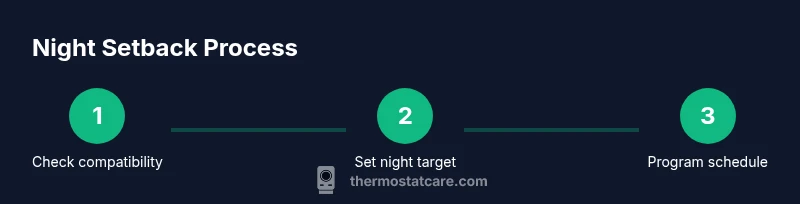
Verify thermostat supports setback scheduling
Check the thermostat manual or app to confirm nightly setback and restore times. If not supported, plan manual adjustments or upgrade.
Tip: If unsure, consult the model’s online guide or manufacturer support. - 2
Choose a night setback target
Decide how much to reduce the setpoint at night based on comfort needs and climate. Start with a modest change to avoid waking up cold or overheated.
Tip: Avoid swinging more than a few degrees unless you test comfort first. - 3
Program or adjust the schedule
Create or modify the nightly schedule so the setpoint lowers during sleep hours and rises before wake time. Save changes and test.
Tip: Set an automatic 'rise' time to ensure morning comfort. - 4
Test for a week and refine
Observe comfort levels over several nights and adjust the setback amount or timing as needed.
Tip: Keep a simple log of temperatures and how you felt. - 5
Monitor energy use and comfort
If you have energy monitoring, compare nights with setbacks to nights without. If savings are minimal, tweak settings.
Tip: Small, gradual changes often yield the best balance. - 6
Consider advanced features
Explore learning modes, geofencing, or occupancy sensing to optimize setbacks automatically.
Tip: Test features one at a time to isolate impact.
Questions & Answers
Should I turn down the thermostat every night?
Not for every household; use a modest setback that matches climate and comfort needs. Reassess after several nights.
You don’t have to adjust every night. Start small and see how it feels.
What if someone in the home feels cold?
Use a smaller setback or zone-based adjustments to keep key rooms comfortable while still saving energy.
If someone feels cold, reduce the setback or adjust only the cooler rooms.
Is there a risk to pipes if I lower temps at night?
In very cold climates, avoid large temperature drops that could affect pipes; maintain a minimum comfortable temperature.
Don’t drop temperatures too low in freezing conditions.
Do smart thermostats help with night setbacks?
Yes. They automate schedules, adjust for occupancy, and can learn your patterns to optimize savings.
Smart thermostats automate setbacks and improve efficiency.
How quickly will I see savings?
Savings accumulate over days and weeks as the setback schedule runs consistently.
You’ll usually notice savings after a few days of consistent setbacks.
Watch Video
What to Remember
- Night setbacks save energy if used consistently
- Start with a modest temperature change
- Program schedules for consistency
- Test and adjust based on comfort
- Smart thermostats simplify nightly setbacks