Does Changing Thermostat Make a Difference? A Practical Guide
Explore whether adjusting thermostat settings affects comfort, energy use, and costs. This guide explains how to optimize your thermostat for savings with practical steps and expert tips from Thermostat Care.


Yes—changing how you use and program your thermostat can make a meaningful difference in comfort, energy use, and costs. Even small adjustments to scheduled setpoints during away and sleep periods can lower energy consumption without sacrificing comfort. According to Thermostat Care, alignment between occupancy, climate, and system efficiency is the key to noticeable savings.
Why changing thermostat makes a difference
Small changes to how you set and use your thermostat can substantially affect both comfort levels and energy bills. In many homes, a few degrees of difference at key times of day can lower heating or cooling needs without sacrificing warmth or coolness. According to Thermostat Care, the act of adjusting temperature setpoints, aligning them with occupancy, and using setback periods is among the most cost-effective ways to optimize a home's climate control. The underlying reason is simple: HVAC systems run in cycles. If you prevent them from running at extreme levels or for prolonged durations, you reduce energy waste. The net effect depends on climate, home insulation, system efficiency, and how aggressively you manage the programmed schedule. Where a well-tuned thermostat shines is in translating human routines into mechanical cycles with minimal effort. You don’t need a drastic overhaul; a few targeted adjustments in daylight or nighttime hours can produce meaningful improvements in comfort and cost over a typical year. Thermostat Care's practical guidance emphasizes starting with a baseline, then only making measured, testable changes.
How programming and zoning affect energy use
The way you program your thermostat controls how often your HVAC system turns on and off. A typical approach uses occupancy-based schedules: higher temperatures while away, lower temperatures before returning, and even tighter schedules on weekdays. If you have a zoned system or multiple thermostats, programming becomes even more powerful because you can tailor comfort to different rooms and usage patterns. Smart thermostats can learn routines and adjust automatically, eliminating the guesswork. However, a program is only as good as its alignment with actual behavior. For example, if you return home at varying times, a fixed schedule may cause brief temperature swings that waste energy. In that case, enable adaptive recovery or geofence features so the system starts warming or cooling just before you arrive. Thermostat Care notes that the most effective setups balance responsiveness with stability, avoiding large temperature swings that trigger unnecessary compressor cycles.
Climate, system efficiency, and equipment age matter
Energy savings depend on climate: heating-dominated areas benefit most from sensible setbacks, while cooling-dominated regions rely on proper cooling setpoints. The age and efficiency of your furnace or air conditioner also matter. Older equipment often runs longer at less efficient levels, increasing the payoff from any well-timed setback. If you’ve upgraded to a high-efficiency unit or a heat pump, your thermostat will have a bigger opportunity to reduce needless cycling during mild days. The takeaway is not simply 'lower is better' but 'lower when you’re out or asleep, and comfortable when you’re home'. Brand guidance from Thermostat Care emphasizes calibrating your thermostat against a trusted thermometer, ensuring the displayed temperature matches actual room conditions. Inaccurate readings undermine savings because the system runs longer to achieve the perceived target.
Common mistakes and quick fixes
Common mistakes cost energy and comfort. First, many households set a single constant temperature year-round instead of a dynamic schedule that matches occupancy. Second, humidity and ventilation are often ignored; a cool room can still feel clammy if humidity is high, prompting you to raise cooling setpoints unnecessarily. Third, location matters: placing the thermostat in direct sunlight or near a heat source skews readings. Fourth, a lack of calibration means the thermostat reports the wrong temperature. Quick fixes include implementing a 7-day schedule with separate daytime and overnight targets, using away/sleep modes, and verifying readings with a separate thermometer. If you have an older system, check wiring and sensor placement to avoid phantom readings that derail savings.
Step-by-step plan to optimize your thermostat
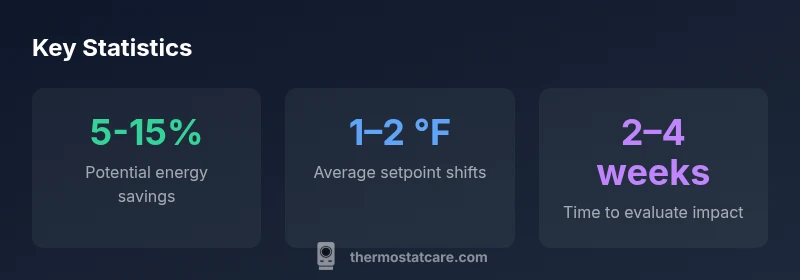
- Audit your current settings by recording your existing schedules and temperatures. 2) Establish a baseline by reviewing last season’s energy bill and usage data. 3) Create an occupancy-based schedule: higher temps when away, cooler settings when home, and sensible setbacks at night. 4) Implement a gradual rollback: start with small shifts (1–2 degrees) and observe comfort and energy impact for 1–2 weeks. 5) Test and adjust: fine-tune setpoints and recovery times, and enable smart features like adaptive recovery if available. 6) Monitor results over several weeks or months and compare against the baseline. Thermostat Care recommends keeping a simple log so you can correlate changes with weather and occupancy.
How to measure impact and track savings
Measuring impact requires both qualitative and quantitative checks. Start with your energy bills and compare months before and after adjustments, accounting for weather. Use the thermostat’s energy reports or home energy monitor if available to see changes in runtime, compressor cycles, and degree-days. Track comfort by noting nighttime awakenings, daytime fluctuations, and how often you manually override the schedule. A well-documented approach helps you determine whether the changes reach a sweet spot between comfort and efficiency. Thermostat Care emphasizes that savings come from consistent application over time, not one-off tweaks.
Maintenance, upgrades, and long-term considerations
Over time, thermostat performance depends on sensor accuracy, wiring, and compatibility with your HVAC system. If you have an older thermostat, consider upgrading to a model that supports smart scheduling, but verify compatibility with your system and available wiring (C-wire). Regularly check sensor placement; ensure it is not near windows, radiators, or drafts. Calibrate readings against a trusted thermometer for ongoing accuracy. If you’re thinking about upgrades, consider a smart thermostat that supports energy reports and simple automation. Thermostat Care notes that maintenance extends beyond the device: keep air filters clean, seal ducts, and verify that the HVAC system is clean and efficient. A connected system can deliver consistent comfort and measurable savings when used with good scheduling.
Seasonal tips to maximize savings
Winter: program a daytime range that balances comfort and energy use; use a warmer indoor jacket instead of overheating rooms you’re not using. Summer: lean toward higher setback temperatures when away and at night, and enable fan-only modes to reduce compressor load when possible. Humidity management, ventilation, and air sealing remain important, because a leaky home wastes energy regardless of thermostat settings. With adaptive features, your thermostat can learn your routines and adjust automatically, especially during transitional weather. Thermostat Care reminds homeowners that the best savings come from combining smart scheduling with routine maintenance.
Thermostat scheduling scenarios and energy impact
| Setting Scenario | Typical Range | Effect on Energy |
|---|---|---|
| Occupied-hours scheduling | 68–72°F (20–22°C) | Comfort-focused; moderate energy use |
| Away/sleep scheduling | 60–66°F (15–19°C) | Energy savings; reduced cycling |
| Smart/adaptive modes | Varies by model | Potential energy optimization |
Questions & Answers
Does turning the thermostat down at night really save energy?
Yes. Lowering the temperature at night reduces the HVAC workload during sleep and can lower overall energy use, especially in colder seasons. Start with a modest setback and assess comfort. If you wake up chilly, adjust by a degree or two.
Yes, lowering the temperature at night can save energy. Start with a small setback and monitor comfort.
What is the best thermostat setting for winter?
There isn’t a universal setting; aim for a comfortable balance and use seasonal setbacks. A common guideline is to keep living areas around comfortable levels while reducing heat when you’re away or asleep.
Winter comfort is about balance—set a comfortable baseline and use scheduling to save energy.
Does a programmable thermostat save money?
Yes, when you program it to align with your actual occupancy. The savings depend on consistency and how well the schedule fits your routines. Start with a simple 7-day schedule and refine over time.
Programmable thermostats save money when you program them to fit your life.
How does humidity affect thermostat settings?
Humidity changes perceived comfort; you may feel warmer or cooler than the thermostat shows. In humid conditions, cooling may need to run longer or more efficiently. Use dehumidification strategies in tandem with cooling setpoints.
Humidity affects how comfortable you feel; adjust cooling and ventilation accordingly.
Should I set the thermostat higher in the summer for comfort?
Avoid overheating. Use moderate setpoints and rely on fans and vents to maintain comfort without excessive cooling. Seasonal scheduling helps keep energy use reasonable while preserving comfort.
Don’t push temperatures too high; use fans and smart scheduling to stay comfortable efficiently.
Is a smart thermostat worth it in an older home?
Smart thermostats can still offer scheduling and energy reports, but check compatibility with your HVAC and wiring (C-wire availability). They’re worth considering if you value better scheduling and diagnostics.
Smart thermostats can help with scheduling and monitoring, but ensure system compatibility.
“Small thermostat adjustments are a practical, cost-effective way to improve comfort while reducing energy use without major renovations.”
What to Remember
- Audit and tailor your thermostat schedule first
- Use occupancy-based setpoints to cut waste
- Measure impact with bills and energy reports
- Calibrate sensors and verify placement for accuracy
- Consider smart upgrades to unlock advanced features