Is It Okay to Lower Your Thermostat at Night? A Practical Guide
Learn when it's wise to lower your thermostat at night, how night setback saves energy, safety considerations, and a practical step-by-step plan for both traditional and smart thermostats.


Is it okay to lower your thermostat at night? In most homes, a modest night setback can reduce energy use and bills without sacrificing sleep comfort. The right approach depends on climate, heating system, and personal health needs. This quick answer helps you decide if a bedtime setback fits your household and how to implement it safely.
Is it okay to lower your thermostat at night?
Is it okay to lower your thermostat at night? In most homes, a modest night setback can reduce energy use and bills without sacrificing sleep comfort. The basic idea is to cool the space slightly while you sleep, then warm it back up before you wake. However, the right approach depends on your climate, your heating system, and who shares your home. The Thermostat Care team notes that the safest and most comfortable setbacks balance savings with personal needs. People living in very cold climates or in homes with older, less-insulated pipes should plan more conservative adjustments and monitor how quickly rooms feel chilly. Pets, seniors, and children can be more sensitive to temperature swings, so any plan should include a provision for quick warmth if anyone awakens uncomfortable. Start with a small, gradual change rather than a drastic drop, and reassess after a few nights to ensure you’re still sleeping well and not stressing your heating system.
How night setback works with different heating systems
Night setback interacts differently with various heating systems. For furnaces and boilers, a gradual drop is usually safe if the system can recover before morning. Heat pumps respond rapidly to temperature changes but may need longer recovery times in very cold weather. In homes with zone controls, you can set a separate nighttime zone, keeping daytime comfort intact elsewhere. If your system is older or undersized for your home, a large drop may cause cold rooms and extra load when you reheat. The Thermostat Care guidance emphasizes knowing your equipment and testing small changes first.
Energy savings and measurement
Saving energy from nightly setbacks often comes from reducing runtime during the hours you’re asleep. Insulation quality, window drafts, and the efficiency of your heating system determine actual savings. Use your thermostat’s energy dashboard or a utility bill trend to gauge impact. While numbers vary, many homeowners observe noticeable savings after a couple of weeks of consistent scheduling. Thermostat Care analysis shows that consistent, moderate setbacks paired with good insulation lead to the best balance of comfort and savings.
Climate considerations: when not to lower at night
In very cold climates or poorly insulated homes, aggressive night setbacks can lead to chilly rooms and uneven heating. If pipes are at risk in freezing conditions, or if occupants wake with numb hands or shivering, strict setbacks may not be advisable. Elderly residents and small children may require more even temperatures for a good night’s rest. Consider keeping bedrooms in a comfortable range or using a lighter blanket strategy rather than a large temperature drop. The goal is to preserve comfort while still saving energy.
Comfort and sleep quality: balancing sleep with savings
Sleep quality is a priority. A temperature that’s too cold can disrupt sleep cycles, and a room that’s too warm can cause restlessness. Pair temperature adjustments with light sleep hygiene: use breathable sheets, appropriate bedding, and consider humidity control if your home is too dry in the cold season. If you wake up during the night, a quick warmth boost—like a lightweight blanket or a quick warm drink—can help without overriding the setback plan. The aim is a comfortable sleep environment that minimizes energy waste.
Setting a safe night setback with a basic thermostat
If you have a basic thermostat, start by locating the scheduling or setback feature. Create a consistent nighttime schedule that lowers the setpoint a little after you’ve fallen asleep, then returns to the daytime setting before you wake. Check that the thermostat is operating in the heat mode you expect and verify that the warm-up period meets morning needs. For manual systems, consider a separate timer on the heating system if possible. The goal is a gradual, predictable change rather than sudden shifts.
Smart thermostats and nightly schedules
Smart thermostats simplify nightly setbacks with automated schedules, adaptive recovery, and occupancy features. Use a bedtime routine that lowers the temperature during sleep hours and gradually warms during wake hours. Many models offer learning algorithms that adapt to your actual sleep times, which improves comfort and energy savings. If you have a smart thermostat, test a weekend schedule first and monitor how quickly temperatures respond to changes.
Multi-zone homes and pets
In homes with multiple zones, you can set different night temperatures for each space. Consider the rooms where occupants sleep and where pets spend time. Pets typically tolerate cooler bedrooms better than humans, but be mindful of comfort for animals with fur or arthritis. Zone controls help tailor comfort without compromising energy savings in other parts of the house. If you don’t have zoning, focus the setback on sleeping areas while maintaining common areas at comfortable levels.
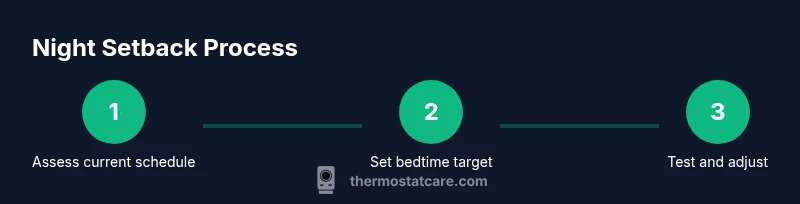
Test, track, and adjust
Give your new night setback plan 1–2 weeks to stabilize, then review comfort, sleep quality, and energy use. If you notice cold pockets or early wake-ups, adjust the setback gradually or adjust morning warm-up timing. Keep a simple log of room temperatures, energy bills, and personal comfort to spot trends and decide whether to fine-tune the schedule. Regularly revisiting the settings helps ensure ongoing balance between comfort and efficiency.
Tools & Materials
- Programmable or smart thermostat(Ensure it supports night scheduling or setback mode.)
- Thermostat manual or app access(Needed to set up schedules efficiently.)
- Notepad or app for tracking changes(Optional but helpful to record comfort and savings.)
- Room temperature sensor (optional)(Helpful to verify actual vs. setpoint temperature.)
Steps
Estimated time: 30-60 minutes for initial setup; ongoing weekly checks for 1-2 weeks, then monthly reviews
- 1
Review current schedule
Open your thermostat app or interface and review the existing nightly vs. daytime setpoints. Note when the system is allowed to run and when it remains idle. This helps you choose a safe starting point for a night setback.
Tip: Take a screenshot or photo of the current settings before making changes. - 2
Define a preliminary night target
Decide on a conservative nightly target that you can recover from before wake-up. Start with a minor adjustment and avoid large drops that could compromise comfort or system performance.
Tip: Choose a target you can easily maintain for several nights without discomfort. - 3
Create or modify the night schedule
Set up a fixed nightly schedule or enable adaptive features if available. Ensure the thermostat will begin warming up in time for morning activities.
Tip: Use the 'sleep' or 'night' mode if your model supports it, and test recovery time. - 4
Test the new setting one night at a time
Run the new setting for one night and assess comfort levels in the morning. Document room temperatures and how you felt during sleep.
Tip: If you wake up cold, adjust the nightly target upward by a small amount. - 5
Gradually refine the setback
Over 1–2 weeks, fine-tune the setback level and recovery timing based on comfort and energy data. Avoid sudden, large swings.
Tip: Make incremental changes—small diffs compound into meaningful savings. - 6
Address zones and drafts
If you have multiple zones, apply different night settings to sleeping areas. Seal drafts around windows and doors to maximize savings.
Tip: Draft-proofing boosts efficiency more than a large temperature drop alone. - 7
Monitor health and safety
Ensure that occupants with health needs or children are comfortable. If someone wakes up chilly, adjust the schedule or provide extra blankets.
Tip: Keep a backup plan for cold nights, such as layered bedding or a small space heater in a safe location. - 8
Evaluate energy impact
Compare energy use over a few weeks with the new settings. Look for measurable changes in bills or energy dashboards.
Tip: Use a consistent billing period to make apples-to-apples comparisons. - 9
Document changes for future seasons
Create a reference sheet with current settings and the rationale behind them. This helps when seasons shift or when you move.
Tip: Include notes on climate changes and occupancy patterns. - 10
Revisit and adjust as needed
Seasonal changes or new occupants may require re-evaluating the night setback. Schedule a periodic review.
Tip: Set a reminder to assess settings at the start of each season.
Questions & Answers
Is it safe to lower the thermostat every night?
For most homes, a nightly setback is safe when done gradually and with attention to comfort. People with health concerns or in very cold climates should adjust cautiously and monitor how the space feels. Always ensure recovery time is adequate for your morning needs.
Yes, it’s generally safe to lower the thermostat at night if you do it gradually and monitor comfort, especially with a safe recovery plan for the morning.
How much should I lower the temperature at night?
The exact amount depends on climate, home insulation, and personal comfort. Start with a modest change and reassess after a few nights. Avoid large drops that leave rooms uncomfortably cold when you wake.
Start with a small change and adjust based on comfort and how quickly the space warms in the morning.
Will a night setback affect humidity or pipes?
Extended cooling can influence humidity and, in very cold climates, risk pipe freezing if the temperature drops too low. Keep an eye on humidity levels and ensure pipes are properly insulated. If you notice persistent dampness or drafts, adjust accordingly.
Lowering at night can influence humidity and pipes in very cold climates, so monitor and adjust as needed.
Does a smart thermostat help with night setback?
Yes. Smart thermostats offer automated schedules, adaptive recovery, and multi-zone controls that optimize night setbacks without sacrificing morning comfort. They simplify testing and adjustments over time.
Absolutely—smart thermostats make nightly setbacks easier and more precise.
When should I revert the setback in come spring?
As seasons shift, you’ll want to revert or adjust the night setback schedule to reflect warmer nights and longer days. Re-evaluate monthly during the transition and align with your comfort needs.
Revisit your setback plan as seasons change and adjust to keep comfort high and savings steady.
Watch Video
What to Remember
- Set a gentle bedtime setback to balance comfort and energy savings.
- Test changes gradually; monitor comfort and system recovery times.
- Use zone controls or drafts management to maximize savings.
- Smart thermostats simplify management with schedules and learning features.
- Regularly review settings for seasonal and occupancy changes.