How Difficult Is It to Move a Thermostat? A DIY Guide
Discover how hard it is to move a thermostat, what factors affect difficulty, tools you’ll need, a practical step-by-step plan, safety tips, and guidance on when to hire a professional.


Moving a thermostat is often doable, but the difficulty depends on wiring, HVAC compatibility, wall material, and the chosen location. This quick guide helps homeowners decide if DIY relocation is feasible and what tools you'll need to complete the move safely. Always consider safety and local codes before starting.
Assessing Feasibility: Is Moving Your Thermostat Worth It?
Relocating a thermostat can improve comfort, reduce glare on digital displays, and place controls at a more convenient height. However, the decision hinges on several factors: the type of thermostat you have (mechanical vs. digital), whether your system is powered by a 24-volt control circuit, and whether you can run low-voltage wiring without compromising wall integrity. In many homes, the main barriers are wiring availability, the presence of a C-wire (common) for power, and the structural makeup of the wall. According to Thermostat Care, roughly half of relocations are straightforward enough for DIY enthusiasts when the existing wiring supports a new location. If a new C-wire or a more complex HVAC setup is required, moving may become time-consuming and require professional help. Start by sketching your ideal location and listing potential obstacles like studs, electrical boxes, or insulation that could interfere with mounting and wiring.
Key considerations: target height and reachability, proximity to current HVAC components, avoiding sun exposure and heat sources, and ensuring the new location won’t interfere with doors or cabinetry. If you’re uncertain about wiring or power, this is a strong signal to consult a pro.
Evaluate Your HVAC System and Wiring Needs
The first serious barrier is understanding your HVAC control wiring. Most modern thermostats run on low voltage (commonly 24V) and rely on a dedicated circuit and several color-coded wires. If your current setup uses a C-wire for continuous power, moving the thermostat is more feasible; if you lack a C-wire, you may need to install one or upgrade to a battery-powered model with limited features. Wiring diagrams from the old thermostat are invaluable, and many systems offer sub-collectors of wires that connect at the control board in the furnace or air handler. If you notice any buzzing noises, dimming lights when the thermostat is powered, or inconsistent temperatures, these indicate wiring or power issues that should be addressed before relocation. Thermostat Care’s analysis indicates that homes with well-documented wiring plans enjoy smoother relocations, while older homes or unconventional wiring layouts often demand professional evaluation.
Choosing the Right New Location
Selecting a new mounting spot is more than about aesthetics. The ideal location should be within easy reach, avoid direct sunlight, drafts, or heat sources, and be adjacent to the same HVAC zoning or branch. Consider line-of-sight to the thermostat’s display, uninterrupted access to the wiring path, and a mounting surface that can support a low-voltage plate. If possible, aim for a height that is comfortable for all regular users and won’t require frequent bending or stretching. A clean path for low-voltage wiring reduces the risk of pinching or crimping wires behind the wall. Use a stud finder to locate solid mounting points and plan to anchor the new plate into at least one stud for stability. In some cases, you may need a shallow wall box or a larger opening to accommodate the new plate. This planning stage sets the foundation for a safe, reliable relocation. Thermostat Care emphasizes documenting the new path to help future maintenance and troubleshooting.
Tools, Materials, and Safety Considerations
Relocating a thermostat is a low-voltage electrical task that benefits from prepared tools and safety discipline. Essential items include a voltage tester, screwdriver set (Phillips and flat-head), wire labels, low-voltage mounting plate or box, electrical tape, wire nuts, wire stripper/cutter, a stud finder, and a drill with appropriate bits for mounting. Optional items include a small level, containment sleeves for the wire run, and a camera or notebook to document wire colors and terminal mapping. Safety reminders: always shut off power at the breaker before touching thermostat wiring, and use a voltage tester to confirm no live current on the wires you handle. If you encounter unfamiliar wires or a non-standard system, pause and reassess; forcing a fix can damage equipment or create a fire risk.
Common Scenarios: DIY vs Pro
DIY relocation works best when you have a standard 24V thermostat with a present C-wire, a straightforward wiring path, and no derated or hidden wiring. If you discover an unfamiliar wire, a lack of documentation, or a complex control board at the furnace, this is a strong cue to hire a professional. Professional help ensures that the new wiring meets local electrical codes and that thermostat compatibility with the HVAC control board is preserved. Thermostat Care notes that a cautious approach—attempting the job with clear steps and proper wiring knowledge—often yields reliable results, but never compromise safety or system performance to save a few minutes.
In cases where your current wires do not align to the new location, a pro may route a new low-voltage cable or evaluate alternative mounting options, such as upgrading to a different thermostat model that suits your wiring configuration. The decision often hinges on code compliance, the complexity of the run, and potential modifications to the furnace or air handler.
Hidden Challenges: Insulation, Wiring Codes, and C-Wire
Even when the physical task seems simple, hidden challenges can complicate relocation. Insulation can overfill wall cavities, complicating wire routing; old plaster can crack or crumble behind a wall plate; and some homes use proprietary wiring schemes that aren’t easily mapped without diagnostic tools. Electrical codes require that low-voltage wiring remain protected and properly terminated; improper splices can lead to arcing or system failure. A missing or failed C-wire can lead to power instability, causing your thermostat to reboot or lose memory settings. Depending on your jurisdiction, additional requirements may apply to wiring routing and wall penetrations. If you plan to work near electrical panels or within walls that show water damage or visible mold, stop and consult a licensed professional. Thermostat Care cautions that attempting to force a relocation in these scenarios can lead to safety hazards and equipment damage.
Getting Ready: Testing, Calibration, and Documentation
Before you finish, recheck all connections and power up the system in a controlled way. Verify that the thermostat responds to temperature changes, heating, and cooling commands, and that the system cycles correctly. Recalibrate or reprogram the thermostat as needed to align with your HVAC system’s setpoints and zone controls. Document the new wiring mapping, including terminal labels and wire colors, so future maintenance is easier. If you moved to a different brand or model, consult the installation manual for any new configuration steps (e.g., recalibrating sensor readings or enabling new features). Keeping a clean, labeled map also helps if you later sell the home or upgrade to a smarter thermostat.
Next Steps After Moving: Testing, Recalibration, and Documentation
Complete a full cycle test across heating and cooling modes to ensure reliable operation. Check temperature readings against ambient room temperature and adjust the thermostat’s hold and schedule as needed. If you observe inconsistent temperatures, dead zones, or slow response times, revisit wiring and calibration. Finally, update any home automation routines or smart-home integrations to reflect the new thermostat location. Regular maintenance—like cleaning sensors and updating firmware—helps preserve performance and energy efficiency.
Tools & Materials
- Voltage tester(Verify power is off before touching wiring)
- Screwdrivers (Phillips and flat-head)(For wall plate screws and mounting)
- Wire labels(Mark wires to track connections)
- Low-voltage mounting plate/box(Matches new location)
- Electrical tape(Insulate exposed connections)
- Wire nuts(Secure splices)
- Wire stripper/cutter(Prepare wire ends)
- Stud finder(Locate solid mounting points)
- Drill and bits(Create mounting holes if needed)
- New thermostat base (if needed)(Ensure compatibility with HVAC)
- Camera or notebook(Capture wiring layout for reference)
Steps
Estimated time: 2-4 hours
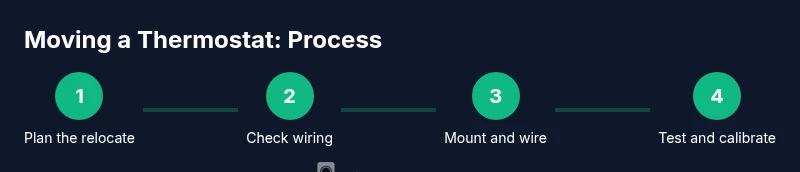
- 1
Plan the relocation
Define the new location, assess wiring path, and confirm accessibility. Create a rough map of how wires will run and what surfaces you’ll mount on. This reduces surprise holes or misrouting.
Tip: Take a photo of the current wiring and wall setup before you disconnect anything. - 2
Power down and confirm safety
Switch off power at the breaker for the thermostat circuit and use a voltage tester to verify no voltage is present on the wires.
Tip: Double-check with a tester after turning off power to avoid shocks. - 3
Remove the old thermostat
Carefully detach the thermostat from its wall plate and label each wire according to its terminal. Disconnect wires one at a time to prevent mix-ups.
Tip: Photograph the terminal mapping for reference. - 4
Plan the new wiring path
Decide a safe route for the wires that avoids running along studs or through insulation where possible. Plan to use conduit or protective sleeves if needed.
Tip: Keep wires away from flues, ducts, or hot surfaces. - 5
Mount the new base or box
Attach the low-voltage mounting plate or box at the chosen location, ensuring it is level and securely anchored into a stud or using appropriate anchors.
Tip: Use a level to ensure the plate sits straight. - 6
Run and connect wiring
Route the wires to the new location, strip ends, and connect to the corresponding terminals on the thermostat base. Use wire nuts and tape for secure splices where needed.
Tip: Avoid over-tightening screws which can break terminals. - 7
Reinstall the thermostat and restore power
Mount the thermostat, reinsert the cover, and switch the breaker back on. Listen for click sounds and verify the unit powers up correctly.
Tip: If you see a fault code, consult the manual or Thermostat Care guide. - 8
Test and calibrate
Cycle heating and cooling to confirm proper operation. Reprogram schedules if necessary and confirm temperature readings match ambient room temperature.
Tip: Run a test over several hours to catch slow drifts. - 9
Document changes
Label wiring and update your wall map with new colors and terminal assignments. Save notes for future maintenance or replacements.
Tip: Store the notes with the thermostat manual for quick reference.
Questions & Answers
Is moving a thermostat safe for DIY?
Moving a thermostat can be safe for DIYers who have basic electrical skills and follow safety steps. Always turn off power, verify no voltage, and use proper tools. If you encounter unfamiliar wiring or codes, stop and consult a professional.
Yes, it can be safe for DIYers who follow safety steps and have basic electrical know-how. If you see unfamiliar wiring, stop and consult a pro.
Do I need a C-wire for moving a thermostat?
A C-wire (common) greatly improves reliability for modern smart thermostats. If your current setup lacks a C-wire, you may need to install one or switch to a battery-powered model with reduced features.
A C-wire helps with reliability. If you don’t have one, you might need to install it or use a battery-powered model.
Can I relocate a thermostat to another room without rerouting wiring?
Relocating without rerouting wiring is possible only if the existing wiring run reaches the new location. Otherwise, you’ll need to extend or reroute wires, which may require professional assistance.
Only if the existing wires reach the new spot. Otherwise, extending wires may require a pro.
What signs indicate I should hire a pro?
Signs include missing documentation, nonstandard wiring, an absent C-wire, frequent thermostat reset codes, or uncertain compatibility with your HVAC control board. In these cases, professional evaluation ensures safety and code compliance.
Hire a pro if wiring is unclear, codes seem uncertain, or you lack a C-wire.
How long does moving a thermostat typically take?
For a straightforward move with a known wiring layout and no complications, plan a few hours. More complex routes and wiring upgrades can extend the timeline to half a day or more.
Usually a few hours for a simple move; longer if wiring is complex.
Will moving affect HVAC efficiency?
Relocating a thermostat does not inherently change HVAC efficiency. Proper placement improves comfort control and reduces energy waste if used to optimize heating and cooling schedules.
Moving won’t change efficiency by itself, but better placement can improve control and energy use.
Watch Video
What to Remember
- Assess feasibility before starting to avoid wasted effort
- Plan wiring path to minimize wall damage and code issues
- Label wires and photograph connections for reference
- Follow safety rules; when in doubt, consult a pro
- Test thoroughly and document the new layout