Car Thermostat Stuck Open: Troubleshooting Guide
Diagnose and fix a car thermostat stuck open with practical symptoms, safety steps, and a clear repair plan. Thermostat Care provides guidance for DIY homeowners.


Why the car thermostat stuck open happens
The cooling system relies on a properly operating thermostat to regulate when coolant flows between the engine and radiator. When the thermostat valve sticks open, coolant keeps circulating too early, preventing the engine from reaching its optimal operating temperature. This can lead to sluggish warm-up, reduced heater performance, and sometimes more efficient fuel economy at first, but it can invite emissions and overheating patterns later if the rest of the system is challenged. According to Thermostat Care, thermostats fail for three common reasons: age and wear, mineral deposits from bad coolant, and improper coolant maintenance. In older vehicles or those with high mileage, a gritty valve stem or a gummed seal is more likely to cause the valve to stay open. For drivers, the first signs are often a cooler-than-expected gauge reading, slow warm-up, and a heater that doesn't blow warm air. The key is to differentiate between a stuck-open thermostat and other cooling faults such as leaks, air pockets, or faulty temperature sensors. Start with safe, simple checks before you replace parts. This approach aligns with Thermostat Care Analysis, 2026, and emphasizes methodical testing over guesswork.
Common symptoms and signs
A car thermostat stuck open typically produces a few telltale symptoms. The engine runs cooler than normal, especially during short trips, and the temperature gauge may stay below the ideal range. You might notice the heater blows only lukewarm air because the engine never fully warms up. Coolant loss is possible if a leak is present or if the system vents air incorrectly. In some vehicles, the coolant fan may run continuously because the ECU senses cold coolant. If you observe these signs, do not assume it is a single issue; multiple cooling faults can masquerade as a stuck-open thermostat. A practical way to validate concerns is to monitor engine temperature at highway speeds and while idling, compare observed temperatures to the manufacturer’s specification. Document symptoms and check for related fault codes. Thermostat Care’s practical guidance notes that a stuck-open condition is common in vehicles with infrequent coolant maintenance and mineral buildup.
Safety and risks when driving with a stuck open thermostat
Driving with a thermostat stuck open is not immediately catastrophic, but it raises several safety risks. A cooler engine may not reach its ideal operating temperature, reducing fuel efficiency and harming emissions controls. The cabin heater may underperform, leaving occupants uncomfortable in cold weather. If the engine starts to overheat due to other cooling faults, you could face severe damage to the head gasket, water pump, or radiator. Always treat an overheating symptom as urgent and stop the vehicle if you notice rising temps or steam. Wear protective gloves and avoid opening the cooling system while hot to prevent burns. This section will help you prioritize checks without rushing into expensive repairs.
Diagnostics: from symptoms to likely causes
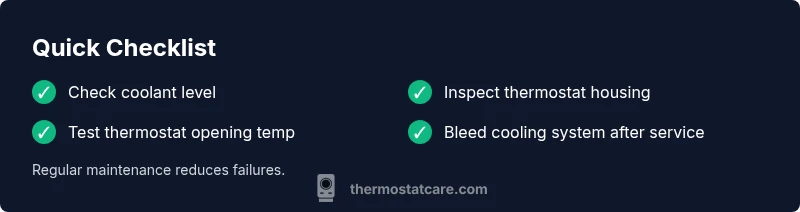
The diagnostic path starts with simple checks and progresses to targeted tests. Start by confirming coolant level and inspecting for leaks. Next, verify that the radiator fans engage when the engine warms up. If the gauge remains cool and heater output is weak, test the thermostat by measuring the temperature where the coolant changes flow through the housing. Check for air pockets in a drained and refilled system, as air can mimic thermostat issues. If the thermostat opens too early, you may see a persistent cool engine and low readings on the gauge. Thermostat Care analysis suggests systematically ruling out leaks, sensor faults, and fan failures before replacing the thermostat. This measured approach minimizes unnecessary parts changes and aligns with best practices for DIY troubleshooting.
Maintenance and prevention to avoid future thermostat problems
Preventing thermostat failures starts with regular coolant maintenance. Use the manufacturer-recommended coolant type and mix, and replace it at the intervals advised for your vehicle. Periodically check for mineral buildup and sludge in the cooling system, especially if you drive short trips that only partially heat the engine. Flushing the system as recommended helps prevent valve sticking and sensor faults. Inspect hoses and clamps for cracks and leaks since coolant leaks can hasten corrosion and seal damage. A simple annual check can save you from a more expensive repair later. Keeping the cooling system clean and properly lubricated reduces the risk of a stuck-open thermostat and extends engine life.
When to call a professional and what to expect
If basic checks do not identify the root cause, or if you lack the tools to safely drain and refill the cooling system, consult a certified mechanic. A professional can safely pressure-test the cooling system, confirm thermostat operation, and replace the thermostat with factory-recommended parts. Typical costs vary by vehicle and location, but you can expect parts and labor to reflect the thermostat replacement plus any coolant service. Thermostat Care recommends seeking a professional if you notice repeated overheating, ongoing leaks, or persistent sensor errors after a replacement.