Stuck Open Thermostat Car: Troubleshooting and Fixes
Diagnose and fix a stuck open thermostat car with step-by-step tips, safety notes, and prevention strategies from Thermostat Care (2026).


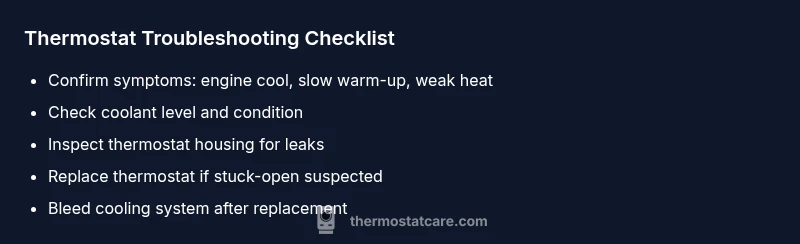
In a stuck open thermostat car scenario, the cooling system never stops allowing coolant to flow, so the engine runs cooler than normal and the heater may stay weak. The quickest fix is to replace the thermostat, bleed the cooling system, and top off coolant. If the problem persists after replacement, check for cooling system blockages or air pockets and seek professional help.
What a stuck open thermostat car does to your cooling system
When the thermostat stays open, coolant keeps circulating through the radiator even when the engine should be warming up. For a stuck open thermostat car, the engine may never reach its optimal operating temperature, the heater can stay weak, and fuel economy can drop as the engine runs cooler than intended. According to Thermostat Care, this is one of the most common cooling-system issues drivers face, and it’s easy to misdiagnose if you skip basic checks. Thermostat Care Analysis, 2026, shows that many drivers wait for obvious symptoms, which can turn a minor fix into a bigger repair. In this guide, we’ll outline quick checks, diagnostic signs, and the most reliable remedy: thermostat replacement and proper coolant bleed.
Common causes of a stuck-open thermostat in cars
A thermostat can fail in the open position due to rust or debris between the valve and seat, a weakened spring, or a worn gasket. Contaminated coolant or incorrect coolant mix can accelerate corrosion and leave deposits that prevent the valve from closing. Improper cooling-system maintenance, such as skipping regular flushes, also contributes. In addition, temperature-rated thermostats from incorrect parts or misalignment during installation can cause the valve to stay open. Understanding these causes helps you target the right repair rather than replacing parts blindly.
Immediate, safe checks you can perform before replacing parts
Only attempt checks with the engine cool to avoid burns. Confirm the coolant level is adequate and look for visible leaks around hoses, the radiator cap, and the thermostat housing. Inspect the upper radiator hose for abnormal feeling or collapse—loss of flow can mimic a stuck-open symptom. If your heater produces only lukewarm air, verify the interior vent settings and that the blend door isn’t stuck. While these checks won’t fix the valve, they help you rule out simple issues and prevent unnecessary repairs.
How to identify the problem: symptoms and tests
Common signs of a stuck-open thermostat car include a coolant temperature that remains cooler than expected, longer warm-up times, continuous fan operation, and weak heater output. If you notice your gauge barely climbs into the middle zone after a long drive, the thermostat is a prime suspect. A professional pressure test or infrared scan can confirm poor coolant flow, but you can also perform a controlled coolant bleed after replacement to ensure no air pockets remain.
Quick orientation: what to expect during a thermostat replacement
The repair typically involves draining coolant, removing the housing, replacing the thermostat with the correct orientation, and refilling the coolant with careful bleeding. Expect some spill—have absorbent towels ready. If you’re unsure about the engine’s temperature rating or the bleed procedure, this is a good point to consult a repair manual or a professional. A properly done replacement restores proper engine temperature and heater performance.
Safety considerations and when to call a professional
Coolant is hot and caustic; never work on the cooling system while the engine is hot and never remove the radiator cap when hot. Wear gloves and eye protection; work in a well-ventilated area. If you notice continuous steam, coolant smells sweet, or leaks appear after replacement, stop and seek professional help. If you’re not comfortable with the steps or you don’t have the right tools, it’s safer to hire a mechanic.
Prevention: maintenance habits that reduce stuck-open risk
Regular coolant flushes per manufacturer recommendations, using the correct type, help prevent corrosion that can snag the thermostat valve. Check the cooling system for leaks and replace aging hoses and clamps. Keep an eye on the temperature gauge and heater performance. A proactive approach reduces the chance of a stuck-open thermostat car and saves long-term repair costs.
Steps
Estimated time: 60-120 minutes
- 1
Gather tools and safety gear
Collect the replacement thermostat (with new gasket), fresh coolant, a drain pan, wrenches, screwdrivers, pliers, rags, and protective gear. Disconnect the negative battery cable and ensure the engine is cool before starting.
Tip: Label hoses and take photos before disassembly. - 2
Drain the cooling system
Place a drain pan under the radiator and open the drain valve or lower radiator hose to drain coolant. Open the radiator cap only when the system is completely cool to avoid burns.
Tip: Reuse or recycle the drained coolant per local regulations. - 3
Access the thermostat housing
Locate the upper radiator hose leading to the thermostat housing. Remove any shields or brackets that block access. Loosen hose clamps and disconnect hoses carefully.
Tip: Keep track of which hose goes where by labeling or photographing connections. - 4
Remove old thermostat and gasket
Take out the thermostat and inspect the gasket surface for damage. Note orientation of the thermostat so the new unit installs correctly.
Tip: Clean mating surfaces with a safe scraper; avoid gouging metal. - 5
Install new thermostat and gasket
Position the new thermostat in the same orientation as the old one. Install a new gasket or seal and reseal the housing. Reconnect hoses and clamp them securely.
Tip: Do not overtighten hose clamps to avoid damaging fittings. - 6
Refill and bleed the system
Refill with the correct coolant type and bleed according to your vehicle’s procedure to remove air pockets. Check for leaks around the housing and hoses.
Tip: Run the engine with the radiator cap off during the first bleed to release air. - 7
Test the repair
Start the engine and monitor the temperature gauge. Check for leaks and ensure the heater produces hot air once the engine reaches normal operating temperature.
Tip: Take a short test drive and monitor temps; recheck levels if needed. - 8
Final checks and cleanup
Reinstall any shields, tidy up tools, and properly dispose of old coolant. Keep a note of the replacement date for future maintenance.
Tip: Record the parts used and procedure for easy reference.
Diagnosis: Engine runs cooler than normal; long warm-up; heater struggles to produce hot air; temperature gauge stays low.
Possible Causes
- highThermostat stuck open
- mediumCoolant flow restricted by rust/debris
- lowLow coolant level or air in cooling system
- lowFaulty water pump or gasket issues
Fixes
- mediumReplace the thermostat and properly bleed the cooling system
- hardFlush the cooling system to remove rust and debris
- hardInspect/repair the water pump if necessary
- easyTop up coolant and remove air pockets after replacement
Questions & Answers
What are the signs that my car thermostat is stuck open?
Signs include a cooler-than-normal engine, longer warm-up times, weak heater performance, and a cooling system that keeps running. If you notice the gauge staying low, treat it as a potential stuck-open issue and inspect the cooling path.
Look for a cold engine and weak heat, plus slow warming up. If you see the gauge staying low, consider a thermostat issue.
Is a stuck-open thermostat dangerous to drive with?
It's generally safe for short trips, but driving with a stuck-open thermostat can lead to poor heater performance, reduced efficiency, and potential engine stress if the engine never reaches proper operating temperature.
Safe for short trips, but not ideal long-term—heater performance and efficiency suffer.
Can I fix a stuck-open thermostat myself?
Yes, if you have basic mechanical skills and the right tools, but it requires draining coolant and careful reassembly. If you’re unsure, consult a repair manual or hire a mechanic.
You can DIY with caution, but consider professional help if you’re unsure.
How long does it take to replace a car thermostat?
Typical DIY replacement takes about 60 to 90 minutes, depending on vehicle layout and whether you need to remove other components. Allow extra time for bleeding the cooling system.
Around an hour to an hour and a half for most cars.
Should I flush the cooling system when replacing the thermostat?
Flushing is advisable if the coolant is old, rusty, or contaminated. Otherwise, a bleed and refill may suffice after thermostat replacement.
Yes, flush if the coolant is old or dirty; otherwise bleed and refill.
Can a stuck-open thermostat cause engine overheating?
Stuck-open usually prevents overheating because the engine runs cooler. However, never ignore thermostat issues—it's still a sign of cooling-system wear that can lead to other failures.
It rarely causes overheating; it mainly causes cooling inefficiency and heat issues.
Watch Video
What to Remember
- Replace a stuck-open thermostat promptly to restore proper engine temperature.
- Bleed the cooling system after replacement to prevent air pockets.
- If symptoms persist after replacement, check for secondary cooling-system issues.
- Regular coolant maintenance reduces future thermostat failures.