Car Thermostat Failure: Urgent Troubleshooting Guide
Car thermostat failure can lead to overheating or poor warm-up. This urgent troubleshooting guide from Thermostat Care walks homeowners through safe checks, symptoms, diagnostic flow, and a step-by-step replacement process to restore proper cooling and heater performance.


When the car thermostat fails, the most likely issue is a thermostat stuck either closed or open. If stuck closed, the engine overheats and the heater may blow cool air. If stuck open, the engine runs cooler than normal, reducing efficiency and warm-up. Start with a safety check, verify coolant level, and plan a thermostat replacement following proper bleeding procedures.
Understanding the Car Thermostat and Why It Fails
The car thermostat is a small valve inside the cooling system that regulates when coolant flows between the engine and radiator. It helps the engine reach its optimal operating temperature quickly and stay within a safe range. When it fails, two common scenarios emerge: the valve sticks closed or sticks open. In Thermostat Care's experience, either failure can cause overheating or persistent cold temperatures, but the symptoms differ. A stuck-closed thermostat blocks coolant flow, causing the engine to overheat and potentially warp gaskets if driven long enough. A stuck-open thermostat allows coolant to circulate too early, so the engine struggles to reach operating temperature, heater performance falters, and fuel economy suffers. Both conditions place extra stress on the cooling system, including water pump wear and radiator strain. If you notice the dashboard temp gauge rising quickly, steam, or a hot smell, stop driving safely and address the issue. In contrast, if the heater blows cool air and the gauge stays at low temps, you may have a stuck-open thermostat or an air pocket. The Thermostat Care team emphasizes that diagnosing the root cause early reduces the risk of engine damage and costly repairs.
Common Symptoms of a Failing Thermostat
Symptoms of a failing thermostat fall into two main camps depending on whether it sticks open or closed. Common signs of a stuck-closed thermostat include the temperature gauge rising toward the danger zone, engine overheating, coolant smell, steam from under the hood, and potential coolant loss through overflow. A stuck-open thermostat often yields a vehicle that takes longer to warm up, the heater blows lukewarm or cold air, increased fuel consumption, and an engine that runs cooler than ideal. Other cues can be fluctuating gauge readings, rough idling after a cold start, and warnings on some cars. If you observe any of these, prioritize safety and assume the issue involves the cooling loop. Thermostat Care’s guidance emphasizes immediate cessation of driving if overheating occurs to prevent warping or head-gasket damage.
Immediate Steps You Can Take Before Replacing the Thermostat
Before you touch any coolant components, ensure the vehicle is parked on a level surface, the engine is completely cold, and the parking brake is engaged. Check the coolant level in the reservoir when cold and top up with the manufacturer-recommended coolant if needed. Inspect for obvious leaks at the radiator hoses and the thermostat housing. Do not open the radiator cap when hot — pressure can cause serious burns. If the car is overheating, pull over safely, allow it to cool, and call for roadside assistance if heat exposure is a risk. When you proceed, have the correct replacement thermostat, new gasket, and the proper coolant ready. Remember to bleed the cooling system after replacement to remove air pockets that can impair circulation. This approach aligns with Thermostat Care’s recommended safety and workflow for DIY repairs.
How a Stuck-Closed vs Stuck-Open Thermostat Affects Your Engine
A stuck-closed thermostat blocks coolant flow, so the engine quickly overheats, the radiator may hiss, and the cooling fan may run constantly. This condition accelerates wear on gaskets, hoses, and the water pump, and it can lead to severe engine damage if ignored. A stuck-open thermostat allows coolant to circulate too early, preventing the engine from reaching its optimal temperature. This causes longer warm-up times, reduced heater performance, higher fuel usage, and can lead to sluggish engine response in cold weather. Thermostat failures can also trigger the cooling system warning light on some vehicles. In either case, the root cause is the same: a valve that fails to operate as designed, requiring inspection, testing, and likely replacement.
How to Diagnose and Verify Thermostat Faults Safely
Start with non-destructive checks: verify coolant level, inspect hoses for cracks, and look for leaks around the thermostat housing. A basic home test involves warming the thermostat in a pot of water to observe the opening temperature, but this is only a rough indicator and should not replace a proper parts replacement in a vehicle. Use your vehicle’s service manual to check the thermostat’s opening temperature and compare to the spec. With engine off and cold, remove the radiator cap (if applicable) and feel for heat distribution around the upper radiator hose. If the hose remains cool while the lower hose is hot, the thermostat may be stuck open. If you notice local overheating but the heater still outputs heat, suspect air pockets or another cooling-system issue. For a conclusive diagnosis, a pressure test of the cooling system and a physical inspection of the thermostat are ideal.
The Step-by-Step Replacement Guide for the Most Common Cause
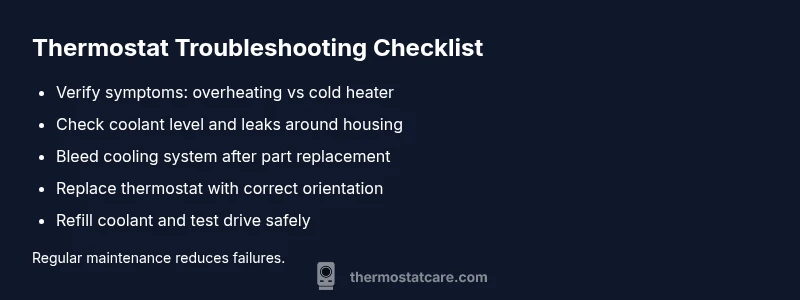
Replacing the thermostat is one of the most common DIY fixes when diagnosed as the faulty component. Begin by ensuring the engine is cool and the car is on a stable surface. Drain enough coolant into a clean container (note the coolant type and volume for refilling). Remove the upper radiator hose clamp and detach the hose to access the thermostat housing. Take out the old thermostat and gasket, clean the mounting surface, and install the new thermostat in the correct orientation (usually with the spring toward the engine). Reconnect the housing and hose, then refill coolant and bleed the cooling system to remove air pockets. Start the engine and monitor for leaks and proper temperature cycling. A test drive should show the temperature stabilizing within the normal range and the heater functioning normally. If the symptoms persist, re-check for air pockets or a related cooling-system issue. This section synthesizes practical steps from Thermostat Care’s troubleshooting framework.
Maintenance and Prevention to Avoid Future Failures
Regular coolant replacement according to the manufacturer’s schedule helps prevent thermostat sticking caused by deposits and corrosion. Use the correct coolant type and mixture, and replace worn radiator hoses and gaskets as preventive maintenance. Periodically check for leaks around the thermostat housing and keep the cooling system free of air pockets by bleeding after any cooling-system work. A healthy cooling system also pays off in better fuel economy, reduced engine wear, and more reliable heater output. Thermostat Care recommends documenting service intervals and keeping a capable toolkit on hand for easy DIY repairs when safe and feasible.
When to Seek Professional Help and What to Expect
If you’re unsure about the thermostat’s condition, or if you discover coolant leaks, head-gasket signs, or persistent overheating after a replacement, seek professional help. A certified mechanic can perform a pressure test, verify the thermostat operation, inspect the water pump, radiator, and the coolant flow path using specialized tools, and replace components as needed. Expect a diagnostic check, possible coolant flush, and a standard replacement procedure with a warranty on parts. The Thermostat Care team notes that professional intervention becomes essential when there is engine overheating, repeated failures, or complex cooling-system issues.
Steps
Estimated time: 60-90 minutes
- 1
Prepare and safety check
Park on a level surface, engage the parking brake, and ensure the engine is cold. Gather the replacement thermostat, gasket, coolant, draining pan, and basic tools. Put on gloves and eye protection.
Tip: Never open the radiator cap when the engine is hot. - 2
Inspect cooling system and locate thermostat
Identify the thermostat housing near the upper radiator hose. Look for signs of leaks around the housing and confirm you have access to drain coolant if needed. Check the coolant condition and level before proceeding.
Tip: Consult your service manual for the exact thermostat location in your model. - 3
Drain and disconnect
If required, drain enough coolant to lower the level below the thermostat. Disconnect the hose clamp on the thermostat housing and carefully detach the hose. Remove the housing bolts and lift the housing to expose the thermostat.
Tip: Keep the coolant in a sealed container for reuse or proper disposal. - 4
Remove old thermostat and gasket
Take out the old thermostat and gasket. Clean the mounting surface thoroughly to ensure a proper seal. Note the orientation of the old thermostat for correct installation of the new one.
Tip: Thermostats are directional; spring side typically faces into the engine. - 5
Install new thermostat and gasket
Position the new thermostat in the correct orientation and install the gasket or gasket sealant as directed by the manufacturer. Re-seat the thermostat housing and tighten bolts evenly to avoid leaks.
Tip: Do not overtighten; reuse new gaskets if provided. - 6
Refill and bleed the cooling system
Reconnect the hose, refill coolant to the recommended level, and bleed the system to purge air pockets. Start the engine with the radiator cap off (if safe) until the thermostat opens and hoses feel warm, then top off coolant as needed.
Tip: Run the engine to the normal operating temperature and watch for leaks. - 7
Test drive and verify
Take a cautious test drive to confirm the temperature gauge stays within the normal range and the heater produces warm air. Recheck for leaks after cooling. If the gauge spikes, re-check for air pockets or misinstallation.
Tip: If overheating recurs, stop and reassess the system or seek professional help. - 8
Document and maintain
Record the service in your maintenance log and schedule periodic coolant checks. Inspect hoses and clamps for wear over time to prevent future issues.
Tip: Routine checks reduce the risk of future thermostat failures.
Diagnosis: Engine overheats or heater cannot warm the cabin effectively
Possible Causes
- highStuck closed thermostat
- mediumStuck open thermostat
- lowAir in cooling system after work
- highLow coolant level
- lowFaulty temperature sensor
Fixes
- easyReplace the thermostat with the correct part and ensure proper gasket seating
- mediumBleed the cooling system to remove air pockets after replacement
- easyTop up or flush coolant if level is low or contaminated
- mediumAddress leaks or failed sensors with proper replacement and reseating
Questions & Answers
What are the signs of a failing car thermostat?
Common signs include engine overheating, a heater that blows cool air, a temperature gauge that reads high or fluctuates, and coolant leaks near the thermostat housing. If you notice these symptoms, address them promptly to prevent engine damage.
Common signs are overheating, weak heater, and a fluctuating temperature gauge. Check the thermostat if these appear.
Can you drive with a faulty thermostat?
Driving with a faulty thermostat is risky. A stuck-closed valve can cause rapid overheating, while a stuck-open valve reduces engine efficiency. If overheating occurs, pull over safely and seek professional help.
Driving with a bad thermostat is risky; if you overheat, stop and call for help.
How long does a thermostat replacement take?
A typical thermostat replacement can take about an hour to a few hours depending on the vehicle, tooling, and accessibility of the housing. Complex cooling systems may take longer.
Most replacements take about an hour or two, depending on the car.
Is thermostat replacement a DIY-friendly job?
Thermostat replacement is doable for confident DIYers with basic tools. Ensure safety precautions are followed, and consult your service manual for your model. If you encounter leaks or signs of deeper cooling issues, seek a pro.
Yes, but follow safety steps and the manual; don’t push if you see leaks.
Can a faulty thermostat trigger dashboard warnings?
Yes, many modern cars will trigger a cooling system warning light or the check engine light if the thermostat fails or the engine overheats. Resolve the thermostat issue promptly to reset and avoid further codes.
A warning light can come on if the thermostat fails or overheating is detected.
What other cooling-system issues mimic thermostat failure?
Low coolant level, a faulty radiator fan, a blocked radiator, or a failed water pump can mimic thermostat symptoms. A thorough cooling-system inspection can differentiate these issues.
Other cooling problems like low coolant or a bad water pump can look like thermostat trouble.
Watch Video
What to Remember
- Identify if thermostat is stuck open or closed through symptoms and testing.
- Bleed and refill coolant carefully after thermostat replacement.
- Prioritize safety and avoid driving with signs of overheating.
- Consider professional help for leaks, sensor faults, and persistent issues.