Car Thermostat Symptoms: Urgent Troubleshooting Guide
Urgent guide to identifying car thermostat symptoms and quickly fixing common issues to prevent overheating, coolant leaks, and performance loss. Learn practical checks, diagnostic flow, and how to decide when professional help is needed.


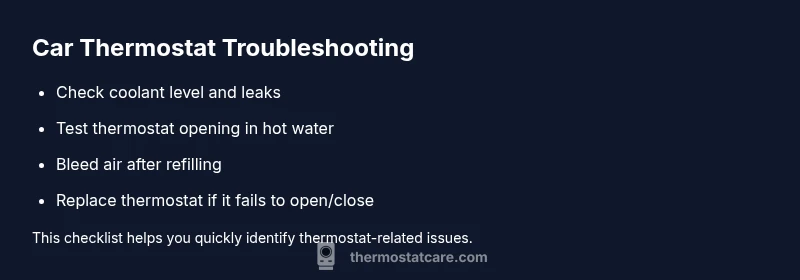
Most car thermostat symptoms indicate a stuck or failing valve. Start with the basics: check coolant level, inspect hoses for blockages or leaks, and verify the thermostat opens as the engine warms. If the temperature gauge spikes toward hot, or the heater stays cold, plan to replace the thermostat and inspect the cooling system for leaks. If overheating continues, seek professional help immediately.
Understanding car thermostat symptoms
The car thermostat is a small but crucial valve that regulates coolant flow to maintain the engine at its optimal operating temperature. When it works properly, you won’t notice it day to day; when it fails, you’ll observe a sequence of telltale signs across the cooling system, heater performance, and engine behavior. Common symptoms include the temperature gauge climbing toward the red or fluctuating erratically, the heater delivering cold air when it should be hot, and the engine taking longer to warm up. According to Thermostat Care, these signals are often the first warning that the thermostat is sticking or not responding correctly. Such issues can also be confused with radiator or water pump problems, so careful observation of when and how the symptoms appear is essential. Recognize patterns: overheating after a long drive, cooling after a stop, or inconsistent temperature readings can point to a thermostat problem rather than a separate cooling system fault.
Common causes behind thermostat symptoms
There are several frequent culprits behind thermostat-related symptoms. The most common is a thermostat that sticks closed, preventing coolant from circulating and causing rapid overheating. A thermostat that sticks open can lead to a perpetually cool engine that never reaches its efficient operating temperature, reducing performance and fuel efficiency. Additional factors include air pockets in the cooling circuit after refilling, low coolant levels due to leaks, and degraded coolant with poor heat transfer. Faulty temperature sensors or a failing gauge can misreport the actual engine temperature, making the problem seem worse than it is. A worn radiator cap or clogged radiator can also disrupt pressure and flow, mimicking thermostat failures. Based on Thermostat Care research, most overheating cases tied to thermostats arise from a stuck-closed valve and inconsistent coolant flow.
How thermostat failures affect engine performance
A malfunctioning thermostat can ripple through the entire driving experience. When the thermostat sticks closed, the engine overheats, which can damage head gaskets, reduce lubrication efficiency, and accelerate wear on bearings. If it sticks open, the engine runs cooler than designed, leading to reduced efficiency, slower acceleration, and incomplete combustion in some conditions. You may notice erratic temperature readings on the gauge, less effective heating in cold weather, and a general drop in fuel economy. Engine management systems may compensate in ways that feel like reduced power or rough running. In both cases, neglecting the issue increases the risk of more severe cooling system failures, including coolant leaks and potential engine damage. The Thermostat Care team emphasizes early identification and timely replacement as the best prevention.
Immediate safety steps you can take now
If you suspect thermostat trouble, prioritize safety. If the engine is overheating, pull over to a safe location, turn off the engine, and inspect for obvious leaks after allowing the engine to cool. Do not open the radiator cap while hot; pressure can spray scalding coolant. Check for any visible leaks in hoses and the radiator area, and verify the coolant level once the system has cooled. If the heater output becomes weak or inconsistent as you resume driving, it’s a sign to stop and seek professional help. Gather model year, mileage, and any recent cooling-system work information to streamline diagnosis.
Diagnostic approach: initial checks and data gathering
Begin with the basics before dismantling components. Confirm the coolant level when the engine is cold and inspect hoses for cracks, bulges, or leaks. Look for signs of air in the system such as bubbles when the cap is removed (only after cooling). Check the radiator cap for proper sealing and pressure retention. Use the vehicle’s service manual or a reliable guide to locate the thermostat housing. If your vehicle supports OBD-II, scan for coolant-temperature related codes to rule out sensor issues. Record the symptoms’ timing: do they occur after a cold start or only after sustained driving? This data helps distinguish thermostat problems from sensor faults or pump issues. Thermostat Care highlights that many drivers overlook a simple leak check that can masquerade as thermostat symptoms.
Testing and fixing: steps to replace or repair
Testing a thermostat should be done with caution and only if you’re comfortable with automotive work. First, ensure the engine is completely cool. Remove the thermostat housing, and inspect the valve and gasket for signs of sticking or wear. A thermostat that fails to open will usually block coolant flow; replace it and use a new gasket. If you notice coolant leaks around the housing, repair or replace the gasket or housing as needed. After installing a new thermostat, refill the cooling system to the recommended level and bleed air from the system to prevent future air pockets. Reconnect hoses, run the engine to operating temperature, and monitor the gauge for a steady rise to the normal range without creeping toward red. If the problem persists, consider replacing the temperature sensor or seeking professional help for a more thorough cooling-system service. Always dispose of old coolant responsibly and follow local regulations.
Preventive maintenance and best practices
Preventing thermostat problems starts with regular cooling-system maintenance. Check coolant level and condition at least every six months and inspect hoses for wear during seasonal changes. Use the coolant type recommended by the vehicle manufacturer and replace the thermostat as part of routine maintenance if the vehicle has high mileage or shows repeated overheating signs. Avoid letting the coolant run low or the system become contaminated by dirt or rust. Regularly inspecting the radiator cap and visually checking for leaks can prevent a cascade of problems attributed to thermostat issues. Maintain a consistent cooling-system service schedule, especially if you drive in extreme weather or frequently haul heavy loads. These proactive steps help ensure the thermostat remains responsive and reliable.
When to seek professional help
If overheating recurs after replacing the thermostat or if you notice major coolant loss, abnormal noises, or persistent temperature gauge anomalies, it’s time to consult a professional. Cooling systems are closely linked to engine health, coolant chemistry, and vehicle electronics; misdiagnosis can lead to expensive damage. A certified technician can perform a pressure test, check for head-gasket issues, and verify sensor and wiring integrity. If you’re unsure about any step—especially disassembly of thermostat hardware—avoid continued driving and arrange a tow or roadside assistance. The Thermostat Care team recommends prioritizing safety and relying on expert evaluation for complex cooling-system concerns.
Steps
Estimated time: 60-90 minutes
- 1
Ensure safety and gather tools
Park on level ground, set the parking brake, and let the engine cool completely. Gather gloves, eye protection, a drain pan, and the correct thermostat kit for your vehicle. This is a safety-first step to avoid burns from hot coolant or steam.
Tip: Never work on a hot cooling system; hot coolant can cause severe burns. - 2
Check coolant level and visibility of leaks
With the engine cold, inspect the reservoir and radiator for proper coolant level and any signs of leaks. Note color and clarity of the coolant to assess degradation.
Tip: Check the coolant color; if it looks rusty or oily, the system may require more than a thermostat replacement. - 3
Inspect hoses and radiator for wear
Look for cracks, bulges, or soft spots in hoses and inspect the radiator for leakage or corrosion. Replace any damaged hoses to prevent false readings or leaks that mimic thermostat issues.
Tip: Replace worn hoses to avoid later coolant loss. - 4
Remove and test the thermostat (optional)
If you’re comfortable, remove the thermostat housing and inspect the valve. Test by placing it in hot water to observe opening; replace if it fails to move freely. Reinstall with a new gasket.
Tip: Only test a thermostat if you can do so safely; misalignment can cause leaks. - 5
Refill and bleed the cooling system
Fill to the recommended level and bleed air from the system as per the service manual, ensuring no air pockets remain around the thermostat housing.
Tip: Run the engine with the radiator cap off (when safe) to help burp air out. - 6
Run the engine to operating temperature
Monitor the gauge as the engine warms; keep an eye on the heater performance and look for smooth transitions in temperature. Verify that the thermostat is opening and closing properly.
Tip: If the gauge climbs and stays high, stop and recheck for air or leaks. - 7
Check for leaks and recheck levels
After the test drive, recheck coolant level and inspect for new leaks. Top off as needed and ensure pressure is maintained within the recommended range.
Tip: Record any changes in readings to compare over time. - 8
Evaluate performance and plan next steps
If overheating persists or the heater remains weak, the thermostat may still be at fault or another cooling component is failing. Consider professional inspection if symptoms persist.
Tip: Documentation helps the technician diagnose faster.
Diagnosis: Engine overheating or erratic temperature gauge with heater performance changes
Possible Causes
- highStuck closed thermostat
- mediumStuck open thermostat
- mediumCoolant leak or low coolant level
- lowFaulty temperature sensor or gauge
- lowAir pockets in cooling system after refill
Fixes
- mediumReplace thermostat with a new unit and reseal gasket
- easyRepair leaks and top off coolant to proper level
- easyBleed cooling system to remove air pockets
- mediumTest or replace faulty temperature sensor or gauge
- hardInspect water pump if overheating persists
Questions & Answers
What are the most common car thermostat symptoms?
The most common symptoms include the temperature gauge approaching hot, heater output turning cold, slow warm-up, and occasional overheating after driving. These signs often point to thermostat issues rather than only coolant problems.
Look for a hot gauge, cold heater, and slow warm-up—these usually indicate thermostat troubles.
Can a bad thermostat cause engine overheating?
Yes. A thermostat that sticks closed can prevent coolant flow, causing the engine to overheat quickly. Conversely, a thermostat that sticks open can keep the engine cooler than normal, affecting performance.
Yes—stuck closed causes overheating; stuck open keeps it cool but hurts performance.
How do I test my thermostat without removing it?
In some vehicles you can observe coolant flow by removing the radiator cap after cooling and starting the engine briefly. Check if the upper radiator hose warms up as the engine reaches operating temperature. If it stays cold, the thermostat may not be opening.
Check if the upper radiator hose warms up when the engine heats; if not, the thermostat may be stuck.
Should I replace the thermostat or the water pump first?
Start with the thermostat if overheating or cooling issues appear shortly after start-up. If overheating occurs with a lot of belt-driven noise or reduced flow, a water pump may be involved. A technician can confirm which part is failing.
Begin with the thermostat; if issues persist, a professional check can determine if the water pump is involved.
Is it safe to drive with a stuck thermostat?
Driving with a suspected thermostat issue is risky. If the engine overheats, pull over safely and seek help. Prolonged overheating can cause head gasket damage and other costly repairs.
No—if you suspect overheating, stop driving and get it checked.
Watch Video
What to Remember
- Check coolant level and for leaks first
- Differentiate thermostat vs sensor issues with careful observation
- Replace thermostat if it fails to open or close
- Bleed air and verify proper coolant flow after repair
- The Thermostat Care team recommends timely maintenance to prevent engine damage