Car Thermostat Troubleshooting: Quick Fixes That Work
Thermostat Care helps homeowners diagnose and fix car thermostat problems quickly, safely, and affordably with practical, step-by-step guidance.


Most likely the thermostat is stuck open or closed, causing overheating or the engine to run cold. Start with quick checks: coolant level, hoses for leaks, and verify the radiator fans come on when the engine reaches operating temp. If these basics don’t resolve it, plan a thermostat replacement or professional service.
Why the car thermostat is a critical component
If thermostat is not working in car, the engine cannot reach its proper operating temperature or may overheat, triggering reduced efficiency, increased fuel use, and potential damage. The thermostat regulates coolant flow between the engine and radiator, coordinating with fans and the ECU. A failing unit often stems from age, mineral buildup, or improper coolant maintenance. Recognizing symptoms early can save you from expensive repairs. Thermostat Care emphasizes safe checks and a practical plan to restore temperature control in your vehicle in 2026. Regular coolant flushes and sensor tests help prevent sudden failures and keep your cooling system healthy.
Common symptoms that indicate thermostat trouble
Look for signs like engine overheating or running hotter than normal, a gauge that fluctuates between cold and hot, heater performance that’s weak or inconsistent, and coolant leaks around the housing. If the engine never warms up or stays cold, the thermostat could be stuck open. If it overheats quickly, it could be stuck closed. Variations in temperature readings or a trip to the shop for a diagnostic can confirm the issue. In some cases, a faulty temperature sensor or a failing cooling fan can mimic thermostat problems.
Safe checks you can perform before pulling parts
Start with the basics: ensure the coolant level is correct and that there are no signs of leaks under the vehicle. Inspect the radiator cap for wear and reseal if needed. Confirm the radiator fans operate when the engine reaches operating temperature by turning on the AC; if the fans don’t engage, investigate fuses or relays. Check for air pockets in the system and bleed the coolant if necessary, following your vehicle’s manual. Finally, ensure the thermostat housing is intact and not cracked. These checks are low-risk, low-cost, and often reveal straightforward fixes.
Diagnostic flow overview
A robust diagnostic flow helps you separate the likely causes from the unlikely. Start with the symptom: overheating, heater performance, or cold engine. Next, consider high-lidelity causes like a stuck thermostat (open or closed) or low coolant and air in the system. If basic checks pass, test the electrical side (sensors and fans) and look for leaks. The recommended actions progress from simple, low-cost fixes to more involved replacements. Thermostat Care recommends documenting observations and using a systematic approach to avoid guesswork.
Step-by-step: handling the thermostat (summary, not the full DIY)
Replacing a car thermostat can require tools and careful steps; this summary outlines the approach. Gather the right gasket, coolant, and tools, then locate the thermostat housing. Drain coolant to below the thermostat, remove the housing, replace the thermostat with the correct orientation and gasket, reassemble, top off coolant, bleed air, and test drive for leaks and proper temperature behavior. For safety, consult a service manual or a professional if you are unsure.
Safety, common mistakes, and practical tips
- Always allow the engine to cool before opening the cooling system; hot coolant can cause severe burns. - Do not mix different coolants unless the manufacturer approves it. - Avoid overfilling the reservoir; too much coolant can cause pressure issues. - Use fresh coolant as recommended and dispose of old coolant properly. - If you smell or see signs of persistent leaks, stop driving and seek assistance.
Prevention tips to extend thermostat life
Regular coolant maintenance, including the correct mix and periodic flushing, reduces mineral buildup that can seize the thermostat. Keep an eye on the temperature gauge and heater performance as early warning signs. Address small leaks promptly, and ensure the radiator fans engage reliably. A well-maintained cooling system reduces the chances of a premature thermostat failure and helps your car run efficiently in various climates.
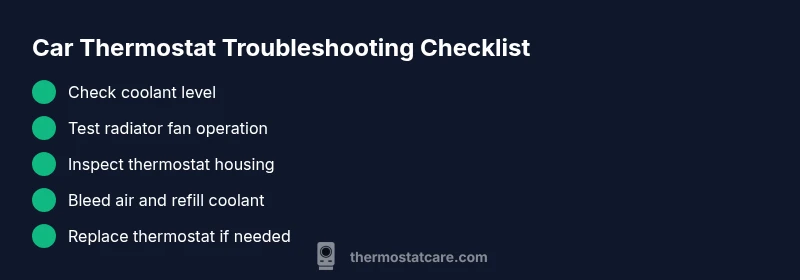
Quick troubleshooting checklist
- Check coolant level and look for leaks
- Confirm radiator fans operate with the engine warm
- Inspect the thermostat housing and hoses for damage
- Bleed air if your vehicle requires it
- Test drive and monitor temperatures for consistency
Steps
Estimated time: 60-90 minutes
- 1
Gather tools and materials
Collect the required tools (socket set, screwdrivers, pliers), a new thermostat with gasket, fresh coolant, a drain pan, and safety gear. Having everything on hand prevents mid-task trips to the garage, which can waste time and lead to mistakes.
Tip: Lay a clear workspace and organize bolts by location to ease reassembly. - 2
Disconnect the battery and locate the thermostat
Disconnect the negative battery terminal to avoid electrical shorts. Then locate the thermostat housing, which sits between the engine and radiator. Refer to your vehicle manual or a trusted diagram to confirm the exact location.
Tip: Double-check your model’s coolant routing to avoid damaging hoses. - 3
Drain coolant and remove the housing
Carefully drain coolant to below the thermostat level using a drain pan. Remove the housing bolts and lift off the cover to reveal the thermostat. Take note of gasket orientation for proper replacement.
Tip: Keep old coolant contained and dispose of it properly. - 4
Replace thermostat and gasket
Remove the old thermostat, clean the mating surfaces, and install the new thermostat with the correct orientation (check arrows or spring direction). Install a fresh gasket or sealant as specified by the manufacturer.
Tip: Do not overtighten bolts; tighten to the manufacturer’s torque spec. - 5
Reconnect lines, refill coolant, and bleed air
Reattach hoses, refill the cooling system with the correct coolant mix, and bleed any air according to the manual. Air pockets can cause hot spots and poor temperature regulation.
Tip: Run the engine with the radiator cap off initially to help air escape. - 6
Restart and test
Reconnect the battery, start the engine, and monitor the temperature gauge. Check for leaks around the housing and hoses. Take a short test drive to ensure the temperature stabilizes and the heater functions normally.
Tip: Watch for sudden temperature spikes or warning lights. - 7
Final checks and cleanup
Inspect for any leaks after the test drive and confirm the cooling system maintains proper levels. Record the maintenance in your vehicle log and reset any dashboard service reminders if applicable.
Tip: Keep a spare gasket and some coolant for future top-offs. - 8
What to do if it doesn’t resolve
If the engine still overheats or won’t reach operating temperature after replacement, check for underlying issues such as a stuck open/closed sensor, water pump problems, or a coolant flow blockage. In many cases, professional diagnosis is warranted.
Tip: Don’t drive aggressively with overheating; this can cause engine damage. - 9
Estimated total time
60-90 minutes for a typical thermostat replacement, depending on vehicle access and tool availability.
Tip: If you’re uncertain at any step, call a professional rather than risk engine damage.
Diagnosis: Engine overheating or not warming properly
Possible Causes
- highThermostat stuck closed
- highThermostat stuck open
- mediumLow coolant level or air in the system
- lowFailed temperature sensor or fan issue
Fixes
- easyReplace thermostat if stuck closed or open; ensure correct orientation and gasket
- easyBleed air and top off coolant; check for leaks
- mediumInspect and replace faulty temperature sensor or fan relay
- mediumRepair coolant leaks and refill with proper coolant mix
Questions & Answers
What are the signs that my car thermostat is failing?
Common signs include overheating, fluctuating temperature gauge, lack of heat from the heater, and occasional coolant leaks near the thermostat housing. If you notice these, inspect the thermostat and related cooling components.
Common signs are overheating and a fluctuating temperature gauge. If you notice these, check the thermostat and cooling system.
Can a car run with a broken thermostat?
A car can continue to run with a faulty thermostat, but it will operate inefficiently and may overheat or never reach proper temperature. Prolonged use can damage engine components and reduce fuel economy.
A car can run with a faulty thermostat, but it risks overheating and engine damage if ignored.
Is replacing a thermostat a DIY job or should I hire a mechanic?
Replacing a thermostat is doable for experienced DIYers with proper tools and a service manual. If you’re unsure about coolant handling or torque specs, seek a professional to avoid leaks or engine damage.
It’s doable for experienced DIYers; if you’re unsure about steps, hire a professional.
Should I change the coolant when replacing the thermostat?
Yes. Replacing the thermostat is a good time to flush and replace coolant if it’s old or contaminated. Use the correct mix and dispose of old coolant safely.
Yes—consider replacing coolant if it’s old or contaminated.
How long does a thermostat replacement take?
Most replacements take about an hour to 90 minutes, depending on vehicle access. More complex installations may take longer.
Usually about an hour to an hour and a half, depending on the car.
Watch Video
What to Remember
- Identify whether the issue is thermostat-related or another cooling system fault
- Prioritize safe checks before parts replacement
- Follow a logical diagnostic flow from simple checks to replacement
- Use proper coolant and bleed air after refilling
- Call a professional if overheating persists after replacement