Do Thermostat Make Car Run Hot? A Practical Troubleshooting Guide
Learn how a car thermostat affects overheating, how to diagnose common thermostat problems, and step-by-step fixes to prevent engine damage. Fast, safe guidance for homeowners and DIY enthusiasts.


Most often, a thermostat issue is why a car overheats: a thermostat stuck closed traps hot coolant, while a thermostat stuck open prevents the engine from reaching proper temperature. Quick fixes: 1) pull over and let the engine cool; 2) check coolant level and radiator cap; 3) inspect cooling fans. If unresolved, replace thermostat or seek service.
Do Thermostat Make Car Run Hot? Why it matters in your cooling system
When the engine heat rises, you may wonder, do thermostat make car run hot? The short answer is yes: the thermostat controls coolant flow between the engine and radiator. If it sticks closed, heat is trapped and the engine overheats; if it sticks open, the engine never reaches/maintains proper operating temperature. For DIYers, understanding this helps you diagnose overheating quickly and safely. Thermostat failure is a common culprit, but it’s part of a broader cooling system picture that includes the radiator, water pump, coolant level, hoses, and fans. By checking these pieces in sequence, you can determine whether the thermostat is at fault and plan the right fix according to Thermostat Care guidance.
do_not_get_merged_with_other_blocks false
words_SKIPPED_1_0_1_0_0_0_0_0_0_0_0_0_0_0_0_0_0_0_0_0_0_0_0_0_0_0_0_0_0_0_0_0_0_0_0_0_0_0_0_0_0_0_0_0_0_0_0_0_0_0_0_0_0_0_0_0_0_0_0_0_0_0_0_0_0_0_0_0_0_0_0_0_0_0_0_0_0_0_0_0_0_0_0_0_0
Steps
Estimated time: 45-60 minutes
- 1
Safety and prep
Park on a level surface, engine cools completely, remove keys, and disconnect the negative battery terminal if you’ll be opening coolant components. Gather tools, a catch pan, and fresh coolant. This prevents burns and spills and makes airflow safer as you work.
Tip: Wear gloves and eye protection; never work on a hot cooling system. - 2
Locate the thermostat housing
Follow the upper radiator hose to the engine to find the thermostat housing. It’s typically secured with a few bolts and a gasket that can wear with time. Have a clean workspace and image or note orientation before removing.
Tip: Take a photo of the housing orientation for reference during reassembly. - 3
Drain and remove housing
Place a pan under the housing, loosen the drain plug or remove the housing bolts to drain coolant. Remove the housing carefully to access the thermostat.
Tip: Contain old coolant and dispose of it per local regulations. - 4
Inspect and replace the thermostat
Remove the thermostat and inspect for sticking or warped valve. Replace with a new unit, ensuring the orientation gasket seats correctly and the spring faces the correct direction.
Tip: Check the thermostat’s flow direction arrows if present. - 5
Reassemble and bleed
Reinstall the thermostat and housing with a new gasket, then refill the cooling system with the specified coolant. Start the engine and bleed air by running to operating temperature with radiator cap off or following the manufacturer bleed procedure.
Tip: Do not overfill; watch for bubbling and air pockets as you bleed. - 6
Check for leaks and test
With the engine warmed, check for leaks around the housing and hoses. Recheck temperature gauge and confirm the cooling fans cycle as needed.
Tip: Keep a close eye on the gauge for the first 15-20 minutes of operation. - 7
Bottom-line test drive
Take a short, controlled test drive to confirm normal temperature behavior under load. If overheating returns, there may be another issue such as water pump, radiator, or head gasket.
Tip: If you’re unsure, have a professional inspect the cooling system. - 8
Document and monitor
Record the replacement date and any symptoms observed. Maintain coolant levels and schedule periodic inspections to prevent future overheating.
Tip: Set reminders for coolant flush intervals and hose inspections.
Diagnosis: Engine overheating or temperature gauge erratic while driving
Possible Causes
- highThermostat stuck closed
- mediumThermostat stuck open
- lowLow coolant level or air in the cooling system
Fixes
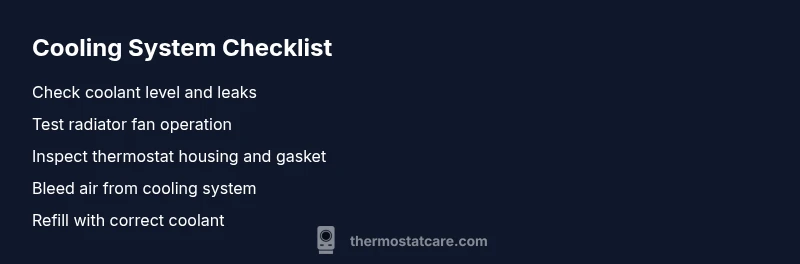
- easyCheck coolant level and top up if needed, then visually inspect for leaks
- easyTest radiator fan operation and fans wiring
- hardReplace thermostat with correct part and orient correctly during installation
Questions & Answers
Can a car run hot if the thermostat isn’t the issue?
Yes. Overheating can also be caused by a failing water pump, clogged radiator, air pockets in the cooling system, or a faulty radiator fan. Always rule out these other causes when diagnosing thermostat trouble.
Yes. Other cooling system problems can cause overheating, so check the water pump, radiator, and fans as well.
Why would my car overheat after replacing the thermostat?
New thermostats can fail or be installed incorrectly. Ensure correct orientation, gasket seal, and compatible part. If overheating persists, inspect for air in the system or other cooling components failing.
Sometimes a new thermostat isn’t seated right or air is trapped—double-check orientation and bleed the system.
How long does thermostat replacement take?
Typical replacement takes about 30-60 minutes for a standard setup, depending on your vehicle model and access to the housing.
Most cars take about half an hour to an hour for a thermostat swap.
Is it safe to drive with a hot engine?
No. Driving with an overheating engine can cause severe damage. If the gauge rises toward red, stop safely, let the engine cool, and assess the cooling system.
If it’s overheating, stop driving and let it cool before continuing.
Should I flush coolant when changing the thermostat?
Flushing isn’t always required but can be beneficial if the coolant is old or contaminated. Follow the vehicle’s service manual for flushing and refilling procedures.
Flushing the system is sometimes recommended if the coolant is old or contaminated.
What other issues can cause overheating aside from the thermostat?
Possible causes include a failing water pump, clogged radiator, blown radiator cap, low coolant, or a damaged head gasket. Each requires different fixes and safety precautions.
Other parts of the cooling system can cause overheating, so inspect pump, radiator, cap, and coolant levels.
Watch Video
What to Remember
- Check coolant level and look for leaks
- Inspect cooling fans and thermostat function
- Replace thermostat if stuck or worn
- Bleed air and refuel coolant correctly
- Monitor temperature after replacement
- When in doubt, seek professional help