Is My Thermostat Bad in My Car? A Practical Troubleshooting Guide
Is my thermostat bad in my car? Learn to identify symptoms, safely test, and fix a failing car thermostat with step-by-step guidance from Thermostat Care. Quick checks, diagnostic flow, and maintenance tips.


According to Thermostat Care, if your car is showing overheating, erratic temperature readings, or a weak heater, the thermostat is often the culprit. In most cases, a stuck-closed thermostat causes rapid overheating, while a stuck-open unit leads to a cooler engine and longer warm-up times. Quick fix: safely check coolant level, top off if needed, and replace the thermostat if symptoms persist. If unsure, consult a pro.
Is my thermostat bad in my car? Quick context and why it matters
When your vehicle’s engine runs, the thermostat acts like a gatekeeper for coolant, deciding when to let coolant flow between the engine and radiator. If it sticks closed, the engine can overheat, potentially causing head gasket damage or warped components. If it sticks open, the engine may never reach optimal operating temperature, reducing efficiency and heater performance. These outcomes are not just about comfort; they can affect fuel economy, emissions, and long-term reliability. According to Thermostat Care, a failing thermostat is a common, fixable issue that many drivers can address with careful diagnosis and safe handling. This guide walks you through symptoms, safe checks, and practical repair paths so you can determine whether a DIY fix is feasible or if professional help is warranted. The goal is to empower you to act quickly without causing harm to yourself or your vehicle.
Common symptoms of thermostat failure
There are several telltale signs your thermostat may be failing in a car. Watch for overheating at normal speeds, a temperature gauge that floats or fluctuates unpredictably, a heater that blows cold air, or a slow or never-warming engine in cold weather. Some drivers notice a persistent coolant smell or visible leaks around the thermostat housing. In many cases, the underlying cause is a thermostat that won’t open or close as it should, but the symptoms can resemble issues in other cooling system components. The Thermostat Care team found that symptoms often mimic sensor or wiring faults, so a methodical approach helps avoid misdiagnosis. If you notice multiple symptoms together, treat it as a high-priority maintenance issue and start with basic checks before diving deeper.
Immediate checks you can perform safely
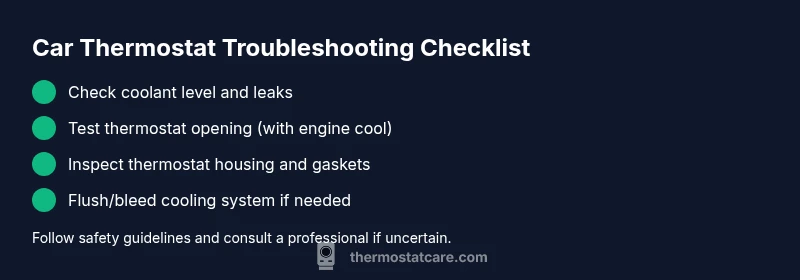
You can start with non-destructive, low-risk checks to gauge whether the thermostat is likely involved. Ensure the engine is cool before touching anything. Check the coolant level in the reservoir and radiator (when safe) and verify there are no obvious leaks or crust around hoses. Inspect the radiator cap for wear and ensure clamps are tight. Start the engine and observe the cooling fan operation and radiator hose feel. If the coolant remains low, top off with the correct coolant mix for your vehicle and run the engine to see if the temperature stabilizes. If the gauge still wanders or the heater stays cold, the thermostat could be the root cause. Thermostat Care emphasizes not forcing the system—safety comes first.
What causes thermostat failures and how to tell them apart
Thermostat failures typically fall into two camps: stuck closed or stuck open. A stuck-closed thermostat usually leads to sudden overheating and a rising temperature gauge, followed by warning lights. A stuck-open thermostat often keeps the engine cooler than normal, causing the heater to underperform and the engine to take longer to reach operating temperature. Other contributing factors include aged or contaminated coolant, a faulty temperature sensor, or a clogged cooling system. Distinguishing between these scenarios requires a combination of symptom tracking and targeted checks rather than assuming a single fix.
Diagnostic flow overview: symptom to diagnosis to solution
A systematic diagnostic approach helps you avoid guesswork. Start with the symptom (overheating, cold heater, or fluctuating gauge), perform basic safety checks (coolant level, leaks, fan operation), and move to more specific tests (thermostat function, temperature readings, wiring integrity). The diagnostic flow aligns with practical, real-world constraints, guiding you toward either a DIY thermostat replacement or a professional service if complex cooling system work is required.
Fix options and when to replace vs repair
If the thermostat is confirmed faulty, replacement is often the most reliable fix. In some cases, a thermostat can be cleaned and reinstalled, but failure risk remains high if components degraded. Thermostat Care recommends replacing the thermostat with a new unit and inspecting the entire cooling circuit for blockages, sensor faults, or air pockets that can mimic thermostat issues. If you have recent coolant service history, ensure the system was properly purged of air to prevent lingering overheating problems. When in doubt, consult a mechanic to avoid costly missteps.
Steps
Estimated time: 60-120 minutes
- 1
Confirm symptoms and safety
Begin by noting the exact symptoms (overheating, cold heater, erratic gauge). Ensure the vehicle is on a flat surface, the engine is cool, and you have protective gloves ready. If you smell coolant or see steam, stop and wait for it to cool before proceeding.
Tip: Never open a hot radiator cap or coolant reservoir. - 2
Check coolant level and condition
With the engine cool, inspect the coolant reservoir and radiator hoses. Look for discoloration, sludge, or contaminants. Top off with the correct coolant if levels are low, following the manufacturer's specification.
Tip: Use a clean funnel and only pour after confirming the target coolant type. - 3
Inspect thermostat housing and gaskets
Locate the thermostat housing at the end of the upper radiator hose. Check for signs of leakage, a warped housing, or worn gaskets. If you can access the thermostat, consider removing and inspecting it for debris or corrosion.
Tip: Take photos before disassembly to aid reassembly. - 4
Test thermostat function (basic)
With appropriate tools, perform a basic test by removing the thermostat and placing it in hot water to observe opening behavior. Compare opening temperature with the spec sheet; replacement is recommended if the opening is sluggish or incomplete.
Tip: Only perform this test if you have the proper tools and a safe workspace. - 5
Inspect cooling system for air pockets and leaks
Purge air from the system if the heater is weak or the gauge fluctuates. Look for leaks around hoses, clamps, and the water pump. A cooling system pressure test can help identify hidden leaks.
Tip: Even small air pockets can disrupt cooling and mislead thermostat diagnosis. - 6
Replace thermostat or seek pro help
If the thermostat fails the opening test or symptoms persist after checks, replace the thermostat with a new unit. Refill and bleed the cooling system, then run the engine to operating temperature and verify stable temperature readings.
Tip: If you’re unsure about re-bleeding the system, consult a professional to avoid air lock.
Diagnosis: Engine overheating, erratic temperature gauge, or weak heater output
Possible Causes
- highThermostat stuck closed
- highThermostat stuck open
- mediumThermostat sensor or wiring fault
- lowCooling system blockage or low coolant
Fixes
- easyIf stuck closed, replace thermostat and inspect upper radiator hose for pressure
- mediumIf stuck open, check coolant flow and replace thermostat; flush cooling system
- easyRepair sensor/wiring with diagnostic tool; replace temp sensor
- mediumTop off coolant and purge air; inspect radiator cap; perform a pressure test of the cooling system
Questions & Answers
What are the most common signs that my car thermostat is failing?
Frequent overheating, fluctuating temperature gauge, and weak cabin heat are common signs. You may also notice a coolant leak around the thermostat housing. Start with a cooling system check and coolant level, then test the thermostat’s operation.
Common signs include overheating and fluctuating gauges. Start with a cooling system check and then test the thermostat.
Can a faulty thermostat cause engine damage?
Yes. A thermostat that doesn’t regulate temperature properly can cause overheating, warping, and gasket failure. Proactive diagnosis and replacement prevent long-term engine damage.
Yes. A failing thermostat can lead to overheating and engine damage if not addressed.
Is it safe to drive with a suspected thermostat problem?
If you notice overheating, pull over safely and shut off the engine to prevent damage. Do not drive long distances with a suspected thermostat issue until diagnosed.
If overheating occurs, stop driving and have it checked. Driving with a suspected thermostat problem isn’t safe.
How long does thermostat replacement typically take?
Replacement time varies by vehicle, but DIY replacement can take 1–2 hours in a typical car with accessible thermostat housing. A shop may take longer depending on access and system bleeding requirements.
Replacement usually takes roughly an hour or two for a common car. A shop may need more time for bleeding and checks.
Should I flush the cooling system during thermostat replacement?
Flushing can remove contaminants and improve cooling efficiency. If you’ve had infestations of debris or coolant contaminants, a flush is worth considering, otherwise replacement alone may suffice.
A coolant flush is often a good idea if the system has debris or poor coolant quality, but not always required with a simple thermostat swap.
How can I prevent thermostat problems in the future?
Maintain proper coolant levels, use the recommended coolant type, and follow your vehicle’s maintenance schedule for radiator and water pump checks. Regular inspections help catch issues before they evolve.
Keep up with coolant maintenance and regular cooling-system checks to prevent thermostat trouble.
Watch Video
What to Remember
- Isolate symptoms and safety first before DIY fixes
- Stuck-closed vs stuck-open explain overheating vs cold heater
- Replace thermostat with a new unit if basic checks don’t fix the issue
- Thermostat maintenance reduces future cooling problems
- The Thermostat Care team recommends professional help if you’re unsure