What Causes a Car Thermostat to Fail: Urgent Troubleshooting Guide
Urgent, practical guide to diagnose what causes a car thermostat to fail and fix it safely. Learn symptoms, tests, and step-by-step replacement tips from Thermostat Care.


The most common reason a car thermostat fails is that the valve sticks open or closed, usually from buildup, corrosion, or a degraded gasket. A stuck-open thermostat prevents the engine from heating properly, causing weak heater output and longer warm-up times. A stuck-closed thermostat causes overheating and potential engine damage. Quick fix: inspect for coolant flow, test the thermostat’s opening, and plan a replacement if symptoms persist.
Understanding how car cooling systems work and why thermostats fail
In car cooling systems, the thermostat regulates coolant flow between the engine and radiator. The thermostat sits between the engine and radiator and opens or closes to control that flow based on temperature. When it fails, the balance is lost and you’ll notice symptoms before major damage occurs. Understanding what causes thermostat to fail in car helps you diagnose quickly and act before a minor fault becomes a costly repair. Common culprits include aging seals, mineral buildup from hard coolant, contaminated coolant, and, in some cases, improper coolant mixture. Even a sloppy replacement can trap air in the system, making the temperature readings misleading. This section explains how a failed thermostat alters heat transfer, how it interacts with the radiator fan, and why both engine temperature and cabin heating can suffer. By recognizing these dynamics, you’ll know where to look first and what questions to ask when you start testing.
Common failure modes: stuck open vs stuck closed
The thermostat is a mechanical valve that should open at a specific temperature. When the wax pellet or spring wears out, the valve can get stuck either open or closed. A stuck-open thermostat never reaches operating temperature, causing sluggish warm-up and weak cabin heat. It also leaves the engine running cooler, which can trick the thermostat gauge and reduce fuel efficiency. A stuck-closed thermostat stops coolant from circulating and causes overheating, which can warp head gaskets and damage the water pump if the condition persists. In many cars the failure is gradual rather than dramatic, so you’ll notice a progression of symptoms. Correct diagnosis requires checking coolant flow, checking the gauge, and validating the thermostat’s opening with a controlled test, not just relying on temperature readings alone.
Symptoms to watch for that point to a thermostat issue
Look for a combination of signals rather than a single clue. Overheating on the gauge or warning light, sudden temperature spikes, or erratic temperature readings can indicate a thermostat issue. Weak or no heat in the cabin during cold weather is another classic sign of a thermostat stuck open. If the engine warms up very slowly or never seems to reach normal operating temperature, that is also a sign. Finally, you may notice coolant on the ground next to the engine, a sweet smell indicating coolant leakage, or foamy coolant in the reservoir if the thermostat is failing and failing seals are present. Remember: multiple symptoms together strengthen the case for a thermostat problem rather than another cooling component.
How to assess the cooling system without specialized tools
Begin with the basics: check the coolant level in the reservoir when the engine is cold, and inspect hoses for cracks or leaks. Turn on the heater to confirm you’re getting any heat; if not, that’s a red flag. Inspect the thermostat housing for signs of contamination or a stuck seal. If you can access the thermostat, you can perform a simple functional test by removing the thermostat and testing its opening in hot water outside the engine, or using a mechanical temperature tester. Disconnect the battery while performing any disassembly to reduce risk, and never work on a hot cooling system. Document all findings with photos so you can compare before and after.
Practical tests you can perform safely at home
Safety first: wait until the engine is cool, wear gloves, and work in a ventilated area. Check coolant color and clarity; milky or rusty coolant can indicate corrosion. After confirming the thermostat’s housing and related hoses look intact, consider a controlled cooling test by warming the engine to the thermostat operating temperature and watching for the thermostat to open. If you have access to a thermometer and a surface-stable test setup, you can observe the response time of the thermostat as the coolant reaches the expected temperature. If in doubt, skip the test and proceed to replacement instead—your car’s diagnosis should be conservative to avoid misinterpretation.
What to do if you suspect air in the cooling system
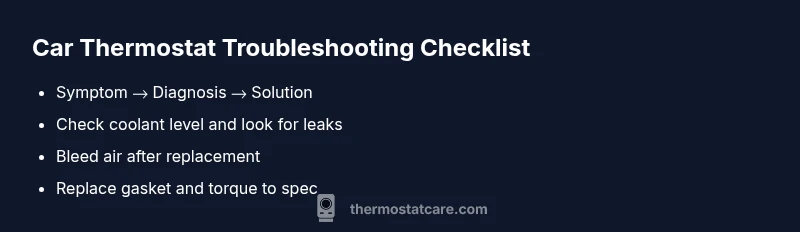
Air pockets can mimic thermostat failure by causing inconsistent temperatures. Start by slowly bleeding the cooling system according to your vehicle’s service manual. Refill coolant to the recommended level and recheck for leaks. Start the engine and let it idle to operating temperature with the radiator cap carefully loosened (if applicable) to release trapped air—only do this if you’re confident in your car’s design and the system’s pressure safety. If the symptoms don’t resolve after bleeding, a thermostat replacement may be necessary.
Safety and professional help, plus maintenance tips
Never open pressurized lines or remove the radiator cap when the system is hot. Use the correct coolant type and fresh gasket, and torque bolts to the manufacturer’s spec. If you’re uncertain at any point, or if you notice a persistent leak or a fluctuating temperature gauge after a replacement, stop and consult a professional. Regular cooling-system maintenance—coolant flushes, hose inspections, and proper coolant ratios—helps prevent premature thermostat failures.
Steps
Estimated time: 60-90 minutes
- 1
Prepare and safety-check
Park on level ground, engine cold. Disconnect the battery, wear gloves, and gather the tools you’ll need. Drain some coolant if required by your approach and set up a clean catch basin. This protects you from spills and keeps the system clean.
Tip: Always work with a cold engine to avoid burns from hot coolant. - 2
Locate thermostat housing
Find the thermostat housing connected to the engine block. Note gasket orientation and take photos before removal so you can reinstall correctly. Loosen clamps and remove the housing carefully, watching for residual coolant.
Tip: Keep the gasket from tearing; a damaged gasket will leak after reassembly. - 3
Remove old thermostat
Take out the old thermostat and inspect the housing and seals for wear. Compare the new part to ensure you have the correct model. Clean the seating surface to remove old gasket material.
Tip: Check the thermostat’s valve and spring for sticking or corrosion. - 4
Install new thermostat
Install the new thermostat with the correct orientation and a fresh gasket. Refit the housing, snug the bolts per spec, and connect any sensors or hoses that were removed.
Tip: Use the manufacturer’s torque specs to avoid over-tightening. - 5
Refill and bleed coolant
Refill the cooling system with the correct coolant mixture. Bleed air according to your vehicle’s procedure to prevent air pockets that mimic thermostat failure.
Tip: Keep a watchful eye for air bubbles and repeat bleeding if necessary. - 6
Run and monitor
Start the engine and bring it to operating temperature with the heater on. Check for leaks and ensure the thermostat opens and closes as the temperature changes. Observe the gauge for steady readings.
Tip: Don’t drive long distances until you confirm stable temperature behavior. - 7
Final safety check and test drive
Let the engine cool, then perform a short test drive. Reconfirm coolant level after cooling. If anything abnormal appears, recheck connections or seek professional help.
Tip: Document observed symptoms and changes for reference.
Diagnosis: Engine overheating or weak cabin heat with inconsistent temperature readings
Possible Causes
- highStuck closed thermostat
- mediumStuck open thermostat
- lowAir pockets in cooling system
- lowFaulty temperature sensor or gauge
Fixes
- mediumReplace thermostat with new gasket; bleed cooling system after installation
- mediumReplace thermostat and coolant if signs persist after replacement
- easyBleed air from cooling system and top up coolant; verify no leaks
- mediumReplace faulty temperature sensor or gauge if readings don’t align with actual temp
Questions & Answers
What are the common signs that a car thermostat is failing?
Common signs include engine overheating, poor heater performance, and a fluctuating temperature gauge. You may also notice slow warm-up or steam from the engine bay. If multiple symptoms appear together, the thermostat is a strong candidate for failure.
Look for overheating, poor heat, and a shaky temperature gauge as clues the thermostat may be failing.
Can driving with a faulty thermostat damage the engine?
Yes—if the thermostat sticks closed, overheating can warp metal components and seals. A stuck-open thermostat can lead to prolonged overheating of the cooling system and reduced lubrication. Regular checks reduce risk of serious damage.
Yes, overheating is risky—it can cause head gasket damage over time.
Is it safe to drive a car with a suspected thermostat issue?
If the temperature gauge rises quickly or the heater stops producing heat, pull over and stop driving. Driving further can cause damage. Have the vehicle inspected before resuming normal driving.
If you notice overheating, stop and get it checked before continuing.
How long does it take to replace a thermostat?
DIY thermostat replacement typically takes about 60-90 minutes, depending on the vehicle and access. Professional service may be faster or slower based on the engine layout and cooling-system design.
It usually takes about an hour to replace a thermostat yourself.
Should coolant be replaced when replacing the thermostat?
Yes. Replacing the thermostat is a good time to refresh coolant and inspect hoses for wear. Refill to the recommended level and check for leaks after the procedure.
Yes—refresh coolant and check hoses when you replace the thermostat.
Watch Video
What to Remember
- Inspect coolant condition before replacement.
- Replace thermostat only after confirming symptoms.
- Bleed air from cooling system after replacement.
- Follow factory torque specs during installation.
- If unsure, consult a professional promptly.