Car Thermostat Issue Troubleshooting: Fast, Practical Help
Urgent car thermostat issue guidance for homeowners and DIY enthusiasts. Learn how to diagnose overheating, cooling, and heater problems with a practical, step-by-step approach.


Most car thermostat issues start with an overheating engine or one that runs cooler than normal. The quickest fix is to verify the cooling system, then inspect the thermostat for sticking or failure. If the thermostat is stuck closed, replace it; if stuck open, the engine may not reach operating temperature. Safety first: never open a hot radiator cap.
Why the car thermostat issue matters and how it shows up
According to Thermostat Care, the thermostat is a small valve that regulates coolant flow between the engine and radiator. When it sticks or fails, the engine can overheat, run too cool, or produce poor heater performance. In modern vehicles, a malfunctioning thermostat can trigger the check engine light or cause fans to cycle incorrectly. Addressing a thermostat issue promptly protects the engine from overheating damage and helps maintain cabin comfort. Common signs include a rising or dropping temperature gauge, fluctuating heat, coolant smells, and occasional coolant leaks from the hose connections near the thermostat housing. Homeowners and DIY enthusiasts should treat thermostat faults as urgent, especially in hot weather or when you notice steam from the hood. The Thermostat Care team recommends starting with basic cooling system checks before replacing components to avoid unnecessary parts changes.
Common symptoms that signal a thermostat problem in your car
When the thermostat begins to fail, it often betrays itself through the dashboard gauges and the heater. A thermostat issue in car scenarios typically shows one or more of these: the temperature gauge stays high or never reaches the correct range, the engine overheats under normal driving or sits at an abnormally low temperature, the radiator fans run continuously or not at all, and the heater delivers weak or inconsistent warmth. You may also notice coolant on the ground, a coolant odor, or bubbling sounds from the reservoir. Even subtle changes, like longer warm-up times or more frequent coolant top-offs, can indicate a thermostat problem. The Thermostat Care team emphasizes that these signals should be treated as urgent, especially before road trips or during extreme weather. Remember that other cooling system issues can mimic thermostat faults, so use a process of elimination to confirm the thermostat as the culprit.
Quick checks you can perform before diving in
Before you dismantle anything, rule out the simplest causes. Check the coolant level in both the overflow reservoir and radiator when cold, and inspect for visible leaks around hose clamps and the thermostat housing. Confirm the radiator and cooling fans operate when the engine warms up. A faulty fan or blown fuse can masquerade as a thermostat issue, leading you to replace the thermostat unnecessarily. Ensure the thermostat housing is clean and free of debris that could hinder the thermostat's movement. If you find coolant low, top it up with the recommended type for your vehicle and bleed air from the cooling system according to the owner's manual. These initial checks can save time and money and reduce the risk of accidental burns or chemical exposure.
Diagnostic flow: symptom → diagnosis → solutions
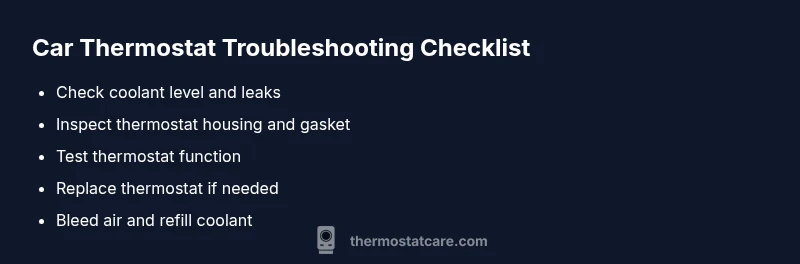
Symptoms guide you toward a diagnosis, which then points to a solution. For overheating, consider a thermostat that stuck closed as a likely cause; for persistent underheating, a stuck-open thermostat is plausible. If thermometer readings are erratic, this might indicate sensor or wiring issues. When in doubt, proceed through a structured flow: verify cooling system integrity, test thermostat operation, inspect the thermostat housing, replace if necessary, then refilled and bleed coolant. If the issue persists after thermostat replacement, consider rising temperatures due to radiator blockage or water pump problems. The goal is to confirm the thermostat is the root cause before replacing other parts, to avoid unnecessary repairs.
Safety and professional help: when to call a mechanic
Working on the cooling system can be hazardous due to hot fluids and pressurized components. Always let the engine cool before opening the radiator cap or thermostat housing. Wear gloves and eye protection, use the correct coolant type, and dispose of old coolant responsibly. If you’re uncomfortable with pressure tests, back-flushing, or removing components, don’t hesitate to contact a qualified technician. Urgent professional help is warranted if you notice steam, significant coolant loss, a high-pitched belt noise, or repeated overheating despite basic checks. A mechanic can perform pressure tests and verify the accuracy of temperature readings with diagnostic tools, ensuring a safe and reliable repair.
Prevention and maintenance: keep it reliable
Preventing thermostat issues starts with regular cooling system maintenance. Schedule coolant flushes at manufacturer-recommended intervals, inspect hoses for cracks or leaks, and ensure the radiator is free of debris. Use the correct coolant concentration and mixed ratio as specified by your vehicle’s manual. Monitor the temperature gauge and heater performance, especially before long trips in extreme temperatures. If you notice a rise in temperature or erratic readings, address it promptly—delay can escalate to serious engine damage. Keeping the cooling system clean and properly charged reduces the risk of thermostat failures and extends engine life.
Final thoughts and quick recap
A thermostat issue in car scenarios is a symptom-rich problem that can escalate quickly if ignored. By performing simple checks, following a structured diagnostic flow, and knowing when to call a professional, you can protect your engine and maintain cabin comfort with confidence. The key is acting early, using the right parts, and validating results after each fix. This approach minimizes downtime and avoids costly misdiagnoses.
Steps
Estimated time: 1-2 hours
- 1
Gather safety gear and tools
Put on gloves and eye protection. Gather a socket set, screwdriver, coolant, and drainage pan. Have the owner's manual handy for torque specs and step-by-step references.
Tip: Work on a cool engine to avoid burns. - 2
Locate the thermostat housing
Find the housing near the top radiator hose. Take pictures before removing any bolts to aid reassembly. Disconnect the battery if you plan any electrical work around the sensor.
Tip: Label hoses and pay attention to clamps. - 3
Drain coolant and remove housing
Place a drain pan under the housing, loosen the drain valve or cap, and drain the coolant. Remove the housing bolts and carefully lift the thermostat out.
Tip: Keep track of gaskets; reuse if in good condition. - 4
Inspect thermostat and gasket
Examine the thermostat for sticking or visible damage. Check the gasket for wear or cracks. Replace if needed to prevent leaks.
Tip: Handle the thermostat gently to avoid bending. - 5
Install new thermostat and gasket
Place the thermostat in the correct orientation as per the flow direction. Re-seat the gasket and bolt the housing back on with proper torque.
Tip: Lubricate gasket lightly with coolant to seal. - 6
Refill coolant and bleed air
Refill the cooling system with the correct coolant mixture. Start the engine with the radiator cap off (when safe) to bleed air until bubbles stop, then re-install cap.
Tip: Keep a close eye on the gauge during bleed. - 7
Check for leaks and test drive
Inspect all hoses for leaks. Take a short test drive and monitor temperature and heater output. Recheck coolant level after the engine cools.
Tip: If the temperature gauge behaves abnormally, stop and recheck. - 8
Final verification
Coolant level should be stable with no leaks. The engine should reach normal operating temperature and the heater should provide consistent warmth.
Tip: Document the service for future maintenance.
Diagnosis: Engine overheating or running at an abnormally low temperature
Possible Causes
- highThermostat stuck closed
- mediumThermostat stuck open
- mediumCooling system air pockets or low coolant
- lowFailed temperature sensor or wiring issue
Fixes
- easyInspect and replace thermostat if stuck; ensure proper coolant flow
- easyBleed cooling system; refill coolant and purge air pockets
- mediumCheck radiator fan operation and fuses; repair cooling components as needed
- mediumTest and repair coolant temperature sensor/wiring
Questions & Answers
What are the telltale signs of a failing car thermostat?
Common signs include an overheating engine, a gauge stuck at a high or low reading, poor heater output, and abnormal coolant leaks or smells. These symptoms point toward thermostat issues but can also indicate other cooling system faults.
Watch for overheating, improper heater warmth, or unusual temperature gauge readings. These point toward thermostat concerns.
Can a faulty thermostat cause engine damage?
Yes. A thermostat stuck closed can cause overheating, which stresses engine components and can lead to gasket failure or warped cylinders if ignored. Replacing the thermostat promptly minimizes risk.
A faulty thermostat can trigger overheating and potential engine damage if left unchecked.
How do I test if my thermostat is working?
You can inspect the thermostat for sticking or blockage, and if skilled, perform a controlled warm-up test by observing coolant flow. For a reliable check, a professional cooling system pressure test may be needed.
A professional pressure test confirms thermostat operation if at-home checks aren’t conclusive.
Is it safe to drive with a thermostat issue?
Driving with a suspected thermostat fault is risky because overheating can occur suddenly. If you notice rising temps, pulsing hoses, or heater loss, stop driving and seek help.
If you see overheating signs, pull over and call for help rather than continuing to drive.
What’s the typical cost to replace a car thermostat?
Costs vary by vehicle and region, but thermostat replacement is usually a mid-range repair. Consult a mechanic for a precise estimate based on your car model.
Costs depend on your model; a local mechanic can provide an exact estimate.
How often should I replace the thermostat?
Thermostats are not usually replaced on a strict schedule; replacement is based on wear or failure. If symptoms appear, inspect and replace as needed to prevent further cooling issues.
There’s no fixed interval; replace when symptoms indicate wear or failure.
Watch Video
What to Remember
- Check coolant level and heater function first
- A stuck thermostat is a common cause
- Bleed air after refilling coolant
- Test after repair and watch for leaks