Can a Thermostat Cause Short Cycling? A Practical Troubleshooting Guide
Discover how a thermostat can trigger short cycling, identify symptoms, and follow a safe, step-by-step fix guide from Thermostat Care for homeowners.


Yes. A thermostat can trigger short cycling if it reads the room inaccurately, is wired or programmed incorrectly, or the HVAC is oversized for the space. Begin with simple checks: verify sensor placement away from heat sources, reset to factory defaults, and test after each adjustment. If short cycling persists, move to deeper diagnostics. Thermostat Care recommends starting with safe, reversible steps and consulting a pro for electrical or refrigerant concerns.
Can a thermostat cause short cycling? What you need to know
Short cycling is when your HVAC system starts and stops too quickly, wasting energy and reducing comfort. Can a thermostat cause short cycling? In many cases, yes: readings that are biased by sun exposure, a miscalibrated sensor, or incorrect settings can trigger premature shutdowns. The Thermostat Care team has seen this pattern in many homes in 2026, and the fix often starts with simple, safe checks. By understanding how your thermostat communicates with the furnace or AC, you can spot the issue without bending copper wires or risking shock. Start with basic verification of placement, defaults, and wiring, then observe how the system behaves after each adjustment.
According to Thermostat Care, beginners often overlook sensor location and default reset steps, which are quick to test and reversible. This article gives you a practical, urgent roadmap to diagnose and fix the most common thermostat-related causes of short cycling.
How thermostats influence cycle length and HVAC behavior
The thermostat is the brain that decides when to fire up heating or cooling. If it misreads room temperature due to a poorly placed sensor or weak batteries, it may trigger short cycling. When setpoints or anticipator/delay settings are off, the system can rapidly reach the target temperature and shut off, only to re-fire soon after. Energy efficiency and comfort hinge on accurate readings, proper fan operation (auto vs on), and appropriate buffering against ambient heat sources nearby. Thermostat Care notes that even small misplacements—like placing a sensor near a lamp or register—can produce misleading readings that shorten cycles.
This means that a few inches can matter: keep sensors away from sunny windows, heat vents, or drafty openings. If you upgraded a thermostat recently, re-check the manual for the recommended sensor placement and any defaults that may have changed after the update.
Common thermostat-related culprits for short cycling
- Mislocated temperature sensor
- Faulty or aged thermostat that can’t read accurately
- Incorrect wiring or loose terminals
- Default or custom settings (anticipator, delay, or fan) that aren’t appropriate for your system
- An HVAC system that’s oversized for the space
According to Thermostat Care Analysis (2026), these factors are the most frequent causes homeowners encounter. System mismatches and sensor placement top the list, but electrical issues and aging equipment can also play a role.
How to verify readings and setpoints
First, compare the thermostat reading with an accurate room thermometer in the same space at several times of day. If there’s a discrepancy, reposition the sensor or recalibrate if your model allows. Check the fan setting (Auto vs. On) and ensure the anticipator or delay settings align with your equipment. Restore factory defaults if you’ve modified multiple options, then re-test to see if cycles shorten or stabilize. Replace batteries if the unit uses them and you notice slow responsiveness. Finally, inspect the air filter and ductwork for blockages that could cause the system to short cycle due to restricted airflow.
Diagnostic flow you can follow before you call a pro
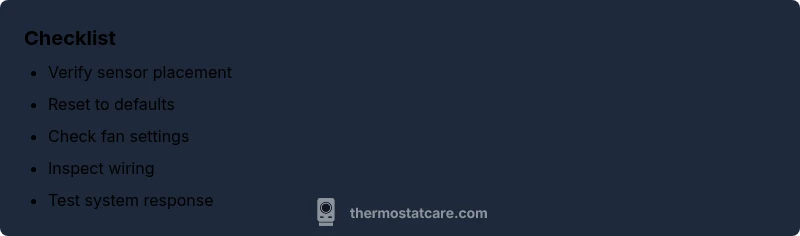
- Confirm power and basic controls are working. 2) Inspect sensor placement and reset defaults. 3) Verify setpoints, delays, and fan settings. 4) Check wiring for loose connections or corrosion. 5) Test after each change and document results. 6) If cycles persist, proceed to deeper checks of the HVAC equipment and consider professional inspection.
Quick fixes you can try before calling a pro
- Relocate the thermostat sensor away from heat sources or drafts and re-test.
- Reset the thermostat to factory defaults and re-enter only essential settings.
- Ensure the fan is set to Auto, not Always On, to prevent constant cycling.
- Inspect wiring for loose terminals; power down the system before touching any wires. If you’re unsure, skip this step and continue with simpler checks.
- Replace old batteries if your thermostat is battery-powered and re-test readings.
- Schedule a professional inspection if the short cycling continues after basic steps.
Safety and when to call a professional
Electrical work can be dangerous. If you notice signs of a burning smell, scorch marks, buzzing, or melted insulation, stop immediately and contact a licensed technician. Do not bypass safety features or realign wiring without proper training. If you’re unsure about wiring, capacitors, or refrigerant-related issues, Thermostat Care strongly recommends seeking professional help to avoid injury or HVAC damage.
Prevention tips to avoid future short cycling
- Schedule regular thermostat maintenance and calibration checks
- Keep the sensor away from heat sources and changes in airflow
- Use appropriate fan settings and verify delays after any system updates
- Replace old thermostats with models designed for your HVAC type
- Maintain clean filters and unobstructed ducts to minimize the risk of short cycling
Steps
Estimated time: 45-60 minutes
- 1
Power down and safety check
Turn off the thermostat and main HVAC power at the breaker. Verify there is no live current before you touch any wiring or sensors.
Tip: Use a non-contact voltage tester to confirm power is off. - 2
Inspect sensor placement
Ensure the temperature sensor is not near heat sources, drafts, or direct sunlight. Relocate if needed and recheck readings after a short wait.
Tip: Wait 5-10 minutes for readings to stabilize. - 3
Reset to defaults
Restore factory defaults on the thermostat to remove any experimental settings that could cause short cycles.
Tip: Document current settings before resetting. - 4
Check setpoints and fan
Confirm setpoints are reasonable for the season and that the fan is set to Auto. Excessively tight ranges can trigger rapid cycling.
Tip: Avoid setting hold or vacation modes during troubleshooting. - 5
Inspect wiring
If you’re comfortable, inspect wiring for loose terminals and signs of wear. Re-seat connections firmly but carefully.
Tip: If you see burnt insulation, stop and call a professional. - 6
Test and observe
Power the system back on and observe how quickly cycles occur after adjustments. If the problem persists, proceed to professional evaluation.
Tip: Record the duration of cycles to share with a technician.
Diagnosis: HVAC cycles on and off rapidly (short cycling)
Possible Causes
- highFaulty temperature sensor causing inaccurate readings
- mediumIncorrect thermostat settings (anticipator, delay, fan)
- lowLoose wiring or electrical interference
Fixes
- easyReposition sensor away from heat sources and reset to defaults
- easyReview and adjust anticipator/delay settings; set fan to Auto
- mediumCheck wiring connections; reseat or replace damaged wires
Questions & Answers
What is short cycling, and why is it a problem?
Short cycling describes HVAC units turning on and off rapidly, which wastes energy and wears components faster. It can compromise comfort and system efficiency. Start with thermostat checks before calling a technician.
Short cycling means your system keeps turning on and off quickly, wasting energy. Begin with thermostat checks before arranging a service.
Can a faulty thermostat cause short cycling?
Yes. A misreading sensor, wrong wiring, or incorrect settings can trigger short cycles. Verify placement, reset defaults, and test after changes to determine if the thermostat is at fault.
A faulty thermostat can cause short cycling due to misreadings or bad wiring. Check placement and defaults to diagnose.
Is battery power a concern for short cycling?
Battery-powered thermostats can exhibit delayed readings if batteries are weak. Replace the batteries and re-test readings to see if cycling improves.
Weak batteries can cause slow or inaccurate readings—change them and test again.
When should I replace my thermostat?
If the thermostat is old (beyond 10-15 years), shows faulty readings, or frequently requires recalibration, replacement may improve reliability and prevent short cycling.
If it’s an old unit that misreads often, consider replacement for reliability.
What should I do if I can’t locate the cause?
If simple checks don’t resolve short cycling, seek a professional HVAC technician to assess wiring, sensors, and compressor cycling. Thermostat Care emphasizes safety and accurate diagnosis.
If you can’t find the cause, call a pro to ensure safe and accurate diagnosis.
Watch Video
What to Remember
- Identify if sensor placement is skewing readings
- Reset and re-check setpoints before deeper fixes
- Auto fan settings usually reduce cycling
- Call a pro for wiring or refrigerant concerns