How Often Should a Thermostat Cycle? A Practical Guide
Learn how often a thermostat should cycle in heating and cooling, how to spot short cycling, and practical fixes to optimize comfort, performance, and energy efficiency in your home.


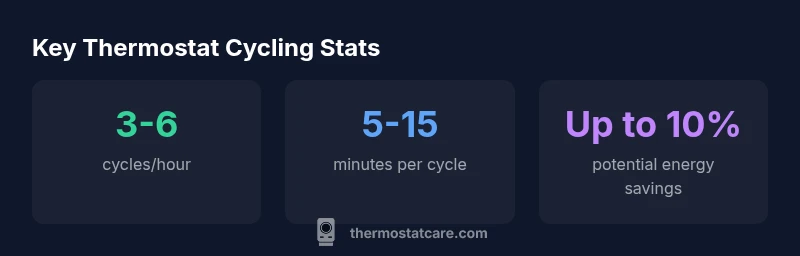
The typical thermostat should cycle multiple times per hour, with each heating or cooling cycle lasting a few minutes. For most homes, short cycling should be avoided, and a normal cycle frequency is roughly 3-6 cycles per hour with 5-15 minutes per cycle, depending on the load and system. If your cycles fall outside this range, investigate insulation, thermostat placement, and equipment efficiency.
Understanding Cycling: What It Means for Your Comfort and Efficiency
The question how often should a thermostat cycle touches the heart of comfort and energy use. In heating and cooling systems, a cycle is the complete on/off sequence that turns the equipment on, heats or cools, and then shuts off again. When a thermostat cycles too often, you feel temperature swings and waste energy; when it cycles too slowly, rooms never reach the setpoint consistently. According to Thermostat Care, normal cycling depends on system size, load, and outdoor conditions, but a balanced cycling pattern helps protect equipment and maintain steady comfort. In this section we’ll break down what typical cycling looks like, how to interpret your current pattern, and how to measure it accurately. The goal is to answer the question with actionable steps you can apply at home, without needing specialized tools.
Factors That Influence Cycle Frequency
- System type matters. Forced air furnaces, heat pumps, central AC, and radiant systems all have distinct cycling patterns.
- Local climate and load. Extreme temperatures push equipment to work harder and can shorten or lengthen cycles.
- Thermostat sensor placement and setback strategy. A sensor located away from heat sources may misread room temperature, triggering unnecessary cycling.
- Airflow and duct health. Leaky ducts and clogged filters increase cycling by forcing the system to work harder to achieve comfort.
- Envelope and insulation. Gaps and leaks can cause loads to vary rapidly, leading to more frequent starts and stops.
- Fan mode and delay times. Running the fan continuously or using short cycling delays can alter cycle length.
- Equipment age and efficiency. Older equipment may cycle more as components wear, while oversized equipment tends to short cycle.
- Smart features. Adaptive recovery and learning algorithms can reduce or temporarily increase cycling during adjustments.
Normal vs Short Cycling: How to Recognize the Pattern
Normal cycling typically falls in a mid range that keeps rooms comfortable without wasting energy. A healthy pattern is roughly 3-6 cycles per hour with each cycle lasting about 5-15 minutes. Short cycling occurs when the system starts and stops too quickly, often under 3 minutes per cycle, or when starts happen far more often than expected. Short cycling wastes energy, erodes comfort, increases wear on compressors and fans, and can trip safety devices. If you notice rapid cycling after a thermostat change or a seasonal shift, reassess load balance, sensor placement, and airflow before calling for service.
How to Measure Your Cycle Length
Begin by observing a full heating or cooling cycle and noting the start and end times. Use the thermostat’s history or a simple notebook to track several cycles over a few hours. If you have a smart thermostat, check the events log for cycle frequency over the last 24 hours. Calculate the approximate minutes per cycle and the cycles per hour. Use this data to compare against typical patterns for your system type and climate. This measurement helps you determine if your cycling is within a healthy range or if adjustments are needed.
Target Ranges by System Type
- Gas furnaces: expect cycles in the 5-15 minute range depending on load and insulation.
- Electric heat pumps: cycles often range from 8 to 20 minutes, especially during defrost cycles or rapid load changes.
- Central air conditioning: typical cooling cycles last 5-15 minutes, with longer cycles during hotter days.
- Radiant or hydronic systems: these often run more steadily, with cycles around 5-12 minutes when the load is steady.
Note that these are broad ranges and your home may fall outside them due to insulation, ductwork, and climate. The key is consistency and avoiding extreme short cycling or excessively long runtimes.
Common Causes of Excessive Cycling
- Dirty air filter restricting airflow.
- Thermostat misreadings or sensor proximity to heat sources.
- Oversized equipment that reaches the setpoint quickly and shuts off early.
- Poor duct design or leaks creating uneven loads.
- Refrigerant or refrigerant line issues in cooling systems.
- Climate conditions that produce rapid load shifts, such as strong sun on a poorly insulated wall.
- Wiring or battery issues in older thermostats that cause intermittent readings.
Practical Fixes to Normalize Cycling
- Replace or clean the air filter; check monthly during peak seasons.
- Check thermostat placement; avoid direct sun, drafts, or heat sources like lights.
- Calibrate or update the thermostat; for older units consider upgrading to a smart model with learning recovery.
- Inspect ducts for leaks and balance airflow with dampers if needed.
- Schedule a professional HVAC tune up to verify refrigerant charge, blower performance, and control wiring.
- Implement gradual setpoint changes to avoid abrupt loads during weather swings.
When to Seek Professional Help
If cycling remains erratic after DIY checks, or if you hear unusual noises, notice frost on the outdoor unit, or detect refrigerant smells, call a professional. Persistent short cycling or long runtimes may indicate a faulty thermostat, a lost refrigerant charge, or a systemic airflow problem. An annual tune-up and a thermostat upgrade every 10-15 years help prevent cycling issues and extend equipment life.
Pro Tips for Long-Term Efficiency
Maintain clean filters, seal air leaks, and keep temperature setbacks moderate. A smart thermostat with adaptive recovery and remote sensors can reduce cycling while preserving comfort. Regular maintenance, zone control, and proper sizing ensure your system cycles efficiently, saves energy, and lasts longer.
Estimated cycle ranges by system type
| System Type | Typical Cycle Range (min) | Notes |
|---|---|---|
| Gas furnace | 5-15 | Wide variety; cycling varies with demand |
| Electric heat pump | 8-20 | Defrost cycles affect length; climate-driven |
| Central AC | 5-15 | Cycles with cooling load; humidity affects duration |
| Radiant floor/water-based | 5-12 | Steady load; less impact from cycling |
Questions & Answers
What is normal cycling for most homes?
Typically 3-6 cycles per hour with 5-15 minute cycles. Exact values vary with climate, load, and equipment.
Most homes see about three to six cycles per hour, each lasting five to fifteen minutes.
What causes short cycling?
Oversized equipment, dirty filters, thermostat misplacement, duct leaks, and refrigerant issues can trigger short cycling.
Common causes are an oversized system, dirty filters, or misplacement of the thermostat.
Can I fix cycling myself?
Yes, start with filters, batteries, and gradual setpoint changes. More complex issues may require a professional.
You can fix several issues at home, like changing filters and updating settings.
How do I know if my thermostat is faulty?
Look for erratic readings, temperature swings, or dead zones. Calibration or replacement may be needed.
Erratic readings or dead zones usually mean a faulty thermostat.
When should I replace my thermostat vs service HVAC?
If old or unreliable, replacement is often best; otherwise service HVAC to address cycling issues.
If the thermostat is old or unreliable, replacement is often best.
Does insulation affect cycling?
Yes, better insulation stabilizes load and reduces cycling by limiting rapid temperature shifts.
Better insulation keeps loads stable, reducing cycling.
“Regularly monitoring cycling helps catch inefficiencies early and extend equipment life.”
What to Remember
- Know your baseline by measuring cycles for 24 hours.
- Keep filters clean to reduce unnecessary cycling.
- Place thermostats away from heat sources to avoid false readings.
- Consider upgrading to a smart thermostat with adaptive recovery.
- Schedule annual HVAC tune-ups to optimize cycling.