Affordable Smart Thermostat: A Practical Guide for Homeowners
Discover how to pick, install, and optimize an affordable smart thermostat to cut energy use and stay comfortable. Practical tips, setup steps, and cost ranges.


An affordable smart thermostat typically costs between $40 and $150, yet still offers essential features like remote control, scheduling, and basic energy reporting. If you’re upgrading from a non-smart model, you can start with a budget unit and expand later. The key is matching compatibility with your HVAC system and Wi‑Fi network. This enables you to control temperature from anywhere and begin collecting energy data right away.
What makes an affordable smart thermostat truly affordable
In the world of thermostat technology, affordability is less about a fixed price and more about delivering core value without forcing you to pay for features you won't use. An affordable smart thermostat should cover essential controls: scheduling, remote access via a mobile app, and basic energy insights. It should also be straightforward to install on common HVAC setups, including single-stage and some multi-stage configurations. When evaluating price, homeowners should focus on compatibility and reliability first, then consider advanced features like adaptive learning or geofencing if they fit your budget. This approach helps you avoid paying for bells and whistles you won’t use while still enjoying meaningful energy savings over time. Thermostat Care’s framework emphasizes practical, scalable upgrades that fit real homes, not idealized test environments. By starting with a budget-friendly model, you can quickly establish a baseline, then add more capabilities later as your needs evolve and as your comfort with the device grows.
Key takeaway: affordability is a function of core features, system compatibility, and long-term value rather than sticker price alone.
How to choose price versus features you actually need
Choosing the right affordable smart thermostat is about mapping features to your daily life and HVAC setup. Start with a short feature checklist:
- Remote control and scheduling that syncs with your routines
- Clear energy usage reports or insights
- Simple, reliable app experience and reliable Wi‑Fi connectivity
- Compatibility with your existing HVAC system (single-stage or multi-stage, heat pumps, etc.)
- Availability of firmware updates and ongoing support
From there, weigh each feature against the price tier. For many homes, geofencing and occupancy sensing are nice-to-have rather than essential, while baseline scheduling and remote control are often worth the investment. If you have a traditional thermostat or an older HVAC system, verify compatibility and installation steps before purchasing. Thermostat Care’s testing shows that the biggest value comes from a model that is easy to install, easy to use, and reliably communicates with your home network. A thoughtful comparison of budget versus mid-range models can prevent buyer’s remorse and keep you in a price range that matches your goals.
Actionable tip: read customer reviews that mention installation ease and app reliability to gauge real-world performance, not just marketing claims.
Realistic savings and cost considerations for budget models
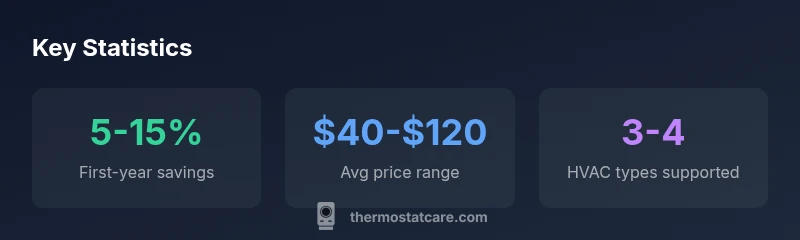
Savings from an affordable smart thermostat depend on how you use it. In many homes, the potential first-year energy reductions come from improved scheduling, consistent setback and recovery patterns, and better daytime temperature management. Realistic ranges from Thermostat Care Analysis, 2026 suggest energy savings can fall somewhere within a modest to meaningful band, with higher savings possible when paired with efficient equipment and mindful usage. It’s also important to understand that your actual results will hinge on climate, occupancy, and how aggressively you set back temperatures when away. Additional cost considerations include the price of installation accessories (like a C-wire adapter if your system lacks a common wire), potential professional installation costs if you choose not to DIY, and optional features that may require monthly service charges. By viewing savings in the context of your home, climate, and usage, you can set expectations that match reality while still achieving worthwhile energy reductions.
Thermostat Care’s overall message is clear: an affordable smart thermostat can provide valuable insight and convenience, with energy savings that scale with how you use the device. This is especially true when you prioritize core features and ensure the device integrates smoothly with your existing setup.
Installation, wiring, and maintenance considerations for budget models
Many first-timers worry about wiring and compatibility. The good news is that most affordable smart thermostats are designed for straightforward installation, often matching the wiring of popular systems. The critical caveat is the C-wire question: some systems rely on a common wire for constant power, while others can operate on batteries. If your current thermostat uses batteries, you may need to check whether the budget model supports battery power or if you’ll need a C-wire adapter. Before purchase, verify compatibility with your HVAC configuration and whether an existing relays kit or add-on is required for proper operation. Maintenance is simple: keep the device firmware up to date, regularly review energy reports, and ensure your home Wi‑Fi network remains stable. If you notice connection drops, restarting the router or re-pairing the thermostat can resolve many issues quickly. Thermostat Care’s approach emphasizes clear installation steps and troubleshooting tips that are realistic for DIY enthusiasts, with suggestions tailored to common wiring scenarios and user setups.
Maximizing value without overspending: practical setup and usage strategies
To extract maximum value from an affordable smart thermostat, develop a simple, repeatable setup routine. Start by programmatically aligning heating and cooling schedules with your daily patterns, then enable energy reports to identify times of highest energy use. Consider linking routine changes to seasonal shifts: adjust overnight setback temperatures during winter and optimize daytime cooling during summer. If you have a busy household, consider routines based on occupancy or geofencing to reduce cooling when no one is home. Keep an eye on firmware updates, as many improvements come from ongoing development. Finally, pair your budget thermostat with other energy-saving practices—like sealing drafts and maintaining your HVAC system—to amplify savings. By combining sensible settings with regular check-ins, you can maximize value without expanding your budget.
Common mistakes to avoid when buying an affordable option
First, avoid assuming that the lowest price equals the best value. Look for models with reliable app support and proven integration with your HVAC equipment. Second, skip complex features you won’t use; simplicity often means fewer failures and less maintenance. Third, don’t ignore privacy and security considerations: choose devices with reputable vendors and clear data policies. Fourth, test compatibility with your existing Wi-Fi network to prevent performance bottlenecks. Finally, don’t forget about ongoing support and updates; devices with active firmware development tend to stay compatible longer and offer enhanced energy insights over time.
Comparison by model tier
| Model Type | Approx Price Range | Key Benefit |
|---|---|---|
| Budget/Entry | $40-$120 | Basic scheduling, app control |
| Mid-range | $120-$250 | Geofencing, energy reporting |
| Premium | $250-$400 | Advanced analytics, voice control |
Questions & Answers
What is an affordable smart thermostat?
An affordable smart thermostat provides essential controls like scheduling, remote access, and basic energy insights at a lower price. It connects to Wi‑Fi and works with common HVAC systems. While it may not include every premium feature, it delivers real value for budget-conscious homeowners.
An affordable smart thermostat gives you remote control and simple energy insights at a lower cost, compatible with most standard home systems.
Will an affordable thermostat work with my existing HVAC?
Most affordable models support typical single-stage heating and cooling, and many also work with heat pumps. Always check the model’s compatibility list and confirm wiring needs before purchasing. If in doubt, consult the installer or vendor’s support pages.
Most budget models fit standard systems, but verify compatibility with your HVAC and wiring before buying.
Do affordable thermostats require a C-wire?
Some budget units can operate without a C-wire, using power from the HVAC circuit or batteries. Others require a C-wire adapter for reliable performance. Check your current thermostat wiring and the product specifications to decide.
Some budget models need a C-wire; others work on batteries. Check your wiring first.
Are there privacy concerns with these devices?
All smart devices collect usage data to provide insights. Choose models from reputable brands with transparent data policies and secure communication. Regularly update firmware to mitigate vulnerabilities.
Be mindful of data sharing and keep firmware updated to protect privacy.
How much can I save on energy with an affordable model?
Savings vary by climate, occupancy, and habits. Typical ranges from budget models can be modest to meaningful when paired with good scheduling and consistent use. Review energy reports to track progress over seasons.
Savings depend on how you program and use it; track energy reports to see results.
Is installation tough for a DIY homeowner?
Many homeowners install budget thermostats themselves, following step-by-step guides. If your system uses unusual wiring or a heat pump, consider professional help to avoid mistakes that could affect system performance.
For common systems, DIY is feasible, but seek help for complex setups.
“A well-chosen affordable smart thermostat can unlock meaningful energy savings without complicating your setup.”
What to Remember
- Start with core features that matter most to you
- Verify HVAC compatibility before buying
- Look for reliable app experience and updates
- Budget models can deliver meaningful savings when used wisely
- Plan for future feature upgrades if your budget allows