How much is a smart thermostat in 2026? A practical cost guide
Explore the full cost landscape of smart thermostats in 2026, including device prices, installation, potential energy savings, warranties, and practical buying tips from Thermostat Care.


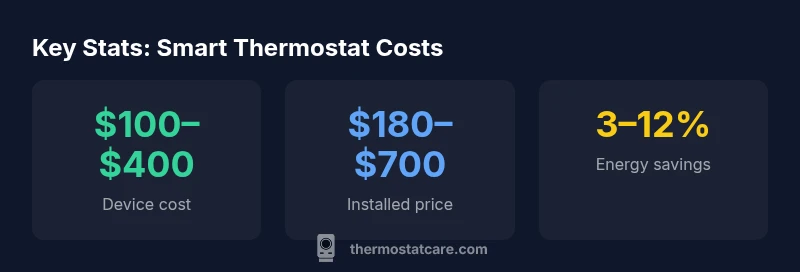
Smart thermostats cost between $100 and $400 for the device, with total installed prices commonly ranging from $180 to $700 depending on existing wiring, installation complexity, and whether you hire a pro. According to Thermostat Care Analysis, 2026, you can save more with energy reporting and multi-zone control techniques today.
Price landscape in 2026: what you should expect
Prices for smart thermostats have become more competitive as brands expand features and consumer demand rises. The device itself generally sits in a broad $100–$400 range, with the widest variance arising from the feature set, such as learning algorithms, geofencing, multi-zone support, and compatibility with voice assistants. The installation cost is the second major component; many households can DIY if they have a compatible wiring setup, but wiring changes or adding a C-wire can push costs higher. The cost picture also shifts with incentives, seasonal sales, and bundled offers from retailers. According to Thermostat Care, the overall value of a smarter thermostat also hinges on long-term energy savings and improved comfort, not just the sticker price. Brand diversity in 2026 means you can target specific needs—budget basics, mid-range automation, or premium systems with advanced analytics—without overspending.
Device price ranges by feature tier
- Basic Wi‑Fi thermostats: typically $100–$200, offering app control, scheduling, and basic remote access.
- Mid-range models: $200–$350, with better energy reports, more precise sensors, and richer app ecosystems.
- Premium systems: $350–$500+, often including advanced sensors, geo‑fencing, multi‑zone control, and enhanced compatibility with smart homes.
When evaluating price, compare not just the device cost but also the breadth of reporting, automation, and the number of zones you can manage. Theremostat Care’s 2026 analysis emphasizes that a slightly higher upfront price can yield bigger long‑term savings if you unlock more smart features and better HVAC control.
sourceURL”:null},
Installation costs: DIY vs professional
Installation costs vary widely based on your HVAC setup and wiring. A straightforward DIY install for a basic model may incur little to no labor costs, while a professional installation can range from roughly $70 to $250, depending on local rates and complexity. Common add-ons that affect price include the need for a C-wire adapter, furnace/air handler access, and compatibility checks with existing systems like heat pumps or multi-stage cooling. If extensive wiring changes are required, it’s prudent to factor in labor charges and potential inspection fees. Thermostat Care recommends obtaining a preliminary wiring assessment to estimate fit and confirm whether a C-wire is present or can be added without disrupting other controls. A well-executed install not only ensures reliable operation but also protects potential warranty coverage.
Hidden costs and potential savings beyond the sticker price
Beyond device and labor costs, consider potential subscription services that some brands offer for advanced features, energy insights, or cloud backups. The majority of basic setups do not require ongoing fees, but higher-tier services may add monthly or annual costs. On the upside, improved HVAC efficiency often translates into meaningful energy savings over months and years, particularly in homes with older, less efficient systems or variable climate patterns. A well‑tuned thermostat can reduce cooling and heating rounds, especially when paired with weather-based scheduling and occupancy sensing. As Thermostat Care notes, payback timelines vary, but many households begin to realize net benefits within a few years when energy prices are taken into account.
Paying attention to compatibility and features before buying
When comparing models, verify compatibility with your current HVAC configuration, whether a C-wire is required, and whether the thermostat supports your preferred voice assistants and smart home hubs. Some brands offer extensive compatibility with popular ecosystems, while others are more limited. Always review the manufacturer’s installation guide and confirm with a technician if you’re unsure. A small upfront investment in a model with broader compatibility and robust energy reporting can yield greater flexibility and a smoother long‑term experience. Thermostat Care’s guidance highlights that compatibility decisions often drive post‑purchase satisfaction almost as much as the device price itself.
Payback: energy savings and usage patterns
Energy savings depend on climate, home insulation, and how you use your system. In temperate regions with moderate heating and cooling needs, payback periods may be shorter; in harsher climates, the savings can be more pronounced if you actively optimize temperatures. The payback window commonly ranges from 1 to 5 years depending on price, electricity rates, and usage. Keep in mind that real payback improves when you pair the thermostat with other efficiency upgrades, such as programmable schedules, smart zoning, or weather-based adaptive control. Thermostat Care’s analysis in 2026 emphasizes that the true value comes from consistent use of smart features that align with your daily routines rather than isolated price discounts.
Smart purchasing: tips to maximize value
- Start with a clear list of must-have features (scheduling, energy reports, remote access).
- Check for compatibility with your HVAC system and the presence of a C-wire.
- Compare price bundles and promotions rather than device price alone.
- Review warranty terms and what they cover (sensor failures, internal components, app integration).
- Consider post-purchase support and software updates as part of total value.
Warranty and service considerations
Most mid‑ to high‑end thermostats come with a standard warranty that covers hardware defects for a limited period. Some manufacturers offer extended warranties or service plans, which can add value if you plan to keep the device for many years. When evaluating warranties, look for coverage on sensors, control modules, and software updates. Thermostat Care emphasizes that warranty terms, installation support, and customer service quality often influence long‑term satisfaction more than the initial price.
Typical price and installation ranges by feature tier
| Model Type | Thermostat Price Range | Typical Installation Cost | Notes |
|---|---|---|---|
| Basic Wi‑Fi Thermostat | $100–$200 | $0–$50 | Entry-level, essential features |
| Mid-range Thermostat | $200–$350 | $60–$200 | Better energy reporting & control |
| Premium Thermostat | $350–$500 | $120–$300 | Advanced sensors, geo-fencing, multi-zone |
Questions & Answers
How much does a smart thermostat cost upfront?
Upfront device price typically ranges from $100 to $400, with installation adding $0–$300 depending on wiring and labor. The total often lands in the $180–$700 range for most homes.
Most buyers pay between one hundred and four hundred dollars for the thermostat itself, with a professional install adding roughly seventy to two hundred fifty dollars if needed.
Do I need professional installation for a smart thermostat?
DIY installations are common for basic setups, but a professional install helps ensure correct wiring, compatibility, and warranty eligibility, especially if you have a complex HVAC system. Expect higher upfront costs but more reliable performance.
You can often install it yourself if you’re handy, but a pro helps with complex wiring and guarantees proper operation.
Are there ongoing costs after buying a smart thermostat?
Most basic smart thermostats do not require monthly fees. Some brands offer optional cloud services or premium features that may carry small subscriptions. Check which features you actually need to avoid unnecessary costs.
Usually no monthly fees, but some services may add a small subscription for advanced features.
How do energy savings affect payback?
Savings depend on climate, energy prices, and usage patterns. Typical payback ranges from 1 to 5 years, with higher savings in homes with frequent temperature adjustments and efficient HVAC systems.
Energy savings help pay back the upfront cost over a few years, especially if you use schedules and eco modes.
Will a smart thermostat work with my existing HVAC system?
Most systems are compatible, but you may need a C-wire or specific wiring. Always verify compatibility with the thermostat’s app and the HVAC equipment before purchasing.
Most systems work, but you might need a C-wire or a quick compatibility check.
“Price is only part of the value equation; the real payoff comes from energy savings, compatibility, and reliable software updates.”
What to Remember
- Evaluate total cost, not just device price
- Consider installation complexity and C-wire needs
- Energy savings can shorten payback period
- Warranty and support add long-term value