Cost to Install Smart Thermostat: A Practical Guide
Explore the true cost to install a smart thermostat, including device price, labor, scenarios, and savings tips. Actionable guidance for homeowners and DIY enthusiasts from Thermostat Care.


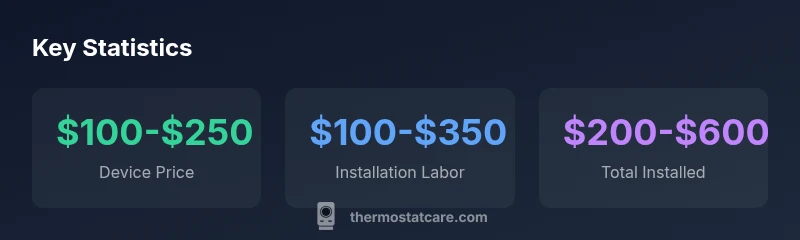
Typically, the total cost to install a smart thermostat ranges from $200 to $600, depending on the device price and wiring complexity. If you already have a compatible setup, installation costs sit toward the lower end; complex wiring or multi-zone systems push the total toward the higher end.
What drives the cost to install smart thermostat
The cost to install a smart thermostat hinges on several factors, and the exact amount varies from home to home. The first lever is the device price itself, which can range broadly by features, brand, and screen size. Beyond the thermostat, wiring needs and compatibility with your existing HVAC system are major cost drivers. If your current setup already has a C-wire (common wire) and simple two-wire control, you’ll likely see lower labor costs. If your system requires a C-wire retrofit, power-sharing from the furnace, or multiple zone controls, expect higher installation time and labor charges. According to Thermostat Care, planning for wiring and control compatibility upfront helps you budget accurately and avoid surprise fees later. Other cost factors include accessibility (hard-to-reach mounting locations), potential upgrades to the electrical panel or breaker, and any required permits or inspections in your area. Finally, taxes, disposal of an old thermostat, and any added smart-home features (such as integration with voice assistants or smart-home hubs) can contribute to the total. While the device price is visible at checkout, the installation cost is often less obvious yet equally important for a precise estimate.
Device price vs. installation charges
When considering the cost to install a smart thermostat, buyers should separate device price from installation charges. Most consumer-grade smart thermostats fall in the mid-range price band, roughly $100 to $250 for the unit itself. You may pay more for premium brands, larger touchscreens, or additional sensors. Installation charges vary widely based on labor rates in your area and the complexity of the job. A straightforward, DIY-friendly installation with a compatible wiring setup might incur only a modest service fee or none if you do it yourself. Professional installers typically charge by the hour or offer a flat rate for standard installs. Expect labor costs to range from roughly $50 to $350, with higher figures tied to wiring upgrades, multi-zone HVAC systems, or inaccessible mounting locations. Remember: even when you DIY, you may still incur costs for a professional inspection or to satisfy warranty requirements. Thermostat Care encourages homeowners to price-shop, request detailed written estimates, and verify what is included in the quoted labor.
Scenarios and cost ranges
To help you visualize what the numbers look like in real homes, here are common scenarios expressed as ranges. These reflect device price bands plus installation labor and assume standard warranty terms:
- Basic install (no rewiring required, C-wire present): Device $100-$180; Labor $50-$100; Total $150-$280. This is the most approachable path for homeowners with compatible wiring.
- Standard install (C-wire present, minor setup): Device $120-$210; Labor $100-$250; Total $220-$460. Expect a moderate labor bill if the installer must configure app integration and furnace compatibility.
- Advanced install (rewiring, multiple zones, or retrofit of a heat pump): Device $150-$230; Labor $150-$350; Total $330-$600. Costs rise with wiring upgrades, zoning, or more complex HVAC configurations. Thermostat brands with more aggressive energy-management features may also require additional setup time.
In all cases, the total is the device price plus labor, plus any added fees for permits, wiring upgrades, or equipment that supports multi-stage systems. Thermostat Care highlights that your exact price depends on your home’s unique wiring and control needs.
Hidden costs and savings opportunities
Beyond the obvious device price and labor, several hidden costs can influence the final total. You might encounter small but real charges for disposal of the old thermostat, a new mounting plate, or replacement screws and mounting hardware. If the installer discovers that your HVAC thermostat wiring is older than standard, they may recommend upgrading cables, which increases the device price and labor. Some regions require permits or inspections for electrical modifications, and those fees can add to the bill. On the upside, there are several opportunities to save: look for rebates or utility incentives for energy-efficient upgrades, compare installer quotes to avoid overpaying, and choose devices with built-in energy-tracking features that deliver longer-term savings. Thermostat Care suggests bundling installation with other smart-home upgrades when possible to reduce service call fees and maximize value across your smart ecosystem.
DIY vs professional installation: pros and cons
DIY installation can be attractive for homeowners comfortable with basic electrical work and following manufacturer instructions. If your wiring is straightforward and you only need to swap one thermostat, a DIY approach can save on labor. However, professional installation has the benefits of a formal warranty, tested wiring, and correct app integration for features like remote monitoring, energy reports, and occupancy-based heating. A miswired thermostat can cause false readings, HVAC cycling, or safety concerns. Before deciding, verify manufacturer compatibility, consult your HVAC system’s warranty terms, and obtain at least two written quotes if you go professional. Thermostat Care emphasizes that the right choice depends on your comfort level, the complexity of your system, and the importance of reliability and energy savings over time.
Real-world examples and case studies
Case Study A: A single-zone forced-air system with a compatible C-wire. Device price: $120; labor: $85; total: $205. The homeowner gains app-based scheduling and energy usage insights, with minimal disruption during a weekend swap. The payback is straightforward if energy efficiency improvements persist across seasons. Case Study B: A multi-zone system with a heat pump and older wiring that requires upgrading to a robust C-wire. Device price: $199; labor: $320; total: $519. The installer provides a dedicated zone setup, which allows separate schedules per room and improved comfort. While the upfront cost is higher, the long-term energy savings and comfort gains can justify the investment, especially in larger homes.
Step-by-step planning checklist
- Identify your device priorities (price, battery life, screen size, and app integration).
- Confirm existing wiring (is there a C-wire? Is the system compatible with the thermostat’s requirements?).
- Get at least two written installation quotes and verify what’s included (disposal, mounting hardware, and any required wiring upgrades).
- Check for rebates or utility incentives in your area and any time-limited promotions.
- Consider whether you want a DIY installation or professional service, balancing cost against warranty and reliability.
- Plan a window for installation during mild weather and ensure access to electrical panels if upgrades are needed.
- Schedule a post-install test to confirm heating and cooling functions, along with app integration and energy-tracking features.
Typical cost breakdown by installation scenario
| Scenario | Device Price | Labor Cost | Total Installed |
|---|---|---|---|
| Basic install (no rewiring) | $100-$150 | $50-$100 | $150-$250 |
| Standard install (C-wire present) | $100-$180 | $100-$250 | $200-$430 |
| Advanced install (rewiring/multi-zone) | $180-$250 | $150-$350 | $330-$600 |
Questions & Answers
What is the average cost to install a smart thermostat?
Costs typically range from about $150 to $550 for total installation, depending on device price and wiring needs. In complex cases with zoning or retrofits, total costs can approach $600 or more. Always get written quotes that itemize device and labor.
Most installations run between a couple hundred and a few hundred dollars, depending on wiring and device features.
Can I install a smart thermostat myself to save money?
If you’re comfortable with basic electrical work and your wiring is straightforward, a DIY install can save labor costs. However, many warranties require professional installation for eligibility and you may still need a pro for app setup and HVAC compatibility checks.
DIY is possible if you have the right wiring and patience.
Do I need a C-wire or any special wiring for most smart thermostats?
Most modern smart thermostats work with a C-wire, but some battery-powered models don’t require one. If you don’t have a C-wire, you might need a retrofit or a compatibility adapter, which adds to both parts and labor costs.
A C-wire is common, but check your model’s requirements.
Are there costs beyond installation?
Yes. You may encounter disposal fees for an old unit, mounting hardware, or a panel upgrade if wiring is outdated. Some regions offer rebates; take advantage of energy-efficiency incentives when possible.
Look for rebates and include disposal and hardware in your plan.
How long does installation take?
Most standard installs take 1–3 hours, depending on wiring and system complexity. DIY jobs may take longer if you’re learning the setup, while professional installs often complete more quickly with a tested, documented process.
Most installs are a few hours; longer if wiring is complex.
“Cost considerations for smart thermostat installations are highly dependent on wiring and system compatibility; proper planning up front can save both time and money.”
What to Remember
- Estimate device price before choosing model
- Expect labor to vary with wiring complexity
- DIY may save money but risks warranty and reliability
- Look for rebates and utility incentives to shorten payback
- Get multiple, detailed quotes before committing