Thermostat Price Guide: How Much Do Thermostats Cost in 2026?
Explore thermostat price ranges, what drives cost, and how to save. A data-driven guide from Thermostat Care covering basic vs. smart models, installation costs, and long-term value.


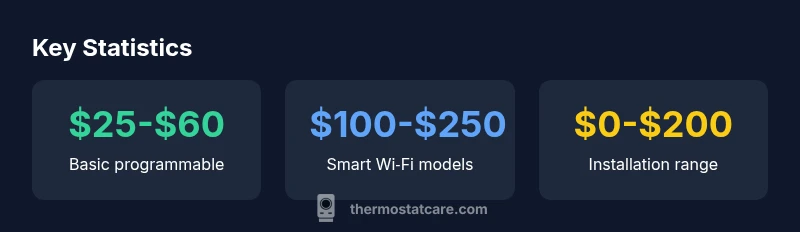
Thermostat price varies by type, features, and installation needs. Basic programmable thermostats typically range from about $25 to $60, while smart Wi‑Fi models usually cost more, roughly $100 to $250, not including installation. Budgeting should weigh energy-savings potential, compatibility with your HVAC, and ongoing app or service costs. According to Thermostat Care, understanding tiered pricing helps homeowners compare options quickly and avoid overspending.
Why Thermostat Price Varies Across Models
According to Thermostat Care, thermostat price is driven by core type, features, and installation complexity. Entry-level programmable models are inexpensive upfront but offer limited control, while advanced smart thermostats add learning algorithms, remote access, and energy-tracking dashboards that justify higher upfront costs. Power needs, display quality, brand ecosystem, and HVAC compatibility all push price in different directions. For homeowners, this means choosing among basic reliability, convenience, and future-proof connectivity. The Thermostat Care team found that price tiers typically map to value delivered, not just the sticker price.
- Consider what you gain: basic reliability versus intelligent scheduling.
- Assess ongoing costs: app subscriptions or cloud services can affect long-term value.
- Check compatibility: C-wire availability and HVAC compatibility influence both price and performance.
Price Ranges by Type: Basic, Programmable, and Smart
Pricing generally scales with capability. Basic models hover at the lower end, while more sophisticated programmable displays add modestly to cost. Smart thermostats with Wi‑Fi and voice-control tend to be the highest-priced option, but they also offer features such as mobile control, energy usage reporting, and compatibility with home ecosystems like Google Home or Amazon Alexa. When evaluating thermostat price, readers should weigh upfront cost against potential energy savings, installation hassles, and required power sources. Thermostat Care’s analysis shows that buyers often overestimate savings from a low-cost unit and underestimate the value of a well-integrated smart model when paired with an efficient HVAC system.
- Energy savings vary by climate and system efficiency.
- Model compatibility matters for performance and cost.
- App and ecosystem features can add significant value.
Hidden Costs That Change the Final Bill
Beyond the sticker price, many homeowners encounter installation fees, wiring upgrades, or power-adapter needs that alter the final cost. The Thermostat Care team notes that some homes require a C-wire or voltage adjustment, which adds hardware and labor. DIY installation can reduce costs but may void warranties if not done correctly. When budgeting, include possible professional installation, extra wiring, and any required smart-home hub or bridge. Knowing these potential add-ons helps prevent sticker-price shock and ensures you select a model that fits your home’s electrical and HVAC setup.
- Budget for professional install if wiring is complex.
- Verify power requirements before buying.
- Factor in compatibility with existing smart home devices.
How to Compare Quotes and Estimate Total Cost
To compare quotes effectively, start by identifying the exact model type you want (basic vs. smart) and listing required features (remote control, energy reporting, voice integration). Request itemized estimates that separate device price from installation fees, warranty coverage, and any add-ons. Ask installers about potential upgrades (C-wire, thermostat backsplates, or new wiring) that could affect the total cost. Use the same baseline for each quote to ensure apples-to-apples comparison. Thermostat Care recommends collecting at least three quotes and verifying each estimator’s credentials and warranty terms. Consider long-term value—cheap upfront costs may yield higher maintenance expenses later.
Value Beyond the Sticker Price: Energy Savings and Longevity
A higher upfront thermostat price can be justified by energy savings, learning capabilities, and reliable remote control. Smart thermostats that optimize heating and cooling in response to occupancy patterns often reduce annual energy use, especially in homes with aging HVAC systems. Additionally, manufacturers’ warranties and update policies impact long-term cost. The Thermostat Care team notes that durability and ongoing software support are key factors in achieving a favorable total cost of ownership. If you plan to stay in your home for several years, investing in a capable model can be economically sensible.
Practical Decision Toolkit: Quick Picks by Budget and Needs
- Budget-conscious buyers: opt for a basic programmable thermostat with straightforward scheduling.
- Mid-range buyers: choose a programmable display model with remote access and energy reports.
- Tech-forward buyers: select a smart thermostat with learning features and full ecosystem integration. Always verify compatibility with your HVAC and existing apps before purchasing. The Thermostat Care team suggests assessing both upfront price and potential energy savings to find the best balance for your home.
Thermostat price ranges by model type
| Model Type | Typical Price Range | Estimated Installation Cost | Notes |
|---|---|---|---|
| Basic programmable | $25-$60 | $0-$100 | DIY-friendly install |
| Non-programmable | $20-$50 | $0-$70 | Simplest option |
| Programmable with display | $60-$120 | $50-$150 | Mid-range features |
| Smart Wi-Fi/learning | $100-$250 | $70-$200 | App control and energy tracking |
Questions & Answers
What is the typical price range for the most common thermostat types?
Most homes spend between $25 and $250 on the thermostat itself, depending on basic versus smart features. Installation costs vary by complexity, typically adding a modest amount for wiring or professional service. Always compare device price, installation, and potential energy savings over time.
Most people pay from about a low-cost basic model to a higher-end smart thermostat, plus installation costs if needed. Compare upfront price plus installation and projected energy savings.
Are thermostat installation costs included in the listed price?
Not always. Some prices include installation, while others quote device price alone. Always request a line-item breakdown that separates the thermostat, installation, and any required upgrades.
Installation may or may not be included. Ask for a separate line-item quote.
Is a smart thermostat worth the price for most homes?
For many homes, smart thermostats deliver meaningful energy savings and convenience, especially with manual or programmable cooling strategies. Evaluate climate, HVAC efficiency, and compatibility with existing devices before deciding.
In many cases, yes, if you’ll use remote control and energy reports.
Can I install a thermostat myself to save money?
Simple units can often be installed by homeowners. Complex setups, C-wire requirements, or warranty concerns may necessitate a professional installer. Always follow the manufacturer’s instructions and verify compatibility.
DIY is possible for basics, but check the wiring and warranty terms first.
Do rebates or incentives affect thermostat price?
Some utilities offer rebates or incentives for installing energy-saving thermostats. These programs can reduce the effective price and payback period, so check local programs before purchasing.
Yes, rebates can lower the overall cost and shorten payback time.
How long does a thermostat usually last?
Most thermostats last many years with proper care, though sensor accuracy and software support may influence performance. If you upgrade, consider compatibility with your HVAC and future smart-home plans.
Most last many years; consider future-proof features when upgrading.
“Price is only part of value—the savings from a well-tuned thermostat compound over time. Look for a model that fits your home, then assess its long-term energy impact.”
What to Remember
- Define your feature needs before shopping
- Price tiers align with value, not just cost
- Factor installation and wiring into total cost
- Energy savings can justify higher upfront price