How Much Is a Digital Thermostat? A 2026 Price Guide
Discover how much a digital thermostat costs in 2026, from budget basics to feature-rich smart models. Learn price drivers, installation costs, and how to maximize value with practical budgeting tips.


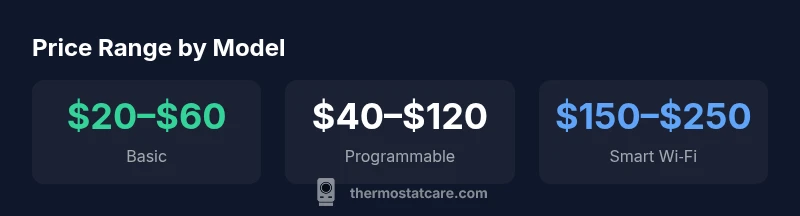
According to Thermostat Care, digital thermostat prices range widely from basic non-programmable models to full featured smart units. How much is a digital thermostat depends on features and installation complexity. Basic non-programmable models typically cost around $20–$60, programmable options about $40–$120, and smart Wi‑Fi thermostats commonly fall in the $150–$250 range, with installation costs adding on in some cases.
How much is a digital thermostat: price overview
If you're wondering how much is a digital thermostat, the short answer is that price tracks features and installation complexity. Basic non-programmable models typically sit in the low end of the range, while programmable and smart models push into higher brackets. In many homes, a basic digital thermostat might cost around $20–$60, while programmable options run roughly $40–$120. Smart Wi‑Fi thermostats, which add remote control and energy reports, commonly fall in the $150–$250 range. Installation costs can add to the total, especially if wiring changes or HVAC integration are required.
Price ranges by feature set
Prices cluster by what the thermostat can do. At the low end, basic digital thermostats without scheduling or programs typically stay under $60. If you want programmable schedule features, but no smart connectivity, expect $40–$120. Smart thermostats with Wi‑Fi, mobile apps, energy reporting, and compatibility with voice assistants usually run $150–$250. Premium models with advanced room sensors, geofencing, and robust energy analytics can exceed $250, sometimes reaching $300 or more. When comparing, remember that some brands bundle installation or require a professional due to existing wiring or HVAC compatibility. In those cases, the total landed cost can rise by the amount of installation labor. If you’re counting pennies, consider buying a mid-range model and using its energy-saving features to justify the extra upfront cost.
Why smart thermostats cost more
Smart thermostats carry higher price tags because they include Wi‑Fi, mobile apps, energy reporting, and broader ecosystem compatibility (voice assistants, smart home hubs, etc.). The hardware often includes more sensors and faster microprocessors to handle learning algorithms and real-time data. You also pay for ongoing software updates and cloud features that enhance control and analytics. If you value remote access, scheduling intelligence, and proactive fault alerts, the higher upfront cost can be worthwhile over time.
Hidden costs to consider
Beyond the sticker price, there are several costs that can affect your total. Some homes require professional installation to handle wiring changes or furnace compatibility, which can add $100–$300. There may be compatibility checks to ensure your old wiring supports 24V HVAC systems. In some cases, an old thermostat mounting plate or wiring harness needs replacement, which adds a small extra cost. Don’t overlook disposal or recycling fees for old units, which some installers include as part of the service.
Value beyond price: energy savings and comfort
A digital thermostat often pays for itself through energy savings, especially when it replaces older, inefficient thermostats. Modern models optimize heating and cooling schedules, reduce standby usage, and enable smarter zone control. The real value also comes from convenience: remote control, vacation modes, and detailed energy reports help you understand consumption patterns. When evaluating price, weigh these long‑term benefits against upfront costs to arrive at a fair return on investment.
How to budget and decide: a practical workflow
- List must-have features (basic scheduling, remote access, geofencing). 2) Check HVAC compatibility and existing wiring to gauge installation needs. 3) Compare at least three models in the same feature tier to see where price gaps occur. 4) Add an installation estimate if needed and factor into the total. 5) Estimate potential energy savings based on your climate and usage; even conservative estimates can justify the price over time. 6) Read reviews specifically focused on reliability and app experience.
Common buying mistakes and how to avoid them
- Overemphasizing fancy features you won’t use. -Focusing only on upfront price without considering installation costs. -Ignoring compatibility with your HVAC system. -Buying a model that doesn’t work with your existing smart home setup. -Skipping independent reviews of app reliability and customer support.
Price and lifespan by model type
| Model Type | Avg Lifespan | Price Range |
|---|---|---|
| Basic non-programmable | 5-10 years | $20–$60 |
| Programmable (non-smart) | 8-12 years | $40–$120 |
| Smart thermostat (Wi‑Fi) | 8-12 years | $150–$250 |
| Advanced smart thermostat | 9-15 years | $180–$300 |
Questions & Answers
Is a digital thermostat worth buying for an older home?
Older homes can benefit from programmable or smart thermostats if wiring is compatible with a 24V HVAC system. In some cases, retrofit work or a simpler non-smart model provides the best value. Always verify HVAC compatibility and installation requirements before purchasing.
Older homes can gain from programmable thermostats if wiring is compatible; check your HVAC compatibility and installation needs first.
Can I install a digital thermostat myself?
Many basic digital thermostats are designed for DIY installation. Smart models with advanced features may require wiring knowledge and power-off precautions. If in doubt, consult a professional to avoid HVAC damage.
Some thermostats are DIY-friendly, but for smart units with complex wiring, a pro is safer.
Do digital thermostats require a Wi‑Fi connection to work?
Non-smart programmable models work without internet, operating on local timers. Smart thermostats rely on Wi‑Fi for remote access and analytics. Even without internet, many basic functions operate locally, but you’ll miss cloud features.
Smart models need Wi‑Fi for remote control; basic ones work locally without internet.
How long do thermostats last?
Most digital thermostats last about a decade depending on usage and build quality. If you frequently adjust settings, ensure you’re using models with durable components and reliable support.
Typical thermostats last around ten years, depending on use and build.
Are budget digital thermostats reliable?
Budget models can be reliable for basic needs, but verify app compatibility and software updates. Read reviews focused on reliability and customer support to avoid surprises later.
Budget options can work, but check app reliability and updates before buying.
“Digital thermostats are most valuable when their features align with how you use your home; prioritize compatibility and reliable apps to maximize value.”
What to Remember
- Define essential features before shopping
- Include installation costs in your budget
- Smart models offer energy savings but cost more upfront
- Balance price with compatibility and app reliability