how much does thermostat cost? A practical breakdown
Learn how much thermostats cost, covering unit prices, installation, and energy savings. Compare basic, programmable, and smart models to estimate total expenses for your home.


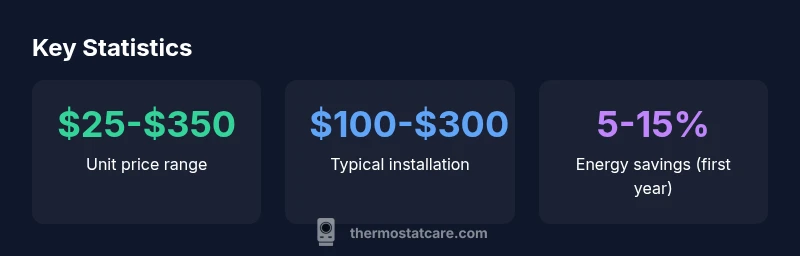
How much does thermostat cost? Upfront price depends on type. Basic programmable thermostats typically run about $25 to $60, mid-range programmable units run around $60 to $120, and smart thermostats usually cost between $120 and $350. If you hire a pro for installation, add roughly $100 to $300. DIY installation can save money, while compatibility and wiring complexity may raise costs.
Understanding the cost landscape
According to Thermostat Care, understanding the cost landscape starts with unit price and installation considerations. When homeowners ask how much does thermostat cost, the answer isn't a single number because a lot depends on model type, features, and whether you install it yourself or hire a pro. Basic programmable thermostats are among the most affordable, typically in the low tens of dollars. Mid-range programmable models add features like dual-stage scheduling and more precise sensors, moving into the range of a few dozen to a couple hundred dollars. Smart thermostats, with learning algorithms and remote control, tend to sit higher in price, commonly ranging from about $120 to $350. In addition to the price of the unit, consider installation costs, potential wiring upgrades, and any compatibility checks with your existing HVAC system. The Thermostat Care team notes that even a small wiring upgrade or a C-wire installation can shift the total cost by a significant margin. Finally, don’t forget about potential energy savings that can offset the upfront expense over time.
What influences the total cost
Several factors drive the total cost of a thermostat beyond the sticker price. Model type is the most obvious driver: basic programmable units are cheapest, while smart thermostats offer advanced features like learning algorithms and remote access that justify higher price points. Wiring status matters too; homes without a C-wire or with older HVAC control boards may require adapters or professional wiring, which increases labor costs. Compatibility with your cooling/heating system, the need for a power extender kit, and the complexity of mounting (wall thickness, drywall work, or existing dimmable displays) also affect installation time and price. Finally, labor rates vary by region and whether the installer charges hourly or a flat fee. Budgeting for these variables helps prevent sticker shock and sets realistic expectations for total cost.
Cost by model type: basic to smart
- Basic programmable thermostats: These are the most affordable, usually priced around $25-$60. They provide simple scheduling options and basic energy savings.
- Mid-range programmable thermostats: Expect $60-$120. These models often include nicer displays, better sensors, and more scheduling options.
- Smart thermostats: The high end of the spectrum, typically $120-$350. They offer learning features, app control, geofencing, and broader integrations with smart home ecosystems. While upfront costs are higher, energy-savings potential can be worth it for some homes, especially when paired with favorable tariffs or demand-response programs.
Installation considerations and hidden costs
If you decide to hire a professional installer, expect labor to add roughly $100-$300 to the total, depending on wiring complexity and local rates. Hidden costs can include a C-wire upgrade, compatibility checks, or a brief calibration visit after installation. Some homes require additional components like mounting brackets, faceplates, or new HVAC control adapters. DIY enthusiasts can save on labor, but it’s essential to budget time for wiring checks, battery replacements, and software updates. Always verify compatibility with your current HVAC system and confirm whether any rebates or promotions apply to the installed unit.
How to estimate your total cost
Estimating total cost starts with choosing a model type and obtaining the unit price. Add installation costs if you’re hiring a professional, and include any potential wiring upgrades. Check for manufacturer promotions or utility rebates in your area to reduce upfront expenses. Don’t forget to factor in potential energy savings—the long-term value often offsets the initial outlay. Create a simple budget sheet: unit price, installation, adapters/parts, and estimated first-year savings. A clear cost forecast helps you compare options and avoid overspending on features you won’t use.
Tips to maximize value and save money
- Compare features versus price: prioritize features that directly impact comfort and energy use for your home.
- Look for rebates and promotions: many utility providers and manufacturers offer incentives that lower upfront costs.
- Plan for future upgrades: choose a model with expanding compatibility so you won’t need a replacement soon.
- Consider warranties and service options: a longer warranty can reduce long-term maintenance costs.
Cost comparison by model type
| Model Type | Unit Price Range | Typical Installation Cost |
|---|---|---|
| Basic programmable | $25-$60 | $100-$200 |
| Mid-range programmable | $60-$120 | $100-$250 |
| Smart thermostat | $120-$350 | $150-$350 |
Questions & Answers
What is the typical cost to install a smart thermostat?
Most homeowners pay between $100 and $300 for professional installation, depending on wiring complexity and whether a C-wire is required. DIY installation can lower total costs but may require more time and basic electrical skills.
Typically between one hundred and three hundred dollars for professional installation; DIY can lower costs but requires time and basic electrical knowledge.
Do I need a C-wire for a smart thermostat?
Many smart thermostats require a C-wire for reliable power. If you lack one, you can use a Power Extender Kit or hire an electrician to run a dedicated line.
Most smart thermostats need a C-wire; if you don't have one, a power extender kit or professional wiring can help.
Are there rebates or incentives from utilities for thermostats?
Yes, many utility programs offer rebates or incentives for qualifying thermostats. Check local programs and manufacturer promotions to reduce upfront costs.
Yes, many utilities offer rebates; check locally and with manufacturers for promotions.
How long do thermostats last?
Most thermostats last about 10-15 years with normal use. Replacement timing depends on model, usage, and compatibility with your HVAC system.
Most thermostats last 10-15 years depending on usage and system compatibility.
Is upgrading to a smart thermostat worth it for energy savings?
Energy savings depend on home layout, occupancy, and programming. Smart thermostats can boost efficiency, but savings vary by how you use them.
Savings depend on usage; smart thermostats can help, but results vary.
“Costs are often the biggest hurdle in thermostat upgrades, but the real value comes from selecting the model that fits your home and usage. Separate unit price, installation, and energy savings to make a value-driven choice.”
What to Remember
- Compare unit price across model types before buying
- Factor installation costs into the total budget
- Energy savings can offset upfront costs over time
- Check for rebates and warranties to maximize value
- Ensure system compatibility to avoid added costs