Thermostat to Boiler Wiring: A Step-by-Step Guide
A safety-first guide for wiring a thermostat to a boiler, covering compatibility checks, wiring options, step-by-step instructions, testing, and troubleshooting for reliable home heating.


Scenario: you want to wire a thermostat to boiler. This quick answer explains the goal, essential safety steps, and what you’ll need. By following standard wiring practices—confirm boiler terminals, verify thermostat compatibility, and power down before handling wires—you can complete the basic wiring setup safely. This Thermostat Care guide emphasizes caution, proper terminology, and verified testing to prevent damage or injury.
Wiring basics and safety considerations
Wiring a thermostat to a boiler involves connecting a low-voltage control circuit from the thermostat to the boiler’s heating control terminals. You are essentially teaching the boiler when to fire based on the thermostat’s temperature setting. Before touching any wires, learn the terminal designations in your boiler manual and your thermostat installation guide. According to Thermostat Care, take time to identify which wires are used for heat call, which are common (C), and which, if any, act as a jumper. Safety first means turning off power at the breaker and isolating any gas supply as required by your system. Wear protective gloves and eye protection if you’ll be working around hot components, and never work on live circuits. A methodical approach reduces risk and protects your heating system.
Compatibility and preparation
Compatibility between the thermostat and boiler is more than choosing a model with the right voltage. You must check the boiler’s terminal block layout, the control signal (voltages such as 24 VAC are common in modern systems), and whether the thermostat requires a C-wire for power. If your thermostat is battery-powered or uses power stealing, you may still be able to operate with limited connections, but you should confirm this with the manuals. Preparing a wiring diagram that maps each thermostat wire (R, W, C, etc.) to the corresponding boiler terminal helps avoid miswiring. This planning step is essential to prevent nuisance trips or short-term boiler outages.
Mapping wires: C-wire, heat call, and common terminals
A typical boiler thermostat circuit uses a heat call wire that closes a circuit to signal the boiler to heat. The C-wire provides a continuous return path to power a smart thermostat. If your boiler lacks a dedicated C terminal, you may need to repurpose a spare conductor or run a new low-voltage wire. Label each conductor with its function before disconnecting anything. Having a clear map reduces guesswork during the final wiring and lowers the risk of connecting the wrong terminal. Always verify wire color conventions against the boiler’s wiring diagram and the thermostat’s installation guide.
Common wiring configurations for boiler thermostats
Two-wire configurations are common on older systems where a simple call-for-heat signal is all that’s needed. Three-wire setups add a C-wire for powered thermostats, improving reliability for smart devices. Some boilers require separate terminals for heat demand and boiler safety interlocks, while others use a single common strip. If you install a thermostat that requires a C-wire but your boiler does not provide one, you may need to install a power adapter or consider a thermostat that supports power sharing. Always follow the diagrams in the manuals rather than guessing from photos online.
Planning your wiring path and compatibility
Plan the routing of wires from the thermostat location to the boiler control panel. Consider wall depth, conduit availability, and potential interference with other components (water pipes, gas lines, or HVAC wiring bundles). A neat, organized route minimizes wear on conductors and makes future maintenance easier. Document the route with a simple sketch that indicates wall thickness, cable thickness (18-22 AWG for low voltage), and any stress points. This planning step helps you avoid accidental damage during wall rerouting or future upgrades.
Schematic overview of terminal labeling and connections
Before you touch any screws, review the boiler’s terminal labels and the thermostat’s terminal designations. Create a cross-reference table: boiler terminal → thermostat wire function. Ensure you know which terminals are live and which are potential ground paths. If your system uses an integration module or relay, make sure you understand its role in the circuit. Mislabeling can lead to a non-functional thermostat, a tripped breaker, or damaged components. When in doubt, consult the boiler manual or Thermostat Care’s troubleshooting resources.
Safety testing and post-install checks
After wiring, recheck every connection for tightness and proper insulation. Use a multimeter to verify voltage at the thermostat terminals, and a non-contact tester to confirm no live power is present when you’re reassembling the wall plate. Confirm that the thermostat’s power type matches the boiler’s control circuit. When you power up, observe the boiler’s ignition signal and listen for the call-for-heat. If the boiler fails to respond correctly or you notice hissing, smells, or unusual noises, immediately power down and re-check your connections.
Troubleshooting and maintenance for boiler thermostats
If the thermostat won’t trigger the boiler, confirm the R and W (or their equivalents) wires are on the correct terminals and that the thermostat is configured for the correct system type (gas, oil, or electric boiler with hot-water or steam). Wires that feel loose or corroded may cause intermittent operation. Regularly inspect the thermostat battery (if applicable) and replace it per the manufacturer’s recommendations. Keep the thermostat’s user interface clean and free from dust, which can affect sensing and touch points. Regular checks help prevent minor issues from becoming bigger problems.
Final notes and future-proofing your setup
A well-planned thermostat-to-boiler wiring setup can improve comfort and efficiency for years. Consider upgrading to a smart thermostat that supports boiler control if you have a compatible system, as long as you have a stable C-wire or an appropriate power option. When in doubt, consult a licensed technician—especially if your boiler is gas-fired or has complex interlocks. Thermostat Care recommends documenting every change you make and keeping copies of wiring diagrams for future maintenance.
Tools & Materials
- Non-contact voltage tester(Verify no live voltage before touching wires)
- Multimeter(Test voltage at thermostat and boiler terminals)
- Screwdriver set (Phillips and flat-head)(Remove boiler and thermostat covers)
- Wire strippers/pliers(Prepare wires and trim insulation evenly)
- Electrical tape or wire nuts(Insulate exposed conductors)
- Thermostat installation manual(For model-specific terminals)
- Boiler manual or wiring diagram(Identify terminal designations accurately)
- Extra thermostat wires (18-22 AWG)(Needed if adding a C-wire or extending runs)
- Safety gear (gloves, eye protection)(Recommended when working near boilers)
Steps
Estimated time: 45-60 minutes
- 1
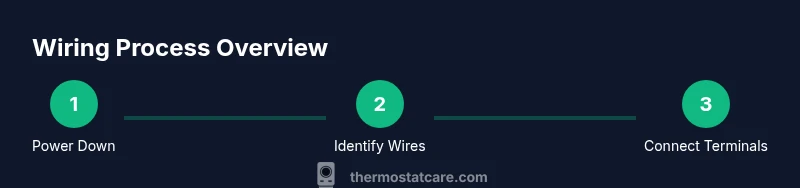
Power down and verify no voltage
Turn off the power at the circuit breaker and, if applicable, the boiler’s dedicated switch. Use a non-contact tester to confirm there is no AC voltage on any exposed conductors before you touch them. This protects you from shocks and prevents accidental short circuits.
Tip: Double-check the boiler's shutoff and wait 1–2 minutes after flipping breakers to ensure the circuit is de-energized. - 2
Identify wires and label functions
Carefully inspect the existing thermostat wiring and identify which wires perform heat call, common, and any jumper connections. Label each conductor with its function (e.g., R, W, C) using painter’s tape or pre-numbered tags. This map will guide the final connections to the new thermostat.
Tip: Take photos from multiple angles before disconnecting anything for reference. - 3
Remove old thermostat and inspect wiring
Detach the old thermostat from the wall and remove its cover to expose terminals. Check for damaged insulation, frayed wires, or corrosion. If you find any compromised wires, trim back and re-strip clean conductor ends before connecting to the new device.
Tip: Do not force wires into terminals; use the correct gauge and twist wires neatly. - 4
Plan the wiring path and confirm terminal compatibility
Draft a quick plan for how wires will run from the thermostat to the boiler, noting any obstacles. Verify that the boiler’s terminals correspond to the thermostat’s expected inputs (R, W, C, G, etc.). If a C-wire is unavailable, decide whether to repurpose a spare conductor or add a dedicated C-wire.
Tip: Keep runs short and straight to reduce resistance and noise. - 5
Connect wires to the new thermostat terminals
Attach each wire to the matching terminal on the new thermostat according to the wiring diagram. Ensure the connections are tight and that the wires are fully inserted. Do not mix up terminals; cross-check with the manuals before final tightening.
Tip: Use the included screws or terminal clamps and avoid over-tightening to prevent wire damage. - 6
Secure the wall plate and restore power
Reattach the thermostat to the wall and restore power at the breaker. Turn on the boiler’s switch if separate and allow the thermostat to initialize. Confirm the thermostat shows a ready status and displays the correct room temperature.
Tip: Observe the thermostat display for a minute to ensure it boots correctly. - 7
Test heating calls and finalize settings
Set a heating target on the thermostat and verify that the boiler lights or begins to heat. Listen for ignition signals and check for warm radiators. Fine-tune scheduling and temperature hold modes as needed.
Tip: If the boiler doesn’t respond, recheck wire placement and thermostat configuration.
Questions & Answers
What is thermostat to boiler wiring?
Thermostat to boiler wiring connects the thermostat's heat-call signal to the boiler's control circuit, enabling temperature-based heating. Correct wiring ensures safe and efficient boiler operation.
Thermostat wiring connects the thermostat's heat signal to the boiler so heating turns on at the right temperature.
Do I need a C-wire for smart thermostats with boilers?
Many smart thermostats require a continuous power source (C-wire). If your boiler doesn’t have a C-terminal, you may need a power adapter, a jumper, or a thermostat model that supports power stealing.
Most smart thermostats need a C-wire, but some models work with alternative power methods.
What safety precautions should I take before wiring?
Always turn off power at the breaker and verify no voltage on exposed conductors. If you smell gas or notice gas-related issues, stop and call a professional.
Turn off power, check for voltage, and never work on live wires around gas boilers.
Can I wire a thermostat to a boiler without professional help?
Basic wiring is possible for experienced DIYers, but miswiring can cause safety hazards or boiler damage. Consider a licensed technician if you’re unsure.
It can be doable, but don’t risk safety—get a pro if you’re unsure.
How do I test the wiring after installation?
Power on, set heating on the thermostat, and observe boiler response. If heat doesn’t start, recheck connections and the thermostat settings.
Power up, test heat call, and watch the boiler respond.
When should I call a professional?
If you’re unsure about wiring diagrams, or if you smell gas, hear gas-related noises, or notice consistent failures, stop and contact a licensed HVAC technician.
Call a pro if you’re unsure or smell gas.
Watch Video
What to Remember
- Plan wiring before touching live circuits.
- Verify boiler and thermostat compatibility first.
- Label wires and map functions clearly.
- Test power off before handling conductors.
- Consult a professional if unsure about gas boilers.