What to Do With Old Thermostat: A Practical Guide
Learn safe, practical steps for handling an old thermostat—dispose, recycle, donate, or reuse. This guide covers power-down, removal, data privacy, and local programs, with expert tips from Thermostat Care.


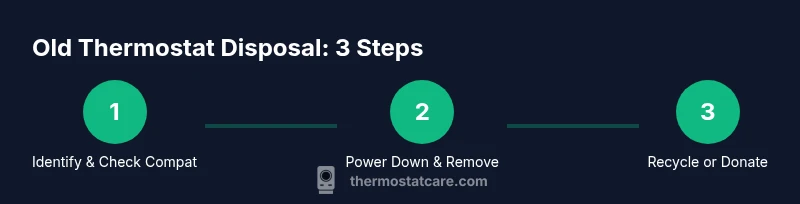
Safely retire an old thermostat by powering down at the breaker, removing the device, labeling wires, and choosing an eco-friendly path. Options include recycling through a local e-waste program, donating if functional, or repurposing components where allowed. The Thermostat Care team emphasizes careful handling of any toxic or battery components and recording your wiring for future use.
Why disposing old thermostat safely matters
According to Thermostat Care, what you do with old thermostat matters for safety and environmental impact. If you're wondering what to do with old thermostat, the answer starts with safety—power down, disconnect, and choose an eco-friendly path. Improper disposal can release contaminants and potentially expose private settings. This guide outlines practical options: recycle through local programs, donate if functional, or repurpose parts where allowed. By handling disposal thoughtfully, homeowners protect air quality, reduce hazardous waste, and simplify future visits from HVAC professionals. Thermostat Care analysis emphasizes that acting responsibly now minimizes risk and helps neighbors, too. Keep in mind that even small devices can contain batteries or switch materials that require special handling.
Assessing your old thermostat: compatibility and options
First, determine if your old thermostat is still compatible with your current HVAC system or if it’s a candidate for reuse in a different setup. Check the model number, wiring requirements, and whether it contains a battery or mercury switch. If the unit functions and can be repurposed with a newer faceplate or a smart module, you may choose to keep it for a secondary zone or guest area. If it’s non-functional, focus on disposal options. Consider whether you want to keep the mounting plate for a future replacement—some backplates can be reused with new thermostats, while others must be discarded. This decision shapes your next steps and helps avoid unnecessary trips to the curb or the e-waste center. Thermostat Care notes that planning ahead reduces clutter and speeds up your upgrade.
Power down and prep: safety steps
Before you touch the device, cut power at the main service panel to prevent shock or short circuits. Confirm no voltage at the wires with a non-contact tester, then remove the thermostat from the wall gently. Prepare a labeled container for screws and keep a photo of the wiring configuration for reference. If your thermostat uses batteries, remove them and dispose of them separately following local rules. This prep work protects you and preserves wiring layout for later reinstallations or dismantling. As you proceed, document any unusual signs of wear or corrosion to share with a professional if needed.
How to remove the thermostat from the wall
Start by gently prying off the faceplate to expose the wall plate and screws. Unscrew the mounting plate from the wall and carefully disconnect the wires. Label each wire with color-coded tape according to its terminal, or photograph the setup before detaching anything. Remove the backplate and store all small parts in a labeled container. If you see frayed wires or burnt insulation, stop and seek a licensed electrician or HVAC technician. This step-by-step removal minimizes the risk of damaging the system or creating additional waste. Keeping the components organized will simplify future installation.
What to do with the old thermostat hardware
Set aside the faceplate and backplate for potential reuse with a compatible replacement. If the mounting plate is damaged, remove it for recycling as metal hardware rather than reusing it. Place screws and any small fasteners in a labeled bag to prevent loss. For the outer casing and interior electronics, follow local disposal guidelines. If the thermostat contains mercury or other hazardous materials, treat it as hazardous waste and deliver it to a proper facility. This helps ensure safe handling and prevents contamination of water or soil near your home. Thermostat Care recommends double-checking local rules before discarding.
Recycling options: local programs and mail-back
Explore local e-waste programs, city or county drop-off sites, and manufacturer mail-back options for recycling your old thermostat. Many communities offer curbside or centralized recycling specifically for small electronics, which includes thermostats. If your unit contains hazardous materials or batteries, separate collection streams may apply. Always confirm requirements with the program: some facilities accept only intact devices, while others require components to be removed beforehand. Thermostat Care analysis shows that following local programs helps ensure confidence that your device is processed safely and responsibly.
Donating or reselling functional units
If the old thermostat still works, donating to schools, community workshops, or nonprofit programs can extend its life and benefit someone else. Check the donor guidelines of local charities or electronics refurbishers to understand what they accept. In some cases, you may even see a small resale value for a used model in good condition. Ensure you erase any personal data and reset to a neutral configuration before giving it away. Donating keeps electronics out of landfills and supports households that are upgrading to programmable or smart thermostats. Thermostat Care endorses reuse when feasible.
Data privacy, memory, and memory clearing
Many thermostats store past schedules and settings in memory. Before disposal or donation, perform a factory reset so no personal data remains on the device. If the unit can be reset without professional help, follow the manufacturer’s instructions; otherwise, request assistance from an HVAC pro. Safeguarding data protects you from incidental sharing of your schedules and preferences. After resetting, take a final photo of the wiring shown during removal for your records. This simple step reduces privacy concerns and streamlines future replacements. The Thermostat Care team emphasizes privacy as part of responsible disposal.
Reusing or repurposing parts and planning your next upgrade
Before you discard, consider whether any components could be repurposed in future projects—for example, backplates or decorative faceplates that fit a future model. If you’re upgrading to a smart thermostat, verify compatibility with your existing wiring (C-wire, power needs, and terminal types). Create a simple disposal plan: recycle hardware, donate functional devices, and store screws securely. By following a structured approach, you minimize waste and simplify upgrades. The Thermostat Care team recommends keeping a brief disposal log for future reference and to assist any contractors who might service the system later.
Tools & Materials
- Non-contact voltage tester(Verify no power before handling wires)
- Flathead screwdriver(For removing faceplate screws)
- Phillips screwdriver(For backplate screws)
- Labeling tape or markers(Label wires by terminal color)
- Camera or smartphone(Photograph wiring setup for reference)
- Small container or bag(Store screws and small parts)
- Battery removal tool (if needed)(Only if batteries are present)
- Local e-waste disposal info(Have program details handy)
Steps
Estimated time: 25-40 minutes
- 1
Power down and verify
Go to the main service panel and switch off the circuit breaker that powers the HVAC and thermostat. Use a non-contact voltage tester to confirm there is no live voltage in the thermostat wires. This prevents electric shock and damage to the control board.
Tip: If you’re unsure which breaker controls the HVAC, turn off the main breaker to cut all power to the unit. - 2
Document wiring
Take a clear photo of the back of the thermostat with the wires attached. Label each wire with tape color-matched to its terminal. Note the orientation of the wires and the model number for reference during reinstall or replacement.
Tip: Photographs are faster than notes and help avoid miswiring later. - 3
Remove the faceplate
Gently pry off the faceplate to expose the wall plate and screws. If there’s resistance, check for clips or tabs and avoid forcing it. Set aside the faceplate in a labeled container.
Tip: Work slowly to prevent damaging the wall or the wall plate. - 4
Disconnect and remove
Unscrew the wall plate and carefully disconnect the wires from the terminals. Keep the screws in your container and verify none of the wires are still live.
Tip: Do not yank wires; loosen terminals gradually to avoid damage. - 5
Handle batteries and hazardous materials
If your thermostat uses batteries, remove them and dispose of them following your local guidelines. If you see mercury-containing components, treat the device as hazardous waste and separate it from general trash.
Tip: Separate battery recycling from device recycling to prevent leakage. - 6
Choose disposal path
Decide whether to recycle, donate, or reuse parts. If the unit is functional, consider donation or resale. If non-functional or hazardous, follow local e-waste disposal rules.
Tip: Check for mail-back programs or local drop-off sites before discarding.
Questions & Answers
Is it safe to throw away an old thermostat?
No. Always follow local e-waste guidelines or recycle. If the unit is functional, donate or resell where possible.
No, use recycling or donation if possible.
Can I reuse the old thermostat with a new system?
It depends on compatibility with the new system's wiring and power requirements. Verify with the new thermostat's installation guide.
Only if it's compatible.
Should I remove batteries before recycling?
Yes. Remove batteries and recycle them separately to prevent leakage.
Yes, remove batteries first.
What if the thermostat has a mercury switch?
Mercury-containing thermostats require special handling as hazardous waste. Do not place in regular trash.
Mercury devices need special disposal.
Where can I recycle an old thermostat near me?
Check local e-waste programs or municipal drop-offs, or use manufacturer mail-back options when available.
Check local programs or mail-back options.
What should I photograph before removing the thermostat?
Photograph wiring connections and the backplate before detaching to simplify future reinstallations.
Photo the wires and backplate.
Watch Video
What to Remember
- Plan disposal early with local programs
- Power down safely and document wiring
- Recycle or donate functional units
- Remove batteries before disposal
- Keep records for future installation