How to Get Rid of an Old Thermostat: A Safe DIY Guide
Learn safe, step-by-step methods to remove and dispose of an old thermostat, with wiring tips, wall repair guidance, and disposal options per local rules.


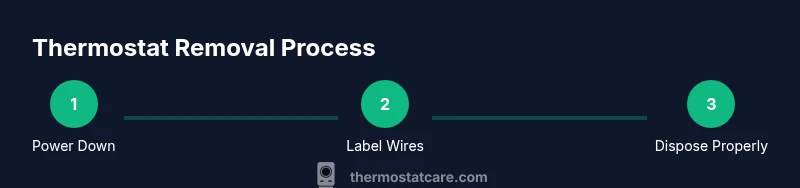
To get rid of an old thermostat, start by turning off power at the circuit breaker and removing the device from the wall. Label wires, take photos for reference, and cap or insulate conductors. Decide between recycling, e-waste programs, or safe disposal per local rules, then patch the wall as needed. Thermostat Care recommends following local guidelines to avoid hazards.
Why Removing an Old Thermostat Matters
According to Thermostat Care, removing an old thermostat safely and responsibly matters for electrical safety, indoor air comfort, and environmental responsibility. Old thermostats may contain batteries or electronic components that require proper disposal, and many jurisdictions restrict disposal in normal trash. Proper removal also makes it easier to install a replacement and ensures the wall remains in good condition for future use. In this guide we cover the why and the basics of planning your removal, including checking local rules, preparing the space, and mapping out the wiring. By understanding the importance of safe practices, you reduce risk to yourself and your home while aligning with best-practice disposal steps.
This section sets the foundation by clarifying the key reasons to remove an old thermostat properly: safety, compliance with local waste programs, and a cleaner finish for any future upgrades. You’ll also see how a thoughtful removal can protect HVAC control wiring and avoid accidental damage to the wall cavity.
Safety First: Power, Wiring, and Hazards
Before touching any thermostat, confirm there is no live power. Turn off the circuit breaker that feeds the thermostat and, if available, switch off any associated power strips. Use a non-contact voltage tester to verify the absence of voltage at wires and terminals. Wear eye protection and keep children and pets away from the work area. Remember that even low-voltage thermostats connect to HVAC systems; a careless move can damage equipment or create a brief electrical arc. If you encounter damaged insulation, scorched wires, or moisture, stop and seek professional help. These safety checks minimize the risk of shocks, short circuits, or fire hazards during removal.
Safety is the foundation of a successful removal. Always verify de-energization before handling any thermostat hardware and make sure to keep an escape path clear in case of unexpected events. This step protects you, your HVAC system, and your home.
Preparation: Gather Your Tools and Check Local Disposal Rules
Plan your removal by noting the model and any labeling on the thermostat. Gather the tools you will need: screwdriver set, non-contact voltage tester, masking tape and pen for labeling, a camera or smartphone for reference photos, and a patch kit for wall repair. Check local rules for thermostat disposal or recycling—many programs accept electronic waste but require proper packaging or drop-off. Having a clear plan prevents rushed mistakes and helps you stay organized as you work through removal and disposal.
Step-by-Step Removal Process
This section walks you through the actual removal, from power verification to wall repair. Start by removing the faceplate and any mounting screws, then gently pull the unit away from the wall to expose the wiring. Take clear photos of the terminal layout for future reference and label each wire according to color or terminal name. Disconnect wires one by one, cap exposed conductors with wire nuts, and set the thermostat aside. Remove the mounting plate, clean the wall surface, and prepare the patch area for a smooth finish. If your thermostat is integrated with a backplate, remove it carefully to avoid wall damage. Finally, patch and repaint the wall if needed to restore a clean appearance.
Safety and organization are the core of a successful removal; follow these steps in order to minimize risk and ensure future compatibility with a new device.
Disposal Options: Recycling, Landfill, and Local Rules
Recycling is the preferred option for most thermostats, especially if they contain batteries or electronic components. Many municipalities offer household hazardous waste programs or electronics recycling events where thermostats can be dropped off. Some programs require you to remove batteries or separate components before disposal. If recycling isn’t available, check if your local landfill accepts electronics as part of a special e-waste stream. Always consult your city or county website for the exact guidelines, and never place a thermostat in regular trash if it contains batteries or hazardous materials. Thermostat Care emphasizes choosing compliant channels to minimize environmental impact and stay within legal requirements.
Wall Repair and Finishing After Removal
With the thermostat removed, inspect the wall for screw holes, plaster damage, or paint chipping. Use a patch kit suitable for your wall type (drywall, plaster, or wood panel) to fill holes. Sand smooth once dry, then prime and paint to match the surrounding area. A clean finish not only improves aesthetics but also helps future replacements go smoothly. If you removed a backplate, install a blank wall plate to cover the box until you decide on a new device. A neat repair reduces call-backs and ensures the wall is ready for its next use.
Documentation and Record-Keeping for Future Reference
Document the removal with photos showing the old wiring layout before disassembly and the patched wall afterward. Keep notes on disposal methods used and any local requirements you followed. This record is helpful if you decide to replace the thermostat again or if future tenants ask about previous installations. A simple digital folder with images and a short checklist can make future upgrades faster and less stressful.
Common Mistakes to Avoid
Common mistakes include skipping power verification, rushing removal, and failing to label wires. Never assume which wire goes where without documentation. Avoid leaving exposed conductors or using the wrong patch materials. Finally, don’t ignore local disposal rules—noncompliant disposal can lead to fines or improper environmental impact. Taking time to plan and document reduces risk and ensures a smoother transition to a new system.
Maintenance and Next Steps After Disposal
After disposal, consider planning for a replacement thermostat. If replacing with a smart thermostat, verify compatibility with your HVAC system and C-wire availability. Keep a copy of all disposal receipts and installation guides for future taxes or warranty considerations. Regularly check the thermostat’s wall box for dust or moisture in the months after removal to prevent future issues and maintain wall integrity.
Tools & Materials
- Screwdriver set (flathead and Phillips)(Have both types on hand to remove wall plate and panel)
- Non-contact voltage tester(Verify power is off before touching wires)
- Electrical tape or wire nuts(Cap exposed wires after detaching thermostat)
- Labeling materials (masking tape and pen)(Label wires by terminal color and function)
- Camera or smartphone(Take wiring reference photos)
- Patch kit for wall repair(Finish wall after removal)
- New wall plate or cover(Cover box if not replacing device immediately)
- Recycling bag/box for old thermostat(Check local e-waste program requirements)
Steps
Estimated time: 45-60 minutes
- 1
Power down and verify safety
Go to the circuit breaker panel and switch off the breaker that feeds the thermostat. Use a non-contact tester to confirm no voltage at the wiring. This prevents shocks and short circuits during removal.
Tip: Double-check the breaker label matches the thermostat circuit to avoid turning off the wrong circuit. - 2
Remove faceplate and mounting screws
Use the appropriate screwdriver to remove the thermostat faceplate and any mounting screws. Gently pull the unit away from the wall to expose the wiring terminals.
Tip: Keep screws in a labeled container for easy re-use if you install a new device later. - 3
Photograph and label wires
Take clear photos of the terminal layout. Label each wire with tape indicating its terminal color and function (R, W, Y, G, C, etc.).
Tip: Creating a wiring map now saves time and reduces mistakes during reinstallation. - 4
Disconnect wiring and cap conductors
Carefully disconnect wires one by one. Cap exposed conductors with wire nuts and secure them with electrical tape.
Tip: If a wire is stubborn, stop and re-check the wiring map to avoid misconnections later. - 5
Remove mounting plate and prep wall
Detach the mounting plate from the wall. Inspect the wall for holes or damage and clean the opening for patching.
Tip: Handle the device carefully to avoid bending the wall box or damaging nearby outlets. - 6
Patch, sand, and finish
Apply patch material, let it dry, sand smooth, and prime before painting to match the surrounding wall.
Tip: Use painter’s tape and a small level to ensure a clean, straight patch line. - 7
Decide disposal path and transport
Choose a compliant disposal path (recycling, e-waste program, or special collection) and arrange transport if needed.
Tip: Carry the thermostat in a sealed bag and follow local drop-off instructions to avoid leakage or contamination.
Questions & Answers
Is it safe to remove an old thermostat myself?
Yes, if you follow proper safety steps: power off at the breaker, verify no voltage, carefully disconnect wires, and dispose through approved channels. If you encounter damaged wiring or moisture, stop and seek professional help.
Yes, you can remove it yourself if you shut off power and follow the steps carefully. If you see damage, call a pro.
Do I need to turn off power at the breaker before removal?
Absolutely. Turning off the breaker eliminates the risk of electric shock and protects the HVAC system during removal.
Yes. Always switch off the breaker before touching wiring.
What are the disposal options for old thermostats?
Most are eligible for electronics recycling or household hazardous waste programs. Check local rules and follow program guidelines to ensure safe disposal.
Recycle or use a local e-waste program based on your city rules.
Should I keep a photo record of wiring before removal?
Yes. Photos provide a reference if you install a new thermostat later and help avoid wiring mistakes.
Definitely. Photos make future upgrades easier.
What if my thermostat has a battery? Can I throw it away with regular trash?
Thermostats with batteries should be treated as e-waste. Remove the battery if possible and dispose according to local guidelines.
Don't put it in regular trash; follow local disposal rules for batteries.
Do local programs accept thermostats at electronics recycling events?
Many events accept thermostats, but you should verify with the event organizers and follow their packaging requirements.
Check with the event organizers to confirm acceptance and packaging.
Watch Video
What to Remember
- Power off before handling any thermostat components.
- Label wires and photograph wiring for future reference.
- Recycle or dispose through approved programs to avoid hazards.
- Patch and finish the wall for a clean look after removal.
- Document disposal steps and keep records for future reference.