How to Dispose Thermostat with Mercury: A Safe Guide
Learn the proper, legally compliant way to dispose a mercury-containing thermostat. Find certified facilities, prepare safely, and transport without risking mercury exposure. A practical guide from Thermostat Care.


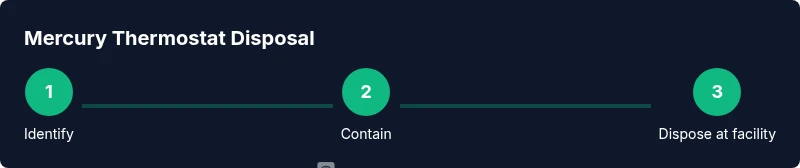
Disposing a thermostat that contains mercury requires careful handling as hazardous waste. Do not crush or drain mercury into plumbing. Instead, identify a certified disposal facility or household hazardous waste program. Place the device in a sealed container and transport it to the facility per local guidelines. If unsure, contact your local waste authority.
What is a mercury-containing thermostat and why disposal matters
Mercury-containing thermostats use a tiny mercury switch to sense ambient temperature. While the mercury is sealed, the device remains hazardous if it breaks or is improperly disposed. This makes responsible disposal essential to protect indoor air quality and local waterways. If you’ve ever asked how to dispose thermostat with mercury, you’re not alone: the answer is to treat the device as hazardous waste and follow local guidelines, rather than throwing it in the trash or recycling bin. The Thermostat Care team emphasizes that even small amounts of mercury can pose risks to children and pets, and that improper handling can contaminate soil or water. Regulations vary by state or country, but the core principle is consistent: use an approved disposal path, keep the thermostat intact, and minimize any potential spillage. For homeowners replacing an older thermostat, planning disposal ahead saves time and reduces stress. In this guide, you’ll learn how to identify mercury-containing thermostats, the safety steps to take, and how to locate the right facility. With clear actions, you can complete disposal without creating environmental or health hazards.
tip":null}
Legal and safety framework: what the law requires
Mercury-waste rules exist to keep communities safe from toxic exposure. In many regions, thermostats containing mercury fall under universal waste or hazardous waste categories that require special handling during collection, transport, and disposal. Homeowners are generally not allowed to place these devices in regular trash streams, and attempting to recycle them via standard electronics channels is often discouraged or prohibited. Local agencies may offer drop-off days, curbside pick-up for hazardous waste, or dedicated facilities where the thermostat can be processed safely. The goal is to prevent mercury from entering landfills or sewers, where it can volatilize and contaminate water supplies. The Thermostat Care analysis shows that following official disposal channels minimizes risk and ensures compliance with environmental regulations. If you’re uncertain about your area’s rules, contact your city or county waste authority, or visit the state’s environmental agency website for guidance. When you search for how to dispose thermostat with mercury locally, you’ll usually find a concise path: identify an authorized facility, arrange transport, and deliver the device securely.
tip":null}
Before you touch the thermostat: PPE and prep steps
Before handling the device, put on nitrile gloves and safety goggles to protect skin and eyes from potential mercury exposure. Ensure pets and children are out of the area, and ventilate the room if you hear any hiss or see a broken seal. Do not attempt to pry open the thermostat or test its internals; mercury-containing switches are sealed precisely to limit exposure. Power down the heating system and turn off power at the circuit breaker if you’re removing the thermostat from a powered line. Gently remove the device from the wall without shaking; aggressive movements can cause a tiny amount of mercury to escape from a cracked seal. Have a clear, clean workspace and a rigid container ready to receive the device. If the thermostat is damaged, do not handle it with bare hands; instead, follow local guidelines for handling broken mercury devices. The goal is to minimize any chance of a spill and to maintain the device’s integrity until it reaches a proper disposal facility.
tip":null}
Safe packaging and labeling: preparing for transport
Pack the thermostat in a sealable, rigid container inside a leak-proof bag. Use crumpled paper or absorbent material to immobilize the device and reduce movement during transit. Label the outer container with a clear hazardous waste notice and your local disposal program’s reference number if you have one. Do not mix this device with other electronics or household trash; keep it isolated to minimize cross-contamination. If the device is cracked, place it in a second containment layer to capture any mercury vapors. Before leaving home, confirm you have the necessary documentation or pickup authorization from your disposal provider. The goal is to keep the mercury contained, the container intact, and the route compliant with local rules.
tip":null}
How to find a certified disposal facility
Start by checking your city or county environmental department for approved facilities or events. You can also use national resources that guide hazardous waste drops-offs, such as state environmental agency websites or nationwide search tools. When you contact a facility, ask about mercury handling, required packaging, and whether transport is allowed from your residence or if you must bring the device to the site. If you’re replacing a thermostat through a contractor, verify they will coordinate disposal or provide certified pickup. Keep your device sealed and labeled throughout this process. Remember, the most reliable path is a certified facility or a household hazardous waste event; avoid resulting fines or penalties by adhering to official channels. Thermostat Care’s guidance emphasizes using approved routes to minimize environmental impact and ensure safety.
tip":null}
What to do with old thermostats during replacement
During a replacement, store the old thermostat in its original box if possible, or place it in a sturdy container until disposal. Do not power up the old device or test any of its components; this can release residual mercury. If you can’t immediately transport the device, store it in a cool, dry place away from living areas and pets. Before removing the new thermostat, confirm you have arranged disposal for the old unit and that your installation work area remains clean. If the thermostat was part of a larger HVAC project, coordinate disposal with your installer to avoid delays. The aim is a smooth transition that protects your home and the environment without creating unnecessary risk.
tip":null}
After disposal: documentation and cleanup tips
After the device has been delivered to a certified facility, request a receipt or disposal confirmation. Keep this documentation for your records; some jurisdictions require proof of proper disposal. If any mercury exposure symptoms occur, seek medical advice promptly. For future upgrades, choose a thermostat that uses non-mercury technology to simplify disposal and reduce risk. Finally, share your experience with neighbors to raise awareness about safe disposal practices. Thermostat Care’s stance is that proactive reporting and compliant disposal protect families and ecosystems alike.
Tools & Materials
- Nitrile gloves(Durable, chemical-resistant; essential to protect skin from mercury)
- Safety goggles(Eye protection to prevent mercury splashes)
- Sealable rigid container(Leak-proof, with a secure lid; for transport)
- Leak-proof bags(Containment to prevent spills during transport)
- Labeling materials(Hazardous waste labels and disposal documentation)
- Mercury spill kit (optional)(Useful if you suspect a spill or cracked device)
- Secure transport container(Rigid box or crate to protect from breakage during transit)
Steps
Estimated time: 45-60 minutes
- 1
Identify device and mercury presence
Confirm the thermostat contains mercury by checking the model label or manufacturer documentation. Do not open or test the device; assume mercury presence if unclear. This step prevents accidental exposure and guides the disposal path.
Tip: If you’re unsure, treat it as mercury-containing and proceed to proper handling only after securing containment. - 2
Power down and prep the area
Turn off power to the thermostat and HVAC circuit to avoid electrical hazards. Clear the workspace of children and pets, and ventilate the area. Do not remove the device while the system is powered if you’re not trained.
Tip: Never attempt to discharge or modify the device on a live system. - 3
Seal and contain the thermostat
Place the thermostat in a leak-proof bag, then put it into a sealable rigid container. Use absorbent material to immobilize the device and prevent movement that could disrupt the seal.
Tip: Handle gently to avoid cracking any sealed mercury switch. - 4
Label and prepare for transport
Apply a hazardous waste label on the exterior container. Gather any disposal documentation or pickup authorization from your facility. Ensure the device remains upright and unbroken during transport.
Tip: Carry the container carefully and avoid stacking with heavy items. - 5
Deliver to a certified facility
Take the device to a designated household hazardous waste event or certified disposal facility, as directed by your local authority. Do not leave it in regular trash or recycling streams.
Tip: Ask for a disposal receipt or confirmation once processed. - 6
Document and follow up
Keep disposal receipt and document the date and location. If you have replaced the thermostat, note the disposal details for future reference. Review local rules for any post-disposal reporting requirements.
Tip: Share feedback with your local program to help improve accessibility for others.
Questions & Answers
Why is mercury in thermostats a hazard?
Mercury is a toxic element that can contaminate air, water, and soil if released. In thermostats, the mercury switch is sealed, but damage or improper disposal can release mercury vapors. Proper disposal minimizes exposure risk for people and environments.
Mercury is toxic and harmful if released; proper disposal minimizes risk for people and the environment.
Can I recycle a mercury thermostat at home?
No. Mercury-containing thermostats require special handling and should be taken to a certified facility or hazardous waste event. Regular recycling streams do not safely process mercury switches.
No. Use a certified disposal path rather than home recycling.
Do I need a professional for disposal?
You don’t necessarily need a contractor to dispose of a mercury thermostat, but you should use certified facilities or official disposal programs. If you’re uncomfortable handling the device, contact your local hazardous waste authority for guidance.
You can do it yourself through certified facilities, but get professional help if you’re unsure.
How should I transport a mercury thermostat safely?
Keep the device sealed in its containment, away from passengers and pets, and labeled as hazardous waste. Do not transport loose or broken devices.
Keep it sealed and labeled as hazardous waste during transport.
Where can I drop off a mercury thermostat near me?
Check your city or county environmental agency for a list of approved facilities or hazardous waste events. Utilities sometimes offer pickups or drop-offs as well.
Look up your local environmental agency’s list of approved disposal sites.
What should I do after disposal?
Keep the disposal receipt for records and any required documentation. If you notice symptoms of mercury exposure, seek medical attention promptly.
Keep your receipt and contact authorities if exposure is suspected.
Watch Video
What to Remember
- Treat mercury thermostats as hazardous waste
- Do not dispose via regular trash or recycling
- Use certified facilities or household hazardous waste events
- Seal and label before transport to prevent spills
- Keep disposal receipts for records