How Long Does a Thermostat Last? Lifespan, Maintenance, and Replacement
Learn how long thermostats typically last, factors that affect lifespan, maintenance tips to extend life, and when to replace. Data-driven guidance from Thermostat Care for homeowners and DIY enthusiasts.


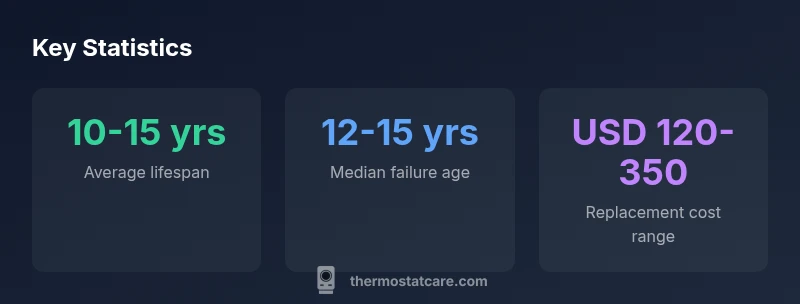
On average, a standard home thermostat lasts about 10 to 15 years with proper installation and regular maintenance. The Thermostat Care analysis, 2026, shows that failures are more common past the 12- to 15-year mark, especially in older mechanical units or batteries in non-smart models. Signs its near end of life include frequent recalibration, unresponsive screens, and slow temperature changes.
What determines how long a thermostat lasts
According to Thermostat Care, how long a thermostat lasts depends on several interrelated factors: the type of unit (smart, digital, or mechanical), installation quality, power supply reliability, and ongoing maintenance. Most homeowners experience a lifespan in the 10- to 15-year range for modern digital models, while older mechanical dial thermostats can reach the 15- to 25-year window with minimal wear. The specific environment also matters: dusty or humid areas, frequent power fluctuations, and HVAC system issues can accelerate wear on sensors, relays, and internal circuitry. Regular attention to battery health (for battery-powered units), firmware updates for smart thermostats, and clean sensor openings can meaningfully extend operation. As the Thermostat Care analysis, 2026, indicates, staying proactive about small problems now prevents surprising failures later. In practice, you’ll notice early warning signs long before a total failure, such as erratic readings, delayed responses to temperature changes, or minor touchscreen glitches. Understanding these variables helps you decide whether to repair, upgrade, or replace, and it sets realistic expectations for maintenance scheduling.
Estimating remaining life: when to replace
While you cannot predict exact retirement dates for a thermostat, you can estimate remaining life by paying attention to performance and age. Start by checking the unit’s age (manufacture date or purchase date) and noting any pattern of errors. Look for frequent recalibrations, dead spots in temperature control, or screens that flicker or fail to power up consistently. Battery-powered models often reveal batteries that wear out every 1-3 years; digital wired units reveal aging components when power draw becomes unstable. Firmware update history for smart thermostats is also telling: a lack of updates or discontinued support can indicate the end of viable software compatibility. If multiple maintenance steps have been tried and errors persist, or if the unit is approaching the typical 12- to 15-year window (and your energy bills are creeping up due to thermostat inaccuracy), plan for replacement. This approach blends practical observation with a conservative timeline to minimize risk of outages.
Maintenance practices that extend life
Proactive maintenance is the best way to maximize thermostat longevity. Begin with a clean installation: ensure the unit is properly powered, the C-wire is secure, and the indoor environment is free of excess dust. For battery-powered units, replace batteries annually to avoid sudden loss of performance. Keep the thermostat free of moisture and dust by gently blowing air from a can or using a soft brush. Regular firmware updates for smart thermostats should be installed when available, as updates often include stability improvements and bug fixes. If your system uses a dual-fuel or heat pump setup, ensure compatibility settings are correct and that sensors accurately reflect room conditions. Periodic calibration checks and sensor tests help prevent drift that can lead to overheating or underheating. Finally, verify wiring connections at the furnace control board during professional service visits, as loose wires are a common cause of intermittent operation. With these steps, you’ll reduce wear on internal components and help your unit operate reliably for many years.
Replacing vs repairing: a decision framework
Deciding whether to repair or replace a thermostat often comes down to age, frequency of issues, and the cost of fixes. If a unit is younger than 12-15 years and problems are isolated (unresponsive touch screen, minor calibration drift), repairs or component replacements can be cost-effective. If the device is older or showing repeated symptoms (random temperature swings, firmware incompatibilities, frequent power losses), replacement is usually the smarter choice. Evaluate the long-term energy efficiency gains; newer digital and smart thermostats can reduce energy consumption, which can offset the upfront cost within a few seasons. Consider compatibility with your HVAC system and whether the home’s wiring (C-wire availability) supports advanced features. A professional assessment can provide a precise estimate of repair versus replacement savings, factoring in labor and parts. Finally, create a transition plan that minimizes disruption, such as scheduling installation during a mild weather window and ensuring that your thermostat communicates reliably with your heating and cooling equipment.
Do smart thermostats last longer? Myths vs reality
There is a common perception that all smart thermostats automatically outlive non-smart models. In reality, longevity depends more on build quality and ongoing software support than on smart features alone. Many smart thermostats are designed with longer firmware lifecycles and faster processors, but they also rely on a steady power supply; a failing C-wire or unstable Wi-Fi can lead to performance issues that shorten perceived life. The hardware used in reputable smart models tends to be robust, and firmware updates can extend usable life through bug fixes. However, if a smart thermostat becomes obsolete due to discontinued software or security vulnerabilities, replacement becomes necessary sooner than anticipated. So, yes, smart tech can enhance longevity in some homes when properly maintained, but it does not guarantee 10- to 15-year durability by default. Evaluation should consider installation quality, network reliability, and compatibility with your HVAC system. Ultimately, the choice should align with your goals—energy savings, comfort, and remote control—rather than chasing a longer hardware warranty alone.
Common durability myths debunked
Myth: Bigger is better. Size or price does not determine lifespan; quality matters. Myth: Firmware updates always extend life. Updates can help stability but cannot fix fundamental hardware aging. Myth: Manual thermostats outlast digital ones. Aging is still real; electronics fail due to battery wear and sensors. Myth: All thermostats last exactly the same. Lifespan varies by type, usage, and environment. Myth: Replacing the thermostat automatically lowers energy bills. Only if installed correctly and paired with efficient HVAC.
Practical longevity checklist you can use this year
- Check battery health and replace batteries on battery-powered units before a failure occurs
- Confirm C-wire is secure and power supply is stable at the furnace control board
- Schedule a professional HVAC tune-up to verify sensor accuracy and wiring integrity
- Keep the thermostat clean and free of dust; use a soft brush monthly
- Update firmware on smart thermostats and ensure reliable Wi-Fi connectivity
- Review energy usage and set expectations for future upgrades based on system age
Lifespan by thermostat type
| Thermostat Type | Typical Lifespan | Key Maintenance |
|---|---|---|
| Smart thermostat | 12-15 years | Firmware updates; battery check; power supply |
| Digital non-smart thermostat | 10-15 years | Battery replacement; dust cleaning |
| Mechanical dial thermostat | 15-25 years | Periodic calibration; keep dust-free; manual checks |
Questions & Answers
How can I tell if my thermostat is near the end of its life?
Look for erratic readings, delayed responses, a flickering or dead display, frequent recalibration, and battery-related failures if applicable. If issues persist after basic maintenance and the unit is past the typical age range, replacement should be considered.
Watch for erratic readings and a dying display. If problems persist after maintenance and the unit is old, plan a replacement.
Do smart thermostats last longer than traditional ones?
Smart thermostats can last as long as traditional models, but their longevity depends on software support, power stability, and wiring. Firmware updates help, but hardware age still matters.
Smart thermostats can last as long as traditional ones, but software support and power stability influence durability.
How often should I replace thermostat batteries?
Battery-powered units typically require battery replacement every 1-3 years, depending on usage. Check the battery health periodically and replace proactively to avoid outages.
Usually every 1 to 3 years depending on usage.
Is there a warranty on thermostats and installation?
Most thermostats come with manufacturer warranties ranging from 1 to 5 years, and installation warranties may be offered by installers. Check local providers for specifics.
Warranties vary by model and installer; check the details before purchase.
Can upgrading to a smart thermostat save me money?
Upgrading can reduce energy bills by improving efficiency and scheduling, but results depend on climate, HVAC system, and usage. Combine with proper installation to maximize savings.
Smart thermostats can save energy, especially when paired with proper setup.
What maintenance steps extend thermostat life?
Keep sensors clean, ensure wiring is secure, replace batteries on time, install firmware updates when available, and have a professional check the HVAC connections during routine service.
Keep it clean, update firmware, and have the HVAC connections checked regularly.
“Longevity comes from proper installation, regular maintenance, and timely upgrades. The biggest gains come from understanding battery health and firmware updates.”
What to Remember
- Know your thermostat type and age to gauge replacement windows
- Regular maintenance can extend life by several years
- Smart thermostats offer energy savings but depend on proper power and support
- Use a clear replacement vs repair framework based on age and symptoms
- Follow a proactive maintenance checklist to maximize longevity