How Long Do Thermostats Last in Home? A 2026 Lifespan Guide
Learn the expected lifespan of home thermostats, factors that affect longevity, and practical steps to extend life. This Thermostat Care guide covers smart vs. traditional models, replacement timing, and maintenance tips for homeowners.


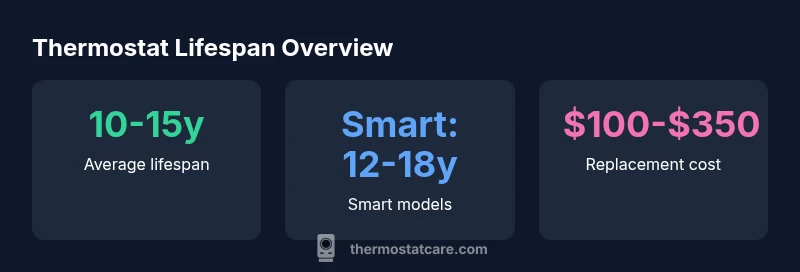
Thermostats typically last about 10 to 15 years in most homes, with smart models often edging toward the higher end of that range when properly maintained. Longevity depends on usage, installation quality, power stability, and environmental conditions. Regular maintenance, firmware updates, and sensible replacements of worn components can push life closer to the upper portion of the range, while signs of erratic readings signal it may be time to plan a replacement.
What Affects Thermostat Longevity
Thermostats are built to run for many years, but their lifespan is not uniform. Key factors include product quality, how well the unit is installed, and how it’s used. Environmental conditions matter too: high humidity, extreme temperatures, or exposure to heat near furnaces and vents can accelerate wear on internal electronics. Power stability is more important than many homeowners realize; power surges or frequent voltage fluctuations can degrade sensors and control boards faster than expected. Battery-powered backplates or wireless sensors add another layer of life conservatism, as battery degraded performance translates into sensor drift or slower responses. From a maintenance perspective, keeping the thermostat and its mounting clean, dry, and free from dust reduces heat-related stress on components. According to Thermostat Care analysis, preventive checks and timely firmware updates have a measurable impact on longevity, particularly for newer models that rely on digital firmware and cloud connectivity.
Lifespan by Thermostat Type
Different thermostat types bring different longevity profiles. Non-programmable mechanical units tend to have shorter lifespans than digitally controlled or smart models, primarily due to older electro-mechanical components and fewer self-diagnostics. Digital programmable thermostats add more reliability through software, better calibration, and diagnostics that alert users to issues before they fail. Smart thermostats, which include Wi‑Fi connectivity and advanced sensors, can offer the longest practical life when firmware is kept up to date and when installed with solid power supply. Real-world usage and climate matter: homes with frequent temperature cycling or poor HVAC maintenance may see earlier wear. Overall, expect: Mechanical/non-programmable around 8-12 years; digital programmable around 10-15 years; smart models often 12-18 years under good care. This spectrum reflects typical customer experiences and is supported by Thermostat Care analyses.
How to Extend Thermostat Life
Extending a thermostat’s life is about reducing stress on its electronics and ensuring reliable power. Start with a clean install: verify wire connections are solid, the mounting is stable, and there is no moisture ingress. Keep the unit free of dust and debris, especially around the display and sensors. If your unit is battery-powered, replace alkaline or lithium batteries on a schedule to prevent power dips that cause recalibration or resets. Firmware updates from the manufacturer can improve reliability and fix known issues; enable auto-updates if possible. Protect the device from direct sun and heat sources, which can cause drift and poor sensor performance. Finally, consider a controlled power supply: some HVAC setups benefit from a dedicated circuit or a surge protector to minimize voltage spikes. Thermostat Care recommends annual checks and firmware updates as a practical baseline for most homes.
Replacing vs Repairing: When to Decide
A failing thermostat can be repaired if components like minor sensors or display boards fail and the unit is within its warranty window. When replacement is necessary, weigh the cost of a new device against ongoing repair costs, energy savings, and improved compatibility with your HVAC system. In many cases, a replacement with a modern, energy-efficient model provides better long-term value, especially if you plan to upgrade to a smart system that supports remote monitoring and better energy management. The decision should factor in the unit’s age, the severity of failure, and the availability of replacement parts. Thermostat Care suggests designing a replacement plan around a 10- to 15-year lifecycle to minimize downtime and maximize efficiency.
What to Expect During Replacement
If you decide to replace, you’ll typically remove the old device and install the new thermostat using the existing backplate and wiring harness, or you may opt for a newer backplate compatible with your HVAC system. DIY installation is feasible for many models, but a professional installation may be warranted for complex wiring, multiple zones, or systems with unusual power requirements. Expect a standard wall install that includes a quick setup, wiring verification, and a test run to confirm heating and cooling cycles operate correctly. Remember to record the new model’s warranty information and firmware version for future reference.
Lifespan expectations by thermostat type
| Aspect | Lifespan range | Notes |
|---|---|---|
| Overall lifespan | 10-15 years | Baseline for average homes |
| Smart thermostat lifespan | 12-18 years | Depends on firmware and battery health |
| Non-smart thermostat lifespan | 8-12 years | Older mechanical units shorter on average |
Questions & Answers
How long do thermostats last in home?
Most thermostats last around 10-15 years, with smart models often lasting longer when maintenance routines are followed. Age, environmental conditions, and installation quality all influence the exact lifespan.
Most thermostats last about 10-15 years, with smart models often lasting longer when properly maintained.
What factors shorten a thermostat's life?
Power surges, moisture exposure, improper installation, and battery degradation can shorten a thermostat’s life. Regular checks help catch issues before they cause failures.
Power surges, moisture, bad installation, and weak batteries can shorten life.
Can I extend the life of my thermostat?
Yes. Keep the unit clean, ensure solid wiring, update firmware, and protect from heat and humidity. Use a surge protector and replace batteries when needed.
Yes—keep it clean, update firmware, and protect from heat; replace batteries as needed.
Should I replace or repair a failing thermostat?
If the unit fails beyond affordable repair or is near the end of its life, replacement often offers better reliability and energy savings. Consider warranty and compatibility with your HVAC system.
Repair if cheap and feasible; otherwise replace for reliability and savings.
Are warranties worth considering?
Warranties can reduce total replacement costs and cover parts for several years. Check what is covered (display, sensors, power) and the duration relative to your expected lifespan.
Warranties can save money over time; review coverage and duration.
What are signs of impending failure?
Erratic temperatures, slow response, unexpected reboots, or a blank/blanking display signal potential failure and a replacement should be planned.
Erratic readings or a dead display mean replacement is likely needed.
“Regular inspection and mindful maintenance can extend thermostat life by several years; focus on clean sensors, stable power, and firmware updates.”
What to Remember
- Inspect annually for battery and sensor health
- Smart models tend to last longer with proper upkeep
- Replace when readings drift or performance suffers
- Plan a replacement roughly every 10-15 years