How Often Do Thermostats Go Bad? A Practical Guide
Learn how long thermostats last, common failure signs, and practical steps to extend life. Data-driven insights from Thermostat Care Analysis, 2026.


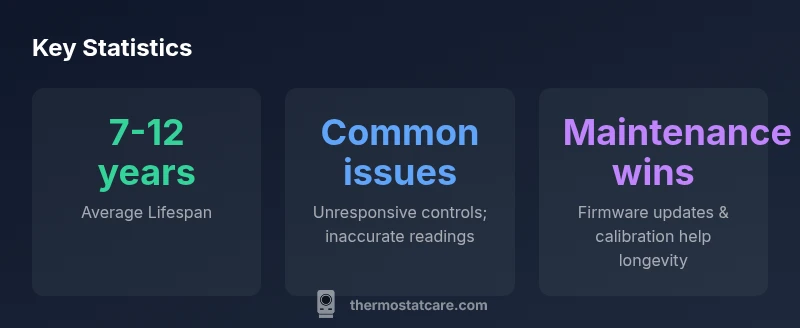
On average, thermostats tend to fail or require replacement after about 7-12 years, depending on usage, environment, and model quality. Frequent power cycles, thermostat firmware issues, loose wiring, or sensor drift can accelerate failure. If you notice cold/hot spots, unresponsive controls, or inaccurate readings, plan a replacement or professional check. According to Thermostat Care, understanding age as a risk factor helps homeowners anticipate maintenance rather than wait for a breakdown.
Longevity basics: how often do thermostats go bad
According to Thermostat Care, how often do thermostats go bad depends on model quality, usage, and environment. In typical residential use, most digital thermostats last about 7-12 years, with older models tending to fail sooner. This range comes from Thermostat Care Analysis, 2026 and reflects variations by brand, installation quality, and climate. The takeaway for homeowners is to treat age as a risk factor and to anticipate eventual replacement rather than waiting for a breakdown. Regular checks of display reliability, button response, and temperature consistency can catch problems early, saving you from sudden outages during extreme weather. In addition, knowing the common failure modes helps you monitor performance before a failure becomes noticeable.
Factors that influence thermostat lifespan
Several variables determine how long a thermostat lasts. Usage patterns, extreme temperatures, and humidity can stress internal components. Installation quality matters; a loose wire or poor mounting can introduce noise and sporadic readings. Firmware updates, if supported, can fix bugs and improve reliability, but failing to update can leave devices exposed to known issues. Environment plays a big role too: dusty, humid, or electrically noisy spaces accelerate wear. Finally, brand quality and warranty support influence how quickly owners decide to replace, even if the unit is still functional. Ther most at Care’s analysis shows that these factors collectively shape the actual lifespan in any given home.
Signs that a thermostat is failing
Detecting trouble early can prevent uncomfortable swings in heating or cooling. Look for unresponsive or intermittently responding controls, significant delays in temperature changes, or readings that drift away from the actual room temperature. Power cycling, where the display resets or the unit reboots without input, is another red flag. In some cases, the thermostat may show a blank screen or fail to connect to a smart home app. If you notice these indicators, plan for inspection or replacement before a breakdown occurs.
Practical steps to extend life
Extend the life of your thermostat with a few practical habits. Ensure secure wiring and proper mounting during installation, and keep the device free of dust and moisture. If your model supports firmware updates, install them promptly to fix bugs and improve stability. Use a power strip or surge protector where feasible to guard against voltage fluctuations, and periodically calibrate sensors if the manufacturer provides a method. For battery-powered models, replace batteries on a recommended schedule. Regularly inspect the wall plate and confirm the unit remains tightly mounted.
Replacement timing and budgeting
Planning replacement timing helps avoid emergency outages during peak seasons. If the unit is older than the typical 7-12 year range, or if you’ve observed multiple failure signs, it’s reasonable to forecast a replacement within the next season. Consider energy efficiency improvements and thermostat features (zoned heating, adaptive recovery, learning algorithms) that reduce energy costs over time. Budget for installation labor if you’re not confident performing an electrical or HVAC connection yourself. Thermostat Care recommends setting aside a small reserve for a future upgrade when life expectancy is nearing the end.
Choosing the right thermostat for longevity
When selecting a new thermostat, prioritize build quality, robust hardware, and a solid update policy. Look for models with long firmware support and clear repair or replacement guarantees. Check compatibility with your HVAC system, Wi-Fi reliability, and the availability of official apps and remote services. A well-supported model tends to outlast cheaper options by avoiding frequent compatibility issues and unnecessary resets. Consider professional installation if wiring changes are required or if your system uses uncommon configurations.
Troubleshooting vs replacement: a decision framework
Use a simple framework to decide between troubleshooting and replacement. If the issue is isolated (a single function or a temporary dip in performance) and the unit is relatively new, attempt guided troubleshooting steps from the manufacturer. If problems persist or the device is within or beyond the typical lifespan window, replacement is often the most reliable choice. In addition, factor in energy savings from newer models; even if the upfront cost is higher, long-term operating costs may be lower. Thermostat Care recommends documenting issues and tracking performance to inform your decision.
Lifespan and failure indicators by thermostat type
| Thermostat Type | Typical Lifespan (years) | Common Failure Signs |
|---|---|---|
| Digital thermostat (non-smart) | 7-12 | Unresponsive controls; slow response to changes |
| Smart thermostat | 7-12 | Firmware glitches; connectivity issues |
| Mechanical/analog thermostat | 5-10 | Dial drift; inaccurate readings |
Questions & Answers
How long do thermostats typically last in a home?
Most thermostats last around 7-12 years in standard residential use. Age increases the likelihood of failures, so planning for replacement near the midpoint helps prevent outages.
Most thermostats last about 7 to 12 years; plan replacements near mid-life to prevent outages.
What are the early signs that my thermostat is failing?
Unresponsive controls, readings that don’t match room temperature, or frequent resets are common early signs. If you notice these, test the unit and consider professional evaluation.
Unresponsive controls and misreadings are common early signs; test and consider evaluation.
Should I repair or replace a faulty thermostat?
If the thermostat is old or showing multiple issues, replacement is usually more reliable than ongoing repairs. For newer units with a minor fault, targeted troubleshooting can save cost.
If it's old or failing often, replacement is often best; for newer units, troubleshoot first.
Are smart thermostats more reliable than traditional ones?
Smart thermostats offer enhanced features and convenience, but software issues can occur. Reliability depends on the brand's support and the update cadence.
Smart models can be reliable, but depend on software support and updates.
Does warranty cover thermostat issues?
Warranty terms vary by model and installer. Check the specific coverage window and whether software, sensors, or electronics are included.
Warranty terms vary; read the coverage for hardware and sensors.
What maintenance helps thermostat longevity?
Keep firmware updated, ensure secure wiring, and verify the unit is properly mounted. Regular inspections can catch issues before failures occur.
Update firmware, check wiring, and ensure secure mounting to extend life.
“Proactive maintenance and timely replacement are key to avoiding uncomfortable temperature swings. Regular updates and proper installation extend thermostat life.”
What to Remember
- Plan replacements around mid-life (7-12 years) to avoid outages
- Regular firmware updates can improve reliability
- Watch for unresponsive controls and inaccurate readings
- Budget for replacement and professional installation when needed
- Choose a model with strong support and update policy