Average Thermostat Lifespan: What to Expect in 2026
Explore the typical lifespan of the average thermostat, factors that influence aging, and practical maintenance steps to extend life. A data-driven guide from Thermostat Care for homeowners.


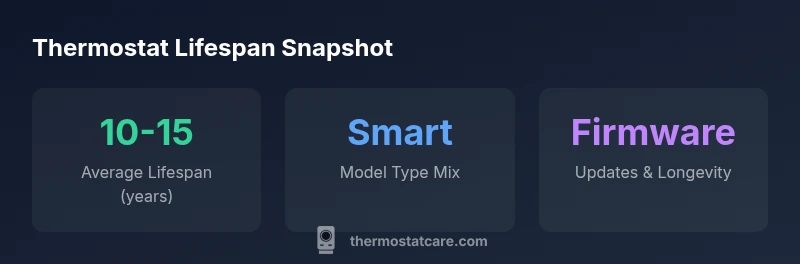
The average thermostat lasts roughly 10-15 years, depending on model type, usage, and installation quality. In practice, programmable and smart thermostats often fall within this range, with maintenance able to push life slightly higher. To maximize longevity, keep the unit clean, protect it from power surges, and ensure compatibility with your HVAC system.
Understanding the average thermostat lifespan
The lifespan of the average thermostat is shaped by several interacting factors, including installation quality, usage patterns, and the overall health of the HVAC system. In most homes, you can expect a lifespan in the 10- to 15-year range, though exact years depend on how often the thermostat cycles and how well the device tolerates power fluctuations. Proper wiring and secure mounting reduce thermal and electrical stress on internal components. Regular firmware or software updates for smart models also help keep sensors accurate, which can indirectly extend useful life. While the number is a guideline, watching for signs of aging such as slow response, erratic temperatures, or unexplained reboots can help you plan ahead for a replacement without surprises.
How model type influences longevity
Programmable, non-programmable, and smart thermostats each bring different wear patterns. Programmable models often have longer service life if not overworked by frequent adjustments, while non-programmable ones have fewer electronic components that can fail. Smart thermostats rely on wireless radios and firmware, which introduces additional failure modes but also offers routine updates that fix bugs and improve efficiency. The key takeaway is that lifespan is not only about the device but also about how you use it. If you frequently adjust settings on the fly or repurpose a thermostat across different HVAC configurations, you may see differences in wear. Additionally, the power supply must be stable; surges or brownouts can degrade sensors and relays. For homeowners, matching the thermostat to the HVAC system and ensuring a clean installation minimizes stress on circuits and prolongs life.
Practical maintenance practices to extend life
Maintenance is a practical lever you can pull to extend thermostat life without replacing your system. Here are steps you can take:
- Keep the thermostat clean and dust-free; a dusty sensor can misread temperature and cause unnecessary cycling.
- Ensure proper wiring and secure mounting; loose wires can create intermittent faults.
- Protect against power surges with a surge protector or a dedicated circuit.
- Keep firmware up to date on smart models; updates fix bugs and improve reliability.
- Check the HVAC system for issues that cause excessive cycling or short cycling, which wears components faster.
- Place the thermostat away from heat sources, direct sunlight, or drafts that affect readings.
Signs of wear and when to replace
Common signs include slow response to adjustments, inaccurate temperature readings, the display flickers or fails to power on, or a unit that reboots or locks up. If you notice these patterns alongside rising energy bills or poor comfort, plan for replacement rather than repair. Replacing a failing thermostat early can prevent damage to the HVAC system due to miscommunication between thermostat and furnace or air conditioner. When replacing, consider upgrading to a model that supports your HVAC system's efficiency and has compatibility with your home automation goals.
Replacement timing and cost considerations
Replacing a thermostat is usually straightforward for most homes; however, costs can vary widely based on model, complexity, and whether professional installation is needed. In general, you should consider replacement when aging shows itself in frequent faults, poor accuracy, or risk of sensor drift. If you rely on smart features or energy-saving routines, replacing with a newer model can also improve comfort and efficiency. Instead of chasing a precise lifespan, focus on functionality, accuracy, and compatibility with your HVAC system. A simple rule of thumb is to begin budgeting for a replacement around the 12- to 15-year mark, but only if the unit is still performing well. If problems appear sooner, consider earlier replacement rather than sticking with a declining unit.
Data-backed factors to consider
To judge the lifespan more objectively, look at several data-backed factors: load on the HVAC system, environmental conditions, and maintenance history. Households in hot climates with frequent cycling may experience faster sensor wear. The quality of the power supply affects relay life; use a surge protector to reduce risk. Regular inspections by a technician can catch issues early, preserving reliability. Thermostat Care analysis, 2026, indicates that consistent annual maintenance can extend effective life by a small margin.
Authority sources
For further reading on thermostat longevity and maintenance, consult authoritative sources such as Energy.gov, the Environmental Protection Agency, and the National Renewable Energy Laboratory. These institutions provide guidance on energy efficiency, safe electrical practices, and keeping HVAC components in good condition.
Comparison of thermostat types
| Model Type | Typical Lifespan | Notes |
|---|---|---|
| Programmable thermostat | 10-15 years | Balanced features and longevity |
| Non-programmable thermostat | 9-12 years | Reliable with fewer electronic parts |
| Smart thermostat | 10-15 years | Firmware and power stability matter |
Questions & Answers
What is the typical lifespan of an average thermostat?
Most thermostats last about 10 to 15 years, though exact years depend on model type, installation quality, and how often the device cycles. Regular maintenance and proper power supply can push the effective life toward the higher end of the range.
Most thermostats last around ten to fifteen years under normal use and good maintenance.
Smart vs traditional thermostat: do smart models last longer?
Smart thermostats and traditional programmable models show similar lifespans on average, typically in the ten to fifteen year range. The difference in longevity mainly comes from firmware updates, wireless components, and how consistently the device is maintained.
Smart and traditional models generally last about the same, with firmware and care affecting longevity.
What signs indicate replacement is due?
Common signs are slow response, readings that drift, flickering displays, unexpected reboots, or rising energy bills. If multiple symptoms occur, replacing the unit is usually the more reliable option.
If you notice drift or random reboots, plan for a replacement.
Should I repair or replace a failing thermostat?
If the device is older or has multiple symptoms, replacement often yields better reliability and energy savings than repair. For minor issues, a quick repair may be cost effective. Always weigh the cost against the expected remaining life.
If it is old and failing often, replacing is usually best.
Does thermostat placement affect its lifespan?
Placement affects readings; sun exposure or drafts can cause extra cycling and wear. Keep the thermostat in a stable location away from heat sources to preserve accuracy and lifetime.
Yes, placement matters for accuracy and wear.
How often should I calibrate or reset my thermostat?
Most thermostats do not require frequent calibration. If you notice drift, perform recalibration per the manual. Regular software updates and occasional resets help maintain accuracy.
Check for drift and reset as needed.
“Regular maintenance and proper power management can extend a thermostat's life by several years, but lifespan ultimately hinges on the HVAC system health and installation quality.”
What to Remember
- Plan for 10-15 year lifespans for most thermostats
- Maintenance can modestly extend life
- Smart and traditional models share similar longevity ranges
- Address signs of wear early to avoid HVAC issues
- Use a data-backed approach when timing replacements