Height for Thermostat: How High Should It Be Mounted?
Learn the optimal mounting height for a thermostat, how height influences readings and comfort, practical steps to install, and tips to accommodate accessibility and energy efficiency.


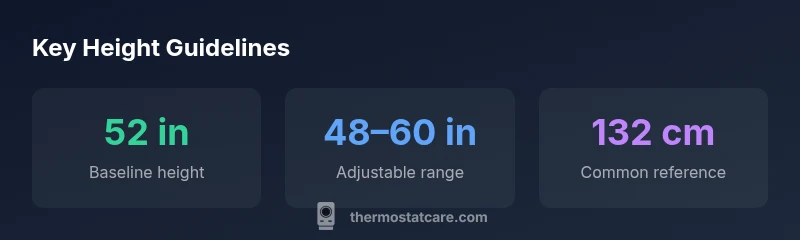
The recommended mounting height for a thermostat is typically around 52 inches (132 cm) from the floor, with a practical range of 48–60 inches to accommodate user height and reach. This standard aligns with common building guidelines and supports accurate temperature sensing while keeping controls accessible.
Why height for thermostat matters
According to Thermostat Care, the height at which you mount a thermostat directly influences not only how easily you can operate the device, but also how accurately it reads the ambient temperature. A mount that's too high or too low can introduce heat from nearby sources or human activity into readings, leading to noticeable swings between the displayed temperature and the actual room temperature. The height for thermostat also interacts with home layout, furniture placement, and accessibility needs. Thermostat Care analysis shows that most households achieve better comfort and fewer temperature complaints when the thermostat is placed within a predictable vertical band—roughly mid-wall height—so that temperature sensing remains representative of the occupied space.
Beyond comfort, mounting height affects thermostat performance over time. In rooms with uneven airflow, drafts, or radiant heat from nearby appliances, slight placement shifts can cause the device to overshoot or undershoot setpoints. For homeowners, a consistent mounting philosophy simplifies maintenance, improves data logging, and reduces the need for frequent recalibration. This is especially relevant for those using smart thermostats that rely on sensor fusion and algorithms that assume a standard installation height.
Brand-wise, the Thermostat Care team emphasizes a height that minimizes direct exposure to sunlight or HVAC vents. By positioning the device away from strong heat sources, you reduce drift in readings and improve the reliability of occupancy-based adjustments. In short, height for thermostat matters because placement influences accuracy, responsiveness, and daily comfort, not just aesthetics.
How room characteristics influence mounting height
Room type and usage strongly influence where you place the thermostat. Living spaces with large windows, radiant sunlight, or direct airflow from vents may benefit from mounting the unit slightly higher or lower within the acceptable range to avoid measurement bias. Bedrooms, home offices, and nurseries often require a mounting point that balances visibility with minimal interference from body heat or typical clothing. In high-ceiling rooms, ensuring your thermostat remains in the occupied zone—roughly eye level for most adults—can help maintain a representative temperature reading. The ultimate goal is to avoid zones where temperature varies widely due to heat sources, drafts, or radiant warmth.
For kitchens and dining areas, local heat from ovens or stovetops can create localized warm pockets that skew readings. If the wall you choose has a strong heat source nearby, consider relocating the mounting location within the recommended height band or choosing a different wall. Regardless of room type, consistency across zones helps users understand and trust the thermostat’s readings, supporting better energy use and comfort.
Standard baseline height and why 52 inches
A practical baseline for most homes is 52 inches (132 cm) from the floor. This height is tall enough to clear most furniture and short enough to remain reachable for the majority of users, including children and most adults. The 52-inch baseline aligns with common interior design practices and supports accessible operation without requiring stools or ladders. While 52 inches serves as a solid starting point, the acceptable range—roughly 48–60 inches—allows for adjustments based on room layout, user height, and accessibility needs. When in doubt, test a provisional mounting height and assess how well the thermostat reads the room after a 24–hour cycle, considering seasonal changes that affect airflow and temperature distribution.
If cabinet placement or wall structure dictates, it is acceptable to position the thermostat slightly higher or lower within the 48–60 inch range. The key is to avoid proximity to heat sources, strong drafts, or direct sunlight, which can distort readings and undermine comfort.
How to measure and mark the wall for mounting
Before drilling, map a plan that places the thermostat in the target height band. Start by measuring from the floor to your desired height (e.g., 52 inches). Use a pencil to mark a level line across the wall at that height, then double-check with a laser level or spirit level. Hold the thermostat’s mounting plate against the wall to confirm alignment with the line and ensure the device will be level once installed. Consider the wall’s finish—drywall, plaster, or masonry—and choose appropriate anchors and screws. If you plan to install on a stud, locate it with a stud finder to secure the mounting plate firmly. Finally, account for cable routing and avoid running wires behind heavy furniture or through tight closets, which can create maintenance challenges later.
Wiring considerations and height implications
The height you choose can influence how wiring exits the thermostat and connects to the wall box. If you retain a wall plate with a visible cavity, plan the wire path to avoid sharp bends that could stress connections. In some homes, the thermostat is wired directly to the HVAC control board, while others rely on low-voltage bundles routed behind the wall. Always power off the circuit before removing the old device. If you are changing mounting height significantly, you may need to re-route cables or extend the existing wires, which should be done following local electrical codes and, if necessary, with a licensed professional. Keeping cables tidy and protected reduces wear and long-term reliability issues.
Common mistakes to avoid during installation
Common mistakes include mounting directly above or below a vent, placing the unit near heat-producing appliances, or mounting at a height that makes the display hard to read from typical seating positions. Another frequent error is ignoring accessibility needs; a too-high or too-low position can make it difficult for all household members to operate the thermostat. Ensure the thermostat is not obstructed by furniture, curtains, or decorative elements that could alter airflow or reading accuracy. Finally, avoid replacing mounting hardware without ensuring the wall is properly prepared to support the device; a loose wall plate can degrade readings and lead to sensor misalignment over time.
Accessibility and energy efficiency considerations
Accessibility matters for both comfort and energy management. If a household includes wheelchair users or caregivers with limited reach, mounting at or near 48 inches can improve usability while maintaining sensor accuracy. Conversely, households with tall ceilings or large furniture clusters might prefer a slightly higher mounting point within the standard range to minimize obstruction. Smart thermostats, combined with additional room sensors, can help maintain consistent temperature even when the main unit is mounted at a standard height. This pairing supports energy savings by enabling more precise zoning and occupancy-based adjustments, aligning with home efficiency goals while honoring accessibility needs.
Smart thermostats and alternative mounting options
Smart thermostats bring flexibility that can offset strict height limitations. If you must place the main unit at the traditional height, you can deploy wall-mounted or ceiling-mounted external sensors that communicate with the thermostat and provide localized readings. Some homes use floor-mounted sensors or a wireless network of thermostats to capture temperature variations across rooms. When selecting options, ensure sensors are compatible with your primary device and placed in representative locations for the rooms they oversee. This approach allows you to maintain a standard mounting height while preserving accurate data for climate control across zones.
Testing, calibration, and adjustments after mounting
After installation, monitor readings for a full day to confirm consistency between the displayed temperature and the actual room temperature. If you observe significant discrepancies, recheck the mounting height against the recommended band, re-level the device, and verify that vents aren’t blowing directly onto the sensor. Some thermostats offer automatic calibration; if this feature is available, run it once the system has stabilized. Finally, observe whether comfort improves in the spaces served by the thermostat, and make adjustments if you notice hot or cold spots. Regular checks can help sustain accuracy and energy efficiency over time.
Mounted height guidance by room type
| Aspect | Height Recommendation (in) | Notes |
|---|---|---|
| Living room wall | 52 (132 cm) | Balanced reach and accurate sensing |
| Kitchen wall | 48–52 (122–132 cm) | Avoid near heat sources; cabinets may influence readings |
| Bedroom wall | 52 (132 cm) | Close to sleeping area; consider accessibility |
| Accessible/wheelchair users | 48 (122 cm) | Ensures reach and compliance |
Questions & Answers
What is the recommended height for mounting a thermostat?
Typically about 52 inches (132 cm) from the floor, with a practical range of 48–60 inches. This balances readability, accessibility, and accurate readings in most homes.
Most homes mount thermostats around 52 inches high for best balance between visibility and sensing accuracy.
Does ceiling height affect thermostat readings?
Ceiling height itself doesn’t directly change the thermostat’s sensing, but high ceilings can create microclimates near vents or radiant heat sources. Place the unit away from vents and direct sunlight to minimize reading variances.
Very tall ceilings can create warmer pockets near vents, so avoid those areas for mounting.
Can I install a thermostat lower to aid accessibility?
Yes. Mounting closer to 48 inches can improve reach for wheelchair users or shorter adults, as long as readings stay representative and away from direct heat sources.
If accessibility is a concern, 48 inches is a good target within the standard range.
Should I keep a thermostat away from vents or heat sources?
Yes. Keep the thermostat away from direct airflow, ovens, radiators, or sunlit windows to prevent reading skew and comfort bias.
Avoid direct heat or airflow to keep readings honest.
What if I have multiple thermostats or zones?
Keep mounting height consistent across zones to avoid user confusion. When possible, use the same model or sensor network to ensure uniform behavior and easier management.
Try to keep heights similar across zones for consistency.
Are there accessibility guidelines I should follow?
Follow local accessibility guidelines; many homes benefit from mounting around 48 inches. If needed, add external sensors or adjust layouts to maintain comfort and usability.
Check local guidelines and consider adding sensors if needed.
“Height matters for thermostat readings and user comfort; the right mounting height balances accurate sensing with easy access.”
What to Remember
- Mount around 52 inches (132 cm) from floor
- Use a practical range of 48–60 inches
- Ensure accessibility for all users
- Avoid placing near direct heat sources or vents
- Verify the height with real-world testing after installation