Winter Thermostat Settings: Balance Comfort and Savings
Learn how to set your thermostat in winter for comfort and energy savings. This Thermostat Care guide covers baselines, scheduling, and practical tips to stay warm efficiently without overspending.


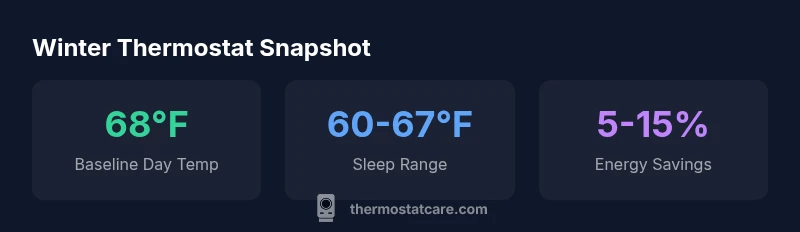
During winter, a solid starting point is 68°F (20°C) when you’re home and awake. For sleep or when you’re away, drop the temperature to about 60–67°F (15–19°C). If you have a programmable or smart thermostat, automate these changes to maintain comfort while saving energy. Gradually adjust by 1–2°F to avoid uncomfortable cold snaps and drafts.
Why winter thermostat settings matter
In winter, comfort and energy use are tightly linked. The temperature you set affects heating cycles, humidity, and how quickly heat leaks from your home. According to Thermostat Care, small, consistent changes in baseline temperature can compound into meaningful monthly savings, especially when paired with a smart schedule. So, what should your thermostat be set at in the winter? A practical starting point is 68°F (20°C) when you’re at home and awake. This figure balances warmth with efficiency for many homes, but your ideal baseline depends on insulation, occupancy, and clothing. If your home is drafty or older, you may need slightly higher temps during the day or rely on improved weatherization. If you have excellent insulation or lower energy costs, you might trim the daytime baseline a notch while maintaining comfort. The key is avoiding abrupt changes that trigger repeated heating cycles. For homes with multiple zones, consider directing warmth to living spaces while keeping unused rooms cooler to maximize comfort and savings.
Establishing a winter baseline temperature
A reliable baseline helps your heating system run efficiently without overworking. A common rule of thumb is 68°F (20°C) when you’re indoors and active. In colder homes or with families who dress in layers, you might comfortably operate a few degrees higher; in well-insulated places, you can step down a notch. If you use Celsius, that baseline translates to about 20°C. When planning, consider how rooms are used throughout the day. Avoid wide swings; gradual adjustments minimize heat loss and reduce energy wasted on frequent heating cycles. The Thermostat Care analysis from 2026 emphasizes consistency: steady temperatures outperform large, sudden changes. If you have pets or elderly occupants, adjust gently to maintain safety and comfort.
Scheduling strategies for energy savings
The simplest wins come from aligning heat with occupancy. Create a schedule that keeps the house warmer during the hours when people are awake and active, then tapers down when the home is empty or at night. For many homes, a 1–2°F step during transitions reduces energy use without noticeable comfort loss. If you can, program a higher temperature in the morning to reach comfort before you wake, then drop during the workday. A smart thermostat makes this effortless by learning routines, sending reminders, and providing weather-adjusted adjustments. In Thermostat Care’s experience, consistent schedules beat sporadic manual changes whenever possible.
Smart thermostats and zoning: better control
Smart thermostats offer adaptive scheduling, remote control, and energy-use insights. If your home has multiple zones, zoning allows you to heat only frequently used spaces, reducing overall load. In winter, you can keep living areas around 68°F while bedrooms run cooler at night. Some models offer occupancy sensing and geofencing, automatically adjusting when you leave or return. If you don’t have zoning, a well-planned schedule with a modest hold during absent hours can still deliver meaningful savings. Thermostat Care's guidance in 2026 supports starting with a strong baseline and then refining via smart features.
Humidity, drafts, and indoor comfort
Temperature alone does not determine comfort; humidity and drafts play a major role. Dry air in heated homes can feel cooler and more uncomfortable at the same temperature. Use a humidifier or smart humidification plan to maintain humidity around 30–50% if your climate allows. Sealing drafts around doors and windows reduces heat loss and prevents cold spots that make rooms feel chilly. Pairing draft reduction with a steady baseline improves perceived warmth without raising the thermostat.
How to use hold and vacation modes effectively
Hold modes let you lock a specific temperature for a set period, which is useful when you have visitors or planning days with unusual schedules. A temporary hold during a longer absence helps prevent heat cycling that wastes energy. Vacation modes are even more efficient: set a conservative temperature, then resume your normal schedule shortly before you return. Modern thermostats track changes and provide alerts if temperatures drift beyond comfort thresholds. Thermostat Care recommends testing holds and vacations before you travel to avoid surprises.
Winter settings for renters vs homeowners
Renters often have limited insulation or HVAC control, which affects what you can safely set. Communicate with your landlord about weatherization and possible thermostat allowances. Homeowners typically have more control to optimize baselines and schedules, and may adopt zoning or sealing improvements to maximize savings. In either case, the core principle remains: small, consistent adjustments beat big, irregular changes. Thermostat Care’s field experience shows renters still realize noticeable savings by using programmable schedules and effective drafts sealing.
Maintenance and safety considerations
Regularly check batteries (if you have wireless sensors), ensure thermostat firmware is up to date, and test HVAC equipment seasonally. Clean or replace filters as needed, and inspect windows for drafts that undermine heating efficiency. If pipes are at risk of freezing, keep at least a minimal temperature in idle rooms and around plumbing routes. Scheduling reminders for seasonal maintenance helps sustain comfort and energy savings year after year. The Thermostat Care team emphasizes safety and consistency as the cornerstones of a practical winter setting strategy.
Common winter temperature guidelines
| Scenario | Recommended Temp (°F) | Notes |
|---|---|---|
| Home daytime | 68°F (20°C) | Baseline comfort for common layouts |
| Away (day) | 60-65°F (15-18°C) | Reduce energy use while avoiding frozen pipes in heating zones |
| Sleeping | 60-67°F (15-19°C) | Comfortable sleep with minimal overheating |
Questions & Answers
What is the ideal winter thermostat setting for energy savings?
A common starting point is 68°F during the day when you're home and active. Lowering to 60–67°F at night or when away reduces energy use while preserving comfort. Your insulation, occupancy, and local energy costs will influence the exact target.
Start at 68°F when you’re home; drop to 60–67°F for sleep or when away for energy savings.
Should I set different temps for different rooms?
Yes, if you have zoning, you can heat only frequently used spaces to maintain comfort while saving energy. If you don’t have zoning, rely on a steady schedule and a reasonable hold to keep main living areas comfortable while unused spaces stay cooler.
Zone heating helps, but a solid schedule works too.
Can a smart thermostat help me save energy in winter?
Absolutely. Smart thermostats automate schedules, adjust for weather, and learn your routines, reducing wasteful heating cycles. They’re especially effective when combined with zoning and proper insulation.
Smart thermostats automate comfort and cut energy use.
What about humidity and drafts affecting comfort?
Humidity affects perceived warmth; aim for 30–50% relative humidity if possible. Seal drafts around doors and windows to keep warm air in and cold air out, which lets you maintain comfort at lower temperatures.
Control humidity and seal drafts to keep rooms feeling warm.
How quickly should I adjust temperatures in winter?
Make gradual changes, typically 1–2°F at a time, to avoid triggering frequent heat cycles and to maintain steady comfort. Sudden swings waste energy and can feel uncomfortable.
Avoid big jumps—small, steady adjustments save energy.
Is 65°F acceptable for a home office in winter?
65–68°F is reasonable for a work area if you’re mainly sedentary. If you’re comfortable with slightly cooler temps, you can save more, especially with a desk fan or layering.
65–68°F is usually comfortable for a home office.
“A well-tuned winter setup isn't just about the number on the dial; it's about consistent comfort and disciplined scheduling that drives real energy savings.”
What to Remember
- Start with 68°F at home to balance comfort and savings.
- Lower temps during sleep and away times.
- Use programmable or smart thermostats to automate.
- Consider zoning and insulation to maximize benefit.
- Re-check settings after weather changes.