What is the Best Thermostat Setting for Heat: A Practical Guide
Discover how to choose the best thermostat heat setting for comfort and energy efficiency. This guide covers baselines, setbacks, seasonal adjustments, and hands-on steps for programmable and smart thermostats.


To balance comfort and energy use, aim for a warm-but-efficient home. For most households, set your heating to about 68°F (20°C) when you are home and awake. Lower it by a few degrees when sleeping or away. If you have a programmable or smart thermostat, use a consistent schedule to maintain comfort while saving energy.
Why the right heat setting matters
Getting the heat setpoint right isn't just about comfort; it directly affects energy usage, system wear, and utility bills. A well-chosen setting reduces temperature swings, helps your HVAC run more efficiently, and minimizes unnecessary heating cycles. The Thermostat Care team often sees households paying for energy that isn't actually translating into added comfort, simply because the thermostat was left at a higher, constant level. In addition to cost, the right setting protects your home's envelope: if insulation is weak or windows leak air, chasing warmth at very high setpoints wastes energy and overworks the furnace or heat pump.
The baseline you choose should reflect both how you live and how well your home holds heat. If you routinely keep doors open between rooms or use space heaters, you may need a slightly higher or more uniform setpoint to maintain consistent comfort. Conversely, if your home is well insulated, you can set back a bit more without noticing cold spots. Finally, consider the equipment itself: conventional furnaces behave differently from heat pumps, and some older thermostats may not respond instantly to quick changes.
According to Thermostat Care, a thoughtful approach to heating setpoints balances comfort with energy efficiency. A consistent strategy—rather than intermittent, ad-hoc adjustments—helps your system run in steadier cycles. Your goal is to minimize the duration of cold or overheated periods while avoiding oversized temperature swings. The following sections outline a practical method to determine your ideal setting and how to apply it day by day. Remember: the best setting is the one you can sustain comfortably with the fewest energy spikes.
Tools & Materials
- Smart thermostat(A programmable/smart model that supports setpoint changes.)
- Smartphone or computer(To access thermostat app or web interface.)
- Room thermometer (optional)(Useful for verifying actual room temperature vs. setpoint.)
- Notebook or digital log(Track setpoint changes and energy use over time.)
- Power access to thermostat(Ensure thermostat has power and is not in off mode.)
Steps
Estimated time: 30-60 minutes
- 1
Identify your current setup
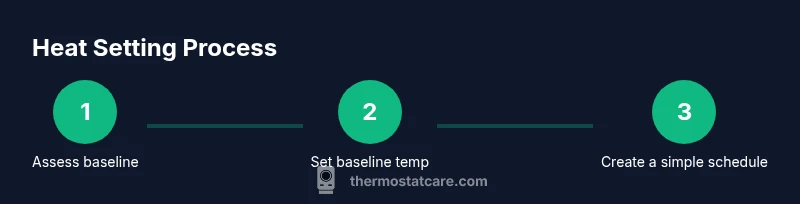
Locate your thermostat and note its current setpoints, schedule, and mode. Check if you have a traditional, programmable, or smart thermostat and whether it supports remote scheduling. Understanding the baseline helps you measure progress.
Tip: If you have multiple zones, start with the primary living area as your baseline. - 2
Set a reasonable baseline
Choose a comfortable baseline point for when you are home and awake—typically around 68°F (20°C) for many homes. This becomes your control point from which you can create sensible setbacks.
Tip: Avoid extreme baselines that are far from your typical comfort level, as they can waste energy. - 3
Create a simple day-night schedule
Program a daytime setting around your wake time and a nighttime setting for when you sleep. Keep the daytime setting close to your baseline, and drop the nighttime setting by a few degrees.
Tip: Keep fall and rise times modest to prevent large swings that stress the system. - 4
Implement away-time adjustments
If you’re away for work or errands, set a modest setback for those periods. For many homes, 2–4 degrees cooler during away times balances savings with comfort on return.
Tip: If you work from home, avoid prolonged pauses in heating that can cause you to override the schedule. - 5
Validate with real temperatures
Use a room thermometer to confirm that the space reaches the intended temperatures within a reasonable time. Adjust if you notice slow heating or cold spots.
Tip: Make sure doors and windows aren’t leaking heat unintentionally. - 6
Refine based on comfort and bills
After a week, review comfort and energy use. If rooms feel chilly at key times, raise the setback a notch; if bills are higher than expected, tighten the schedule slightly without sacrificing comfort.
Tip: Small, incremental changes reduce discomfort and improve savings.
Questions & Answers
What is a comfortable indoor temperature in winter for most homes?
Most homes aim for around 68°F (20°C) when people are awake and active. Adjust within a few degrees based on personal comfort and home insulation. The key is consistency rather than chasing a single perfect number.
A common winter comfort target is about 68 degrees Fahrenheit when you're at home and awake. Adjust within a few degrees if needed for comfort.
Does using a setback actually save money?
Setbacks can save energy by reducing heating when spaces are unoccupied or during sleep. The savings depend on insulation, outdoor temperatures, and your HVAC system. Start with small setbacks and monitor changes.
Yes, setbacks save energy by reducing heating during unoccupied times, especially if your home is well insulated.
How should I adjust a heat pump versus a conventional furnace?
Heat pumps respond differently to setpoints. For heat pumps, avoid extreme setbacks that push system into auxiliary heat. Use moderate setbacks and maintain a comfortable baseline for efficient operation.
Heat pumps work best with moderate setbacks and a stable baseline, avoiding large swings that trigger auxiliary heating.
What is a programmable thermostat and why does it help?
A programmable thermostat automates temperature changes to fit your schedule, reducing manual adjustments and ensuring consistent comfort. It minimizes energy waste by aligning heating with occupancy.
Programmable thermostats automate changes to save energy and keep you comfortable without manual tweaks.
How quickly will I notice a difference after changing the setting?
Most people notice a difference within a few hours to a day, depending on outdoor temperatures, home insulation, and HVAC responsiveness. Give the system time to reach the new setpoints.
You should start noticing changes within a day as the house reaches the new temperatures.
Is 68°F the best setting for all homes?
No. The ideal setting depends on climate, insulation, and personal comfort. Use 68°F as a solid starting point and adjust gradually based on how your home feels and your bills.
68°F is a solid starting point, but adjust based on your own home’s comfort and energy use.
Watch Video
What to Remember
- Set a practical baseline around 68°F (20°C) when home.
- Use modest setbacks during sleep/away times.
- Program a simple, consistent schedule for steady comfort and energy savings.
- Validate with real room temperatures and adjust gradually.