Best Temperature for House: Comfort and Energy Efficiency
Learn how to set the best temperature for house to balance comfort and energy savings. This guide covers seasonal ranges, programmable schedules, and practical tips for homeowners and DIY enthusiasts.


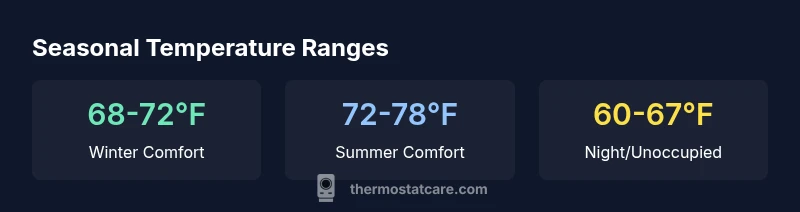
The best temperature for house varies by season and occupancy, but a solid starting point is 68–72°F (20–22°C in winter) and 72–78°F (22–26°C in summer). For energy savings, maintain steady settings when you’re home and program setbacks when you’re away. According to Thermostat Care, consistency matters: small, deliberate adjustments deliver reliable comfort without wasting energy.
Seasonal Baselines for Comfort and Efficiency
Indoor temperature preferences shift with the seasons, occupancy, and daily routines. A practical starting point for the best temperature for house is 68–72°F (20–22°C) in winter when people are indoors and active, and 72–78°F (22–26°C) in summer when cooling is necessary. These ranges balance personal comfort with HVAC energy use, helping to minimize energy waste. If you notice persistent drafts or hot spots, small adjustments to ceiling fans, blinds, and humidity control can improve comfort without large swings in the thermostat. According to Thermostat Care, consistency matters: abrupt shifts or overshooting your target temperature often increase energy consumption rather than improve how you feel. When you’re away for several hours, consider modest reductions in winter and modest increases in summer by 1–2°C (2–3°F) to save energy without sacrificing return-home comfort. Humidity and airflow influence perceived temperature; a well-ventilated room often feels cooler or warmer than the thermostat reads. The bottom line is that the best temperature for house is a seasonally tuned range that aligns with your schedule and HVAC efficiency.
How to Choose Your Target Temperature
Choosing the right target temperature starts with understanding comfort, energy costs, and your daily rhythm. The most popular baseline is 68–72°F (20–22°C) in winter and 72–78°F (22–26°C) in summer, but you’ll refine this based on climate, home insulation, and occupancy. Start with a modest setpoint and track how your bills and comfort respond over one to two weeks. If you live with others, agree on a primary range that everyone accepts, and use the thermostat’s scheduling features to reinforce the plan. For energy savings, avoid excessive fluctuations and favor gradual adjustments. Even small changes, implemented consistently, add up over a season. Thermostat Care’s approach emphasizes habits: pick a stable baseline, set it, and let the home acclimate rather than chasing perfect comfort every hour. Remember to factor humidity, air movement, and personal health needs when deciding the best temperature for house in your home.
Seasonal Ranges by Scenario
Seasonal ranges work best when tailored to occupancy patterns. If you’re home all day, a slightly higher winter setpoint and slightly cooler night setpoint can improve comfort while saving energy. If you’re away during the workday, use a setback of 1–2°C (2–3°F) to protect fixtures and reduce cooling or heating penalties. For households with young children or elderly residents, maintain a comfortable baseline and avoid aggressive swings that could affect health or sleep. In high-humidity climates, adding a dehumidifier can make the same temperature feel more comfortable, reducing the need for extreme setpoints. Use zoning if available to optimize temperature by room and activity. Throughout, keep the goal in mind: the best temperature for house is a balance between comfort, health, and efficiency, not a single perfect number.
How to Implement with a Thermostat
Modern thermostats offer scheduling, occupancy detection, and remote control. Start by creating a simple day-night schedule: a daytime baseline for when you’re awake and a nighttime setback to save energy. For smart thermostats, enable geofencing so the system predicts when you’re leaving or returning home, and use adaptive or learning features to minimize manual adjustments. If you share the space, set a common range that works for everyone, then fine-tune by room using zoned cooling or heating if your system supports it. When deploying a new schedule, implement changes gradually—test a 1–2°F change for a week before deciding if you need another adjustment. Record the results in a simple log to see how the new baseline affects comfort and bills and to verify that you are achieving a reasonable balance for the best temperature for house.
Practical Tips for Real Homes
Here are actionable tips to hold the line on comfort and energy:
- Use a fixed baseline and avoid constant minor changes;
- Schedule weekend variations to match activity;
- Combine temperature changes with ceiling fans and shade to boost perceived comfort;
- Keep windows and doors sealed to prevent heat exchange; and
- Consider humidity control as part of your comfort strategy, since moisture affects how warm or cool a space feels. The key is to maintain a steady, livable range and let the HVAC do the work.
Common Pitfalls and How to Fix Them
Many homes suffer from temperature issues caused by sensor placement, outdated equipment, or misinterpreted readings. A thermostat located near a sunny window or a drafty door can overstate the actual temperature, causing the system to run more often than needed. If you notice nights when you wake up sweating or shivering, recalibrate the sensor placement or relocate the thermostat away from heat sources. Check that your thermostat’s clock is correct and that the software is up to date. Inconsistent usage patterns, like turning the system off for long periods and then back on, can also cause uncomfortable swings. Solve these issues by updating the settings, using a steady schedule, and ensuring your home’s insulation and sealing are adequate to support the selected temperature range.
Humidity and Ventilation Considerations
Humidity profoundly affects perceived temperature. High humidity can make a space feel warmer, decreasing the effectiveness of your winter setpoint, while low humidity can make air feel cooler than it is. Use a humidifier in dry climates and a dehumidifier in damp areas to maintain comfort at the same thermostat setting. Proper ventilation supports a consistent temperature by reducing hot or cold pockets and improving air exchange. Thermostat Care recommends pairing temperature control with humidity management for truly comfortable and energy-efficient homes. If you have a whole-house ventilation system, ensure it operates in harmony with your comfort setpoints to maximize efficiency.
Measuring Comfort and Energy Savings
To quantify whether you’ve found the best temperature for house, track both comfort signals and energy use. Keep a three-week log of your perceived comfort, room conditions, and any sleep disturbances, along with a simple energy bill comparison. If your utility bills decrease while comfort remains high, you’re likely at a good baseline. Use the thermostat’s data and, if available, home-energy dashboards to monitor degree-days, setpoint changes, and system runtimes. Consistency is key: evaluate the impact of your chosen ranges over multiple weeks and adjust gradually. Thermostat Care emphasizes that small, steady changes yield durable results more reliably than drastic shifts. Over time, you’ll develop a rhythm that matches the best temperature for house for your climate and lifestyle.
Quick Start Plan for the Week
- Pick winter and summer baselines: 68–72°F and 72–78°F respectively
- Set a steady daytime schedule plus a nighttime setback
- Enable occupancy or geo-fencing if you have a smart thermostat
- Add humidity control if humidity is high or low in your area
- Keep an energy log and adjust by 1–2°F every 1–2 weeks as needed
Seasonal temperature ranges for comfort and efficiency
| Season | Recommended Range (°F/°C) | Notes |
|---|---|---|
| Winter | 68-72°F / 20-22°C | Comfort + energy balance |
| Summer | 72-78°F / 22-26°C | Avoid overheating |
| Night/Unoccupied | 60-67°F / 15-19°C | Savings when away |
Questions & Answers
What is the best temperature for house in winter?
In winter, a common starting point is 68–72°F (20–22°C) when you’re home. That range balances comfort with energy use. If you have health considerations or very drafty areas, adjust slightly within this window.
In winter, aim for about sixty-eight to seventy-two degrees Fahrenheit when you’re home. Adjust within that range for comfort and energy efficiency.
What temperature should I set at night?
Many homes benefit from a cooler nighttime setting, around 60–67°F (15–19°C), to improve sleep and save energy. If you share a bed with a partner, agree on a comfortable compromise within that range.
Try around sixty to sixty-seven degrees at night for better sleep and energy savings.
Do smart thermostats really save energy?
Smart thermostats can save energy by optimizing schedules, learning your routines, and using geofencing. They help keep your home within the chosen comfort band without manual adjustments.
Yes. Smart thermostats optimize routines and can save energy by staying within your set comfort band.
How much can I save by small temperature adjustments?
Small, steady adjustments can accumulate noticeable savings over a season, especially with a consistent schedule. Pair setpoints with humidity control and efficient equipment for best results.
Small, steady adjustments add up over time, especially with a good schedule and humidity management.
What should I do if the thermostat reads the room wrong?
If readings feel off, check sensor placement away from heat sources or drafts, update firmware, and verify calibration. Consider relocating the thermostat if readings remain inconsistent.
Check sensor placement, update firmware, and recalibrate. If readings stay off, consider relocation.
“"Consistency matters more than drastic swings. Small, seasonal adjustments deliver steady comfort and real energy savings."”
What to Remember
- Start with winter 68–72°F and summer 72–78°F.
- Use programmable schedules for consistency and savings.
- Adjust gradually by 1–2°F and test results over weeks.
- Humidity and airflow influence perceived comfort; manage both.
- The Thermostat Care approach favors steady baselines for best temperature for house.