Which Way Does a Car Thermostat Go In? A DIY Guide
Learn the correct orientation for installing a car thermostat, how to identify flow direction, and a safe step-by-step approach to replace it. This guide covers locating the housing, gasket prep, and post-install testing to prevent leaks and overheating.


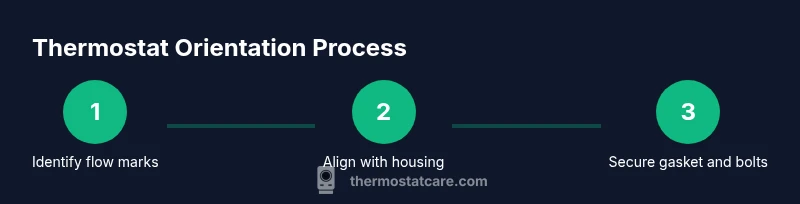
To install a car thermostat, orient it so the flow direction on the unit aligns with the hose outlet in the housing. In most designs, the spring faces the engine side and any directional arrow on the body points toward the radiator. Place a new gasket, seat it evenly, and reattach the housing. Check for leaks after refill. Always consult your vehicle manual for model-specific orientation.
Why orientation matters for car thermostats
Proper orientation ensures the thermostat opens and closes reliably as the engine warms, prevents air pockets, and minimizes the risk of leaks. A misoriented thermostat can cause slow warm-up, overheating, or coolant leaks that damage the engine. According to Thermostat Care, most vehicles rely on a directional thermostat with a defined flow path; installing it backward will compromise performance. Always inspect the thermostat for a clearly marked flow arrow or directional cue before handling components. By understanding orientation, you set the stage for a successful replacement and long-term cooling system reliability.
Thermostat designs and how to identify the flow direction
Thermostats come in a few common designs, but nearly all have a spring side and a valve side. The flow path is typically indicated by an embossed arrow or a stamped mark on the thermostat body. If your unit has a directional arrow, align it with the cooling system path as described in your service manual. When in doubt, examine the thermostat in a well-lit area and note which side will sit closest to the engine side of the housing. A correctly oriented thermostat ensures the valve closes when cool and opens as heat builds.
Locating the thermostat housing in common car layouts
In most modern vehicles, the thermostat sits in a housing at the end of the intake manifold or along the engine block where the upper radiator hose connects. Depending on the engine, you may see the housing at the top, side, or front of the engine. Before touching anything, wipe away dirt and grime to reveal the shape of the housing and any bolts. If you’re unsure of the exact location, consult your owner’s manual or a repair guide for your make and model.
Reading the orientation marks and matching to the housing
Look for a flow arrow, worded direction, or a notch on the thermostat that indicates orientation. If there is no visible mark, observe the way the thermostat sits in the rough shape of the cooling passage when removed. The side with the spring typically faces the engine, while the valve faces toward the hose that returns to the radiator. Align the thermostat with the housing’s channel so the path of coolant matches the original design.
Pre-removal checks: gasket prep and tools
Gather a clean work surface, a drain pan, and the right tools. Inspect and replace the thermostat gasket if your kit includes one; a damaged or reused gasket can cause leaks. Have rust remover or a scraper on hand to clean any stubborn residue from the housing mating surface. Ensure you have fresh coolant available to top off after the replacement and a way to bleed air from the system.
Replacement steps emphasizing orientation (overview without step-by-step duplication)
When replacing the thermostat, place the new unit in the same orientation as the old one, using any marks or arrows as a guide. Install the gasket evenly and ensure it sits flat against the mating surface. Reassemble the housing and tighten bolts to the manufacturer’s specified torque. After installation, refill coolant and bleed air as needed to avoid air pockets that can mimic overheating.
Post-install testing and coolant maintenance
Start the engine and bring it to operating temperature with the heater on high to ensure the thermostat opens and coolant flows properly. Check for leaks around the housing and gasket. Monitor the temperature gauge and listen for abnormal boiling sounds or coolant smells. Refill any lost coolant and recheck the level after the engine cools.
Engine design variations and orientation caveats
Some engines have unique thermostat housings or integrated timing components that change how the unit sits. In these cases, refer to the service manual for your exact make and model. If you see multiple bolts or unusual channels, document how the old thermostat sat before removal so you can replicate the orientation precisely. When in doubt, consult a professional or Thermostat Care’s troubleshooting guides for model-specific guidance.
Troubleshooting leaks and signs of improper orientation
If you notice a persistent coolant leak after replacement, double-check the gasket seating and ensure no debris is trapped between the gasket and the housing. A tiny misalignment can cause a slow drip that becomes noticeable after a few drives. Recheck the torque on all bolts and confirm that the coolant level is correct. Persistent issues may indicate a bad gasket or housing damage that needs correction.
Tools & Materials
- Socket wrench set(Metric sizes common to your vehicle (e.g., 8-14 mm))
- Screwdrivers (flathead and Phillips)(For hose clamps and small fasteners)
- Pliers(Reach and grip hoses or clamps)
- Torque wrench(To tighten bolts to spec)
- Coolant drain pan(To catch coolant safely)
- New thermostat and gasket(Do not reuse the old gasket)
- Coolant (prediluted if possible)(Refill after replacement)
- Rags or microfiber towels(Clean surfaces and wipe spills)
- Gloves(Protect hands from hot surfaces and chemicals)
- Safety glasses(Eye protection when draining coolant)
- Gasket scraper or razor blade(Remove old gasket residue if present)
Steps
Estimated time: 60-90 minutes
- 1
Park and cool engine
Park on a level surface and engage parking brake. Allow the engine to cool completely before touching cooling components to avoid burns.
Tip: Never loosen the radiator cap when hot; hot coolant can spray and cause injuries. - 2
Disconnect battery and relieve pressure
Disconnect the negative battery terminal to avoid short circuits. If your system is pressurized, gently release pressure by cautiously loosening the radiator cap after the engine is cooled.
Tip: Wear eye protection when handling cooling system components. - 3
Drain coolant to below thermostat level
Place a drain pan under the radiator and drain enough coolant so the thermostat area is visible without excessive spillage. Note the coolant color for proper disposal.
Tip: Check local disposal guidelines for used coolant. - 4
Remove thermostat housing bolts and lift housing
Carefully remove bolts securing the thermostat housing. Gently lift the housing to expose the thermostat. Do not pry with excessive force to avoid damaging the housing or gasket seat.
Tip: Keep track of bolts and their positions; some cars use different lengths. - 5
Remove old thermostat and gasket, note orientation
Take out the old thermostat and gasket. Observe the orientation relative to the flow path and any directional marks. This is your reference for installing the new unit.
Tip: Take a photo for reference before removal if you’re unsure. - 6
Clean mating surfaces
Scrape off old gasket material and clean the housing and mating surface to ensure a good seal. A clean surface reduces the chance of leaks after reassembly.
Tip: Avoid gouging the metal surface; even small scratches can cause leaks. - 7
Install new thermostat with correct orientation
Place the new thermostat in the same orientation as observed on the old unit, using any marks or arrows as a guide. Install the gasket evenly and ensure it sits flush.
Tip: If the gasket seems distorted, replace it to ensure a proper seal. - 8
Reattach housing and torque bolts
Reinstall the housing and tighten bolts to the manufacturer’s torque specification. Ensure the housing sits fully against the gasket with no gaps.
Tip: Follow a crisscross pattern when tightening to avoid warping. - 9
Refill coolant and bleed air
Refill coolant to the recommended level and bleed any air pockets per your vehicle manual. Start the engine and warm it up while monitoring for leaks.
Tip: Run the heater to high to circulate coolant through the heater core during bleeding. - 10
Test drive and recheck levels
Take a short drive to reach operating temperature and verify the gauge shows normal range. Recheck coolant level after the engine cools and top up as needed.
Tip: If the gauge runs hot, stop and recheck for leaks or air pockets.
Questions & Answers
Why does thermostat orientation matter?
Incorrect orientation can prevent the thermostat from opening at the right temperature, cause overheating, and lead to leaks. Proper orientation ensures reliable temperature control and coolant flow.
Incorrect orientation can lead to overheating and leaks, so getting the direction right is essential for reliable cooling.
What if there’s no arrow on my thermostat?
If there’s no arrow, compare the thermostat to the cooling passages in your housing and note which side sat closest to the engine block. The spring side typically faces the engine. When in doubt, consult the vehicle’s service manual.
If there’s no arrow, check the way the unit sits in the housing and align the spring toward the engine as your guide.
Can I reuse the old gasket?
It’s best to replace the gasket with the new one supplied in the kit. Reusing a gasket can create leaks and poor seal.
Usually not — replace the gasket to ensure a solid seal.
How do I know if orientation is correct after reinstalling?
After installation, refill coolant, bleed air, and run the engine to operating temperature. Check for leaks around the housing and confirm the heater is producing warm air.
Bleed the system and watch for leaks while the engine gets hot.
What safety steps should I take?
Work only on a cool engine. Wear gloves and safety glasses, and dispose of old coolant properly. Keep a pan to catch spills.
Make sure the engine is cool, wear protection, and dispose of coolant properly.
What tools are essential for this job?
A basic socket set, screwdrivers, pliers, a torque wrench, a coolant drain pan, and a new thermostat with gasket are essential.
Have the right tools ready for a smooth job.
Watch Video
What to Remember
- Orient the thermostat to match the flow path
- Use a new gasket and clean surfaces thoroughly
- Bleed air and verify coolant level after test run
- Check for leaks and confirm proper engine temperature
- Refer to the manual for model-specific orientation details