When to Change Coolant Thermostat: A DIY Car Guide
Learn how to identify when to change coolant thermostat, test your cooling system, and perform a safe replacement with practical, data-driven guidance from Thermostat Care.


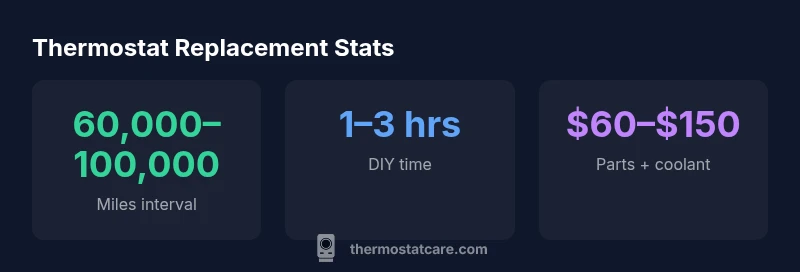
The coolant thermostat should be changed when it fails to regulate engine temperature, leaks coolant, or sticks open or closed, causing overheating or poor heater performance. Typical replacement windows span roughly 60,000–100,000 miles or 5–10 years, but climate, driving style, and maintenance affect the schedule. This quick guide outlines signs, tests, and a safe DIY replacement workflow.
What the coolant thermostat does and why it matters
According to Thermostat Care, the coolant thermostat is a small valve that controls coolant flow between the engine and radiator. It opens when the engine reaches a set temperature to prevent overheating and closes to keep the engine warm during cold starts. A healthy thermostat helps the engine reach optimal operating temperature quickly and maintain stable temperatures, improving fuel efficiency and reducing emissions. If the thermostat sticks or fails, the engine can overheat, run colder than intended, or cause heater performance problems. This article explains when to change coolant thermostat and how to assess whether replacement is needed. We'll cover signs, tests, and a safe DIY replacement workflow curated for homeowners and DIY enthusiasts.
When to change coolant thermostat: key indicators
Knowing when to change coolant thermostat comes down to a handful of reliable symptoms. If you notice persistent overheating, temperature gauge wandering above the normal range, or a heater that won’t produce warm air, you should investigate whether it is time to change coolant thermostat. Another telltale sign is coolant leaks clustered around the thermostat housing or a collapsed hose, which often indicates a failed seal. If the engine cools slowly or takes longer than usual to warm up, that can also point to a thermostat that needs replacement. The question of when to change coolant thermostat should be considered in the context of mileage, climate, and service history. In many cars, the decision is driven by observed temperature behavior combined with a passing diagnostic reading; this is how to approach when to change coolant thermostat in a systematic way.
How we test and diagnose safely
To determine when to change coolant thermostat, start with a visual inspection and a quick pressure test. Check for coolant leaks around the thermostat housing and inspect hoses for signs of swelling or softness. Use a cooling system pressure tester to confirm there are no hidden leaks. Next, compare inlet and outlet temperatures with the engine at operating temperature; a thermostat that opens late or never will skew these readings. If readings are out of spec, run a controlled cold-start test and perform a hot-off-test to observe opening behavior. When the data show inconsistent circulation or slow warm-up, you have strong evidence to consider when to change coolant thermostat. If codes point to coolant flow or temperature sensor errors, prioritize a thermostat evaluation as part of your diagnostic plan. This section helps you decide when to change coolant thermostat with confidence.
Replacement steps: DIY workflow
If you determine that it’s time to change coolant thermostat, here is a practical, safety-minded DIY workflow. Gather the right tools: standard hand tools, a new thermostat with gasket, sealant if required, and fresh coolant. Begin with engine cool-down and disconnecting the battery. Drain a portion of the coolant to the level recommended by your manufacturer. Locate the thermostat housing (usually near the radiator or engine block), remove the housing bolts, and carefully take out the old thermostat. Clean the housing surfaces, install the new thermostat in the correct orientation, reseal the housing, and refill coolant to the proper level. Start the engine and check for leaks; bleed air from the cooling system as needed. Finally, monitor temperature behavior over the next drive to confirm that when to change coolant thermostat has been resolved and that the engine maintains stable temperatures. Remember to dispose of old coolant properly and to recycle the old gasket if needed.
DIY vs professional: pros and cons
Choosing between DIY replacement and a professional service hinges on tool access, vehicle design, and personal comfort with cooling-system work. DIY can save money and provide a learning opportunity, but a failed reassembly or improper bleeding can cause more harm. If your vehicle requires special tools, has a complex thermostat layout, or you suspect a larger cooling-system issue (like a blown head gasket or radiator flow restriction), a professional service is recommended. When to change coolant thermostat is clearer after weighing these factors: DIY is feasible for many common vehicles with straightforward housings; professional help is advisable for modern hybrids, performance cars, or vehicles with tricky bleed procedures. Thermostat Care consistently advises homeowners to plan for a thorough cooling-system check in conjunction with a thermostat replacement, ensuring you address related seals and hoses.
Maintenance to extend thermostat life
To prolong the life of the thermostat and delay the question of when to change coolant thermostat, stick to regular cooling-system maintenance. Use the manufacturer-approved coolant type and mix ratio, replace old hoses before they leak, and perform a coolant flush at the recommended interval to prevent corrosion and deposits. Regularly check the thermostat housing for seepage and ensure the radiator cap seals well. By staying proactive, you’ll reduce the likelihood of sudden thermostat failures and keep your cooling system in healthy condition. When to change coolant thermostat should be considered within the broader context of preventative maintenance, not as a one-off repair. Thermostat Care’s approach emphasizes routine checks, correct coolant formulation, and timely replacements when signs indicate the device is no longer performing within spec.
Common myths and misdiagnoses about coolant thermostats
A common myth is that a cooling fan alone fixes overheating, while in reality the thermostat plays a central role in regulating flow. Another misconception is that a thermostat replacement is always expensive; in many cars the part costs are modest, and DIY replacement is feasible with basic tools. Believing that a thermostat is always the root cause can lead to wasted time; often, a cooling-system bleed, dirty radiator, or a leaky hose masquerades as thermostat trouble. When to change coolant thermostat should be guided by diagnostic tests and symptom history, not by assumptions. This section helps you separate myths from actionable steps so you can address when to change coolant thermostat with confidence and accuracy.
Thermostat-related indicators and recommended actions
| Indicator | What it means | Suggested action |
|---|---|---|
| Temperature gauge behavior | Temp rises to normal range but fluctuates or spikes | Inspect thermostat housing; test flow and replace if needed |
| Heater performance | No warm air or delayed heat | Check for thermostat sticking or late opening; consider replacement |
| Coolant leaks near housing | Seal failure around thermostat area | Replace thermostat and gasket; inspect hoses and clamps |
| Engine overheating after warm-up | Thermostat stuck closed or restricted flow | Inspect cooling path; replace thermostat if stuck |
Questions & Answers
What are the most common signs that indicate a thermostat failure?
The most frequent indicators are overheating, temperature fluctuations, and weak or no cabin heat. If you notice these, it’s wise to inspect the thermostat as part of your diagnostic plan and consider replacement if tests confirm failure.
Common signs include overheating and fluctuating temperature; if you notice these, inspect the thermostat and replace if tests confirm failure.
Can I replace a thermostat myself if I'm not mechanically inclined?
Many cars allow a DIY thermostat replacement with basic tools. If your vehicle has a complex bleed procedure or you’re unsure about coolant handling, consider professional help to ensure a safe bleed and proper reseal.
Yes, many can DIY, but some cars require extra care with bleeding the cooling system.
How long does a thermostat replacement take?
DIY replacements typically take 1–3 hours depending on the vehicle, tools, and how easily the thermostat housing is accessed. Plan for extra time if you’re also inspecting hoses or performing a coolant flush.
Most replacements take about 1 to 3 hours, depending on access and fluids.
Is a thermostat failure the same as a thermostat housing leak?
Not necessarily. A thermostat can fail without a housing leak, and a leak can occur without thermostat failure. A thorough cooling-system inspection helps distinguish the root cause.
They’re related but not the same; diagnose by testing both thermostat function and housing seals.
What coolant type should I use for thermostat replacement?
Use the coolant type specified by your vehicle’s manufacturer. Mixing types can cause corrosion and poor cooling performance. Check your owner’s manual or a label under the hood.
Always use the manufacturer-recommended coolant type.
Should I replace the radiator cap at the same time?
If the radiator cap shows signs of wear or is part of the cooling-system test, replace it to ensure proper pressure and bleed efficiency. It’s a small extra step that can prevent future issues.
If worn, replace the radiator cap—it's inexpensive and helps pressure test success.
“A reliable thermostat is the gatekeeper of engine temperature; when it misbehaves, you risk efficiency and overheating. Early diagnosis saves time and money.”
What to Remember
- Identify symptoms early to decide when to change coolant thermostat.
- DIy replacement is often feasible with basic tools on many cars.
- Use the correct coolant and bleed the system after replacement.
- Always test and verify cooling system function after replacement.
- Consider professional help for complex cooling systems or hard-to-reach housings.