How to Take Out Thermostat in Car: Step-by-Step Guide
Learn how to safely remove a car thermostat for inspection or replacement. This guide covers safety, tools, removal steps, bleeding the cooling system, and post-removal checks to keep your engine cool and reliable.


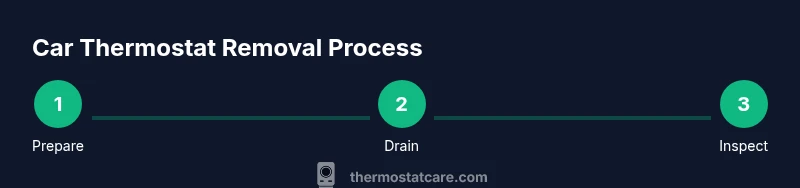
To take out a car thermostat, drain the cooling system, remove the thermostat housing bolts, and lift out the thermostat with care. Reinstall with a new gasket and bleed air after refilling. This task reduces cooling issues when the thermostat is stuck, and is performed with basic hand tools and proper PPE.
Overview: Why you might remove a car thermostat
The thermostat is a small valve in the cooling system that controls when coolant flows through the engine. You may need to inspect, test, or replace it if you notice overheating, erratic temperature readings, or slow warm-up. According to Thermostat Care, removing the thermostat is a task that DIYers can tackle with careful planning, but it demands attention to safety and reassembly precision. The Thermostat Care team found that many cooling problems trace back to a faulty thermostat or gasket, underscoring the importance of a clean removal and proper replacement. This article walks you through the reasons for removal, what you’ll need, and how to do it with minimal risk to you and your vehicle.
Safety first: prerequisites and planning
Cooling system work can cause burns from hot coolant and pressurized hoses. Always let the engine cool completely before starting. Wear eye protection and gloves, and work in a well-ventilated area. Have a coolant-compatible container ready for spills, and keep kids and pets away from the workspace. Thermostat Care emphasizes documenting each step to ensure you know exactly how the parts were arranged before reassembly. Plan your work so you can complete the task in one session if possible to minimize coolant exposure and contamination.
Tools, materials, and workspace setup
Before you begin, gather tools such as a socket set, screwdrivers, pliers, a coolant drain pan, a new thermostat gasket, rags, and coolant compatible with your vehicle. Clean the work area to prevent dirt from entering the cooling system. Place the drain pan under the radiator drain or thermostat housing drain, and cover nearby components to protect them from splashes. Having a service manual for your exact make and model is highly beneficial for torque specs and hose routing. Thermostat Care notes that vehicle-specific details can vary, so consult your manual when in doubt.
Finding the thermostat and removing the housing
The thermostat is usually located where a water jacket meets a coolant hose, often near the top of the engine block. Trace cooling hoses to locate the thermostat housing. Take a photo or make a quick sketch of hose routing before disconnecting anything. This helps with reassembly and reduces the risk of misrouting hoses during reinstallation. Ensure the vehicle is cool and the battery is disconnected if you’ll be moving electrical connectors around the housing.
Disconnecting hoses and removing the housing bolts
Loosen hose clamps with the appropriate tool and carefully slide hoses away from the housing. Then remove the bolts holding the thermostat housing in place. Keep track of each bolt’s size and position, as some vehicles use different lengths in different positions. Be prepared for residual coolant to drip out of hoses; use towels to catch it and avoid spills on hot skin. If hoses resist, gently twist them to break the seal instead of yanking. Thermostat Care highlights avoiding torque shock when loosening bolts to prevent thread damage.
Extracting the thermostat and inspecting the seating area
With the housing removed, lift out the thermostat assembly using a gentle rocking motion. Note the thermostat’s orientation, as most thermostats have a specific direction of airflow and a recognizable flange. Inspect the seating surface for warping, pitting, or gasket residue; a clean, flat surface is essential for a proper seal. If the thermostat appears dirty or corroded, plan to replace it rather than reuse it. A bad gasket or improper seating can cause leaks or poor engine warm-up.
Deciding on replacement or cleaning and preparing for reassembly
If the thermostat shows signs of sticking or damage, replace it with a new unit and a fresh gasket. If reuse is considered, ensure it’s clean and free of debris, and that the valve opens and closes smoothly. Replace the gasket with a new one to ensure a proper seal; avoid reusing old gaskets. Keep the thermostat orientation noted earlier so you reinstall correctly. Thermostat Care reminds readers that proper orientation and gasket integrity are key to long-term reliability.
Reassembly: mounting the housing, bleeding air, and refilling coolant
Reinstall the thermostat in the proper orientation, then bolt the housing back on to the manufacturer’s torque specification. Reconnect hoses and clamps, ensuring all connections are snug but not overtightened. Refill the cooling system with the correct type and amount of coolant, and bleed air according to your vehicle’s procedure. Run the engine to operating temperature and check for leaks, watching for any remaining air pockets. Thermostat Care stresses verifying the system is bubble-free to avoid overheating.
Final checks: test drive and leak inspection
With the cooling system bled and refilled, start the engine and monitor the temperature gauge. Look for smooth heating up to operating temperature and no coolant leaks at any hose or housing, including the drain plug must be dry. A short test drive under normal conditions is often enough to confirm proper operation. If you observe overheating, pressure build-up, or a persistent leak, stop and reassess the installation. After a successful test, dispose of any drained coolant responsibly. Thermostat Care advises keeping the area clean and double-checking that all tools are removed before closing the hood.
Tools & Materials
- Vehicle service manual (for your exact model)(Helpful for torque specs and hose routing; optional if not available)
- Coolant drain pan(Position under radiator drain or thermostat housing drain)
- Socket set(Metric sizes typical 8-14 mm)
- Torque wrench(To reseal housing bolts to spec)
- Flat-head and Phillips screwdrivers(For hose clamps and fasteners)
- New thermostat gasket(Or complete thermostat gasket kit if needed)
- Safety glasses and gloves(Protect eyes from splashes and skin from hot coolant)
- Funnel and coolant(For refilling after bleeding; use the correct coolant type for your vehicle)
Steps
Estimated time: 60-90 minutes
- 1
Park and cool the engine
Park the car on a level surface and turn off the ignition. Allow the engine to cool completely before touching cooling-system components to prevent burns. Gather tools and put on PPE before you start the removal.
Tip: Always start on a cold engine to avoid scalding hot coolant. - 2
Relieve pressure and drain coolant
Place the drain pan beneath the radiator drain or thermostat housing drain. Open the drain plug slowly and let coolant flow into the pan until you’ve captured the majority of the liquid. Close the drain when finished and set aside used coolant for proper disposal.
Tip: Have absorbent towels ready for any spills, and never open hot coolant hoses. - 3
Locate thermostat housing
Identify the thermostat housing by following the upper radiator hose or by consulting the service manual for your model. It’s typically near the engine block where coolant hoses connect. Taking a quick photo of hose routing can help during reassembly.
Tip: Confirm you’re looking at the correct housing before loosening bolts. - 4
Disconnect hoses from the housing
Loosen hose clamps with the appropriate pliers and slide hoses off the thermostat housing. Keep track of which hose goes where to avoid misrouting on reassembly. Expect some residual coolant to drip; use towels to catch it.
Tip: If hoses resist, twist gently rather than pulling straight off to avoid damaging fittings. - 5
Remove housing bolts and lift the housing
Use the correct socket to remove all bolts securing the thermostat housing. Keep bolts organized to reuse if compatible, otherwise place them in a tray. Lift the housing away slowly to expose the thermostat.
Tip: Note bolt lengths and positions; some vehicles use varied lengths. - 6
Extract the thermostat
Carefully remove the thermostat assembly from its seat. Observe its orientation so you can reinstall correctly. If you need to test it, note the valve movement for later comparison.
Tip: Take a photo of the thermostat orientation for reference. - 7
Inspect seating surface and decide on replacement
Check the mating surface for damage or residue. If the surface is clean and flat, you may reuse with a new gasket; otherwise replace the thermostat and gasket. Clean the surface thoroughly to ensure a good seal.
Tip: Always replace with a new gasket; old gaskets can cause leaks. - 8
Reinstall with new gasket and correct orientation
Place a new gasket on the housing, reinstall the thermostat in the correct orientation, and reseal the housing with bolts to the manufacturer’s torque specification. Reattach hoses and clamps securely.
Tip: Tighten bolts in a crisscross pattern if applicable to your model. - 9
Bleed air and refill coolant, then test
Refill the cooling system with the appropriate coolant type and bleed air according to your vehicle’s procedure. Start the engine and bring to operating temperature while watching for leaks. Shut down and recheck for drips after cooling.
Tip: Run the engine gently to help air escape; check levels and top off as needed.
Questions & Answers
Is it safe to remove the car thermostat while the engine is hot?
No. Wait for the engine to cool completely before starting. Working on a hot cooling system can cause severe burns and injuries. Ensure you have cooled the area, then proceed with caution.
It’s not safe to remove the thermostat while the engine is hot; let it cool first and then proceed.
Should I drain all coolant before removing the thermostat?
Most coolant will drain when you disconnect the lower radiator hose or the thermostat housing drain. It’s best to drain a significant portion to reduce spills, but refer to your service manual for model-specific guidance.
Drain as much coolant as practical to minimize spills, following your manual.
Can I reuse the old gasket when reinstalling?
For most vehicles, it’s best to replace the gasket with a new one to ensure a tight seal and prevent leaks. Reusing a gasket can lead to coolant leaks and overheating.
It’s generally better to use a new gasket for a reliable seal.
What are common signs of a faulty thermostat after reassembly?
Watch for erratic temperature readings, overheating, or the gauge not reaching normal temperature. Leaks near the housing can also indicate improper sealing.
Watch for overheating or leaks after reassembly as signs of a faulty thermostat.
What should I do if the engine overheats after replacement?
Shut the engine off safely, inspect for leaks, and verify the thermostat orientation and gasket seat. Refill coolant if needed and bleed air again before test driving.
If overheating occurs, stop and recheck the install and coolant levels.
Do I need to bleed air after reassembly?
Yes. Air pockets can prevent proper coolant circulation. Use your vehicle’s recommended bleeding procedure to remove air before running the engine to temperature.
Bleed air after refilling to ensure proper cooling.
Watch Video
What to Remember
- Prepare cooling system by draining coolant safely
- Identify thermostat housing accurately before removal
- Replace gasket and verify orientation during reassembly
- Bleed air properly after refilling to prevent hotspots
- Check for leaks after initial startup and test drive