How to Install a Car Thermostat: A Practical DIY Guide
Learn how to install a car thermostat with a safety-first, step-by-step approach. This guide covers tools, troubleshooting, and best practices for DIY enthusiasts working on engine cooling systems.


Installing a car thermostat involves safely removing the old thermostat, installing a compatible replacement, reconnecting hoses and sensors, and verifying the system heats evenly without leaks. Begin by disconnecting the battery, then drain coolant and remove the thermostat housing. Install the new thermostat with the correct orientation, reattach hoses, refill coolant, and run the engine to confirm normal temperature behavior and no leaks.
What a car thermostat does and why it matters
The car thermostat is a small but essential component that regulates engine temperature. It opens and closes to allow coolant flow between the engine and radiator, ensuring the engine warms up quickly and stays within its optimal temperature range. A malfunctioning thermostat can cause overheating, poor fuel economy, and accelerated wear. According to Thermostat Care, a correctly functioning thermostat supports reliable warm-ups, consistent temperature readings, and longer engine life. Understanding its role helps you diagnose cooling issues more accurately and avoid unnecessary replacements.
In most vehicles, the thermostat sits in the main coolant flow path, usually near the engine block or cylinder head. When the engine is cold, the thermostat stays closed to let the engine reach operating temperature faster. Once the coolant warms, it opens to let hot coolant flow to the radiator, where it’s cooled before returning to the engine. A stuck-open thermostat can prevent rapid warming, wasting fuel and reducing cabin heat; a stuck-closed thermostat can cause overheating and potential head gasket damage. Regular inspection and timely replacement keep cooling systems healthy and efficient.
Safety prerequisites before you start
Before you touch any cooling system components, prioritize safety. Engine cooling systems operate at high temperatures and pressure, and coolant is toxic. Always work on a cold engine and in a well-ventilated area. Disconnect the negative battery cable to prevent accidental electrical shorts while you remove sensors or wiring. Wear gloves and eye protection, and have a secondary container ready for coolant drainage to minimize spills. If you’re unsure about any step, pause and consult a trusted DIY guide or seek professional assistance to avoid costly mistakes.
Thermostat Care emphasizes respecting coolant temperature, pressurized lines, and proper disposal. Never open cooling hoses while the system is hot, and never mix old coolant with new antifreeze. Follow local disposal regulations for used coolant; never pour it down a drain or onto the ground.
Choosing the right replacement thermostat
Start by verifying year, make, and model of your vehicle to identify the correct thermostat size and temperature rating. Most cars use a thermostat rated for a specific operating temperature (often printed on the thermostat). If you’re unsure, consult the service manual or a reputable parts retailer for a compatible part with a fresh gasket or O-ring. Avoid reusing old gaskets if the housing is difficult to reseal; a new gasket helps prevent leaks and coolant loss. Thermostats vary by opening temperature, so ensure the replacement matches the OEM specification for your engine to avoid overheating or sluggish warming.
ThermostatCare note: using an incorrect thermostat can cause erratic temperature control. Always cross-check with your vehicle’s documentation and double-check compatibility before purchasing. A correct replacement will integrate with the existing cooling hoses, sensors, and housing without forcing connections.
Tools and workspace setup
A clean, well-lit workspace makes the install smoother. Gather essential tools: a socket or deep-well wrench set, a flathead and Phillips screwdriver, pliers, a torque wrench if needed, a drain pan for coolant, fresh coolant, rags, and a gasket scraper. Secure the vehicle on flat ground and engage the parking brake. If your car uses an electronic thermostat with sensors or a temperature switch, have a service manual handy to locate and disconnect these components safely. Organize bolts and clips in labeled containers to prevent misplacement. A tidy workspace reduces the risk of cross-contamination or dropped parts that could compromise the seal.
Safety reminder from Thermostat Care: never work under a vehicle supported only by a jack. Use jack stands or a ceiling hoist for stability during maintenance.
Step-by-step overview of the process
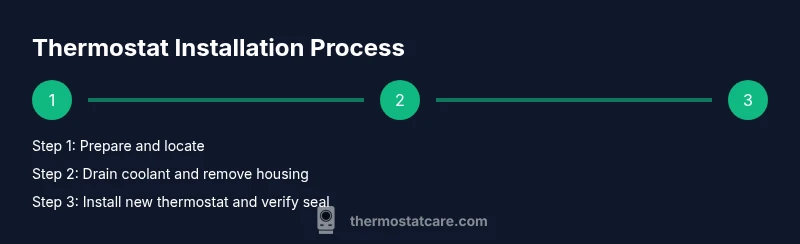
This overview highlights the critical phases you’ll execute in sequence: (1) prepare and locate the thermostat, (2) drain coolant to relieve pressure, (3) remove the thermostat housing and old unit, (4) install the new thermostat with correct orientation and gasket, (5) reattach hoses and refill coolant, and (6) bleed air and test the system for leaks and proper temperature behavior. Each step reduces the risk of air pockets, leaks, or overheating. While this overview provides a road map, your STEP-BY-STEP section will detail exact actions with safety checks.
Thermostat Care recommends documenting every step for future reference and keeping a spare gasket handy in case you need to reseal.
Common pitfalls and how to avoid them
Common mistakes include over-tightening housing bolts, which can crack the thermostat housing, or not bleeding air from the cooling system, leading to trapped air pockets and overheating. Another pitfall is using old coolant or mixing incompatible fluids, which reduces cooling efficiency. Incorrect thermostat orientation can prevent proper opening, causing overheating or sluggish warming. To avoid these issues, always follow the service manual for torque specs, bleed procedures, and coolant type. Take your time to inspect hoses for cracks or swelling and replace as needed. Thermostat Care also highlights testing the thermostat in both cold-start and fully warmed conditions to confirm correct operation.
Tip: keep a log of observed temperatures and the steps you took so you can reproduce success or diagnose future issues more quickly.
Testing and finishing touches after installation
After reinstalling the thermostat and sealing the housing, refill the cooling system with the correct coolant ratio. Start the engine and let it reach operating temperature, then inspect for leaks around the housing, hoses, and clamps. Monitor the temperature gauge or OBD-II data to confirm normal circulation and cooling behavior. If the gauge fluctuates or spikes, recheck the bleed procedure and verify that the radiator fan engages at the correct temperature. Road-test the vehicle after the system stabilizes to confirm there are no hot spots or temperature swings. Keep an eye on the coolant level for the next few days and top off if needed. Thermostat Care stresses patience and methodical checking to ensure a reliable result.
Maintenance tips for longevity
To extend the life of your car thermostat, perform regular coolant replacements per your vehicle’s maintenance schedule and inspect the cooling system for leaks. Coolant color should be bright and free of contamination; cloudy or rusty coolant often signals internal corrosion or a failing component. Periodically check hoses and clamps for wear and replace them preemptively. If you notice frequent overheating events, test the thermostat and related temperature sensors, as concurrent issues can mask root causes. Keeping a clean cooling system reduces stress on the thermostat and the water pump, supporting consistent engine temperatures.
Estimated time and cost ranges (what to expect)
Installation duration varies by vehicle design and driver experience, but most DIY enthusiasts can complete the job in a few hours, including a coolant drain, replacement, and refilling. Material costs depend on your car and part quality; plan for a replacement thermostat, new gasket/O-ring, and fresh coolant. Budget cautiously, allowing for unexpected needs such as sensor disconnects or extra hoses. If you encounter stubborn fittings or a complex cooling path, the project may require more time or a pro’s assistance. Thermostat Care notes that accurate parts and careful bleeding dramatically reduce the risk of rework.
What to do next
With the new thermostat installed, it’s wise to run several heat-up and cooldown cycles while monitoring the cooling system. Save your notes and any torque specs for future maintenance. If you’re unsure about any step, consult a professional or an experienced DIY forum with photos from your setup. Maintaining a tidy, well-labeled workspace helps you revisit the project later without confusion.
Tools & Materials
- Socket wrench set(Include deep sockets for housing bolts)
- Torx/flathead screwdrivers(Used for hose clamps and sensor connections)
- Pliers(For hose clamps and hoses)
- Coolant drain pan(To catch coolant safely)
- Fresh coolant(Appropriate type for your vehicle)
- Gasket or O-ring (new)(New for best seal)
- Gasket scraper or plastic scraper(Clean old gasket residue)
- Funnel and rags(Pour coolant and keep area clean)
- Gloves and eye protection(Safety first)
- Torque wrench (optional)(If your vehicle specifies precise torque)
Steps
Estimated time: 30-60 minutes for standard setups; longer for complex routes or sensor-related installations.
- 1
Disconnect the battery and locate thermostat
Begin by disconnecting the negative battery terminal to prevent electrical shorts. Locate the thermostat housing, usually near the engine where a plastic or metal cover leads to the radiator. Consult your vehicle manual for precise location as layouts vary by make and model.
Tip: Label any sensors you disconnect to ensure correct reattachment. - 2
Drain coolant and prepare workspace
Place a drain pan under the housing and carefully open the drain valve or remove the lower hose to release coolant. Allow the system to reach ambient temperature before opening. Catch all coolant and store or dispose of it according to local regulations.
Tip: Keep coolant levels in a marked container for reuse if compatible. - 3
Remove thermostat housing and old unit
Loosen clamps and bolts securing the thermostat housing. Carefully lift the housing to reveal the thermostat. Note the orientation of the thermostat before removal and inspect seat and gasket surface for damage or debris.
Tip: Take a photo of the orientation before removing the old thermostat. - 4
Install new thermostat and gasket
Position the new thermostat in the same orientation as the old one, ensuring the spring or jiggle tab aligns with the housing. Install a new gasket or O-ring to ensure a proper seal and prevent leaks.
Tip: Skip reusing the old gasket; a new seal prevents future leaks. - 5
Reconnect hoses and seal the housing
Reattach all hoses securely and tighten clamps to the recommended torque. Reinstall the thermostat housing and ensure it sits flush against the engine block. Double-check all connections for potential interference with belts or moving parts.
Tip: Avoid overtightening to prevent housing cracking. - 6
Refill coolant and bleed air
Fill the system with the appropriate coolant to the recommended level. Start the engine and let it reach operating temperature to purge air. Watch for air bubbles and top off as necessary to maintain correct levels.
Tip: Bleed from the highest point to remove air pockets efficiently.
Questions & Answers
Is it difficult to install a car thermostat myself?
For many DIYers, replacing a car thermostat is a moderate task that requires basic hand tools, careful attention to safety, and following the vehicle manual. If you’re uncomfortable with coolant handling or don’t have the right tools, consider professional assistance.
DIYers with basic tools can replace a thermostat, but if you’re unsure about coolant handling or vehicle-specific steps, seek professional help.
Do I need to drain the cooling system before replacing the thermostat?
Yes, draining or relieving pressure is typically required to safely remove the housing and gasket. Keep coolant contained and ready for re-use if compatible, and always dispose of used coolant properly.
Usually, you should drain the coolant first, and then reinstall with fresh coolant after the swap.
How can I tell if the thermostat is stuck closed?
If the engine overheats quickly, the heater produces little warmth, or the temperature gauge spikes, the thermostat may be stuck closed. Verify with a service manual or a diagnostic scan for confirmation.
Overheating and no heater heat are common signs of a stuck closed thermostat.
Will replacing the thermostat fix overheating?
Replacing the thermostat can resolve overheating if the thermostat is the root cause. However, overheating can also result from other issues like a faulty radiator, water pump, or coolant leaks, so inspect the whole cooling system.
It can fix overheating if the thermostat is the culprit, but other cooling system problems may also cause it.
Can I reuse the old gasket?
It’s usually best to use a new gasket or O-ring to ensure a reliable seal. Reusing an old gasket increases the risk of leaks after installation.
Prefer a new gasket for a solid seal and leak prevention.
What safety precautions should I take?
Always disconnect the battery, let the engine cool, and wear protective gear. Work in a well-ventilated area and handle coolant carefully to avoid spills and exposure.
Turn off the car, wait for cooling, and use gloves and eye protection.
Watch Video
What to Remember
- Understand how a thermostat regulates engine temperature and cooling flow.
- Always safety-check: disconnect battery, cool engine, and work in a ventilated area.
- Use a new gasket and correct thermostat orientation for a reliable seal.
- Bleed the cooling system properly to avoid air pockets and overheating.
- Test and monitor the system after installation to confirm proper operation.