Water Heater Thermostat Replacement: DIY Guide
Learn how to safely perform water heater thermostat replacement with a practical, step-by-step guide. Get the right tools, safety tips, and testing methods to restore reliable hot water.


Safely replace a water heater thermostat with a step-by-step approach. Turn off power, optionally drain, disconnect the old unit, install a new thermostat, and test the temperature. For the full details, read the complete guide.
What a water heater thermostat does and why replacement may be needed
A water heater thermostat regulates the temperature of the water in your tank. When it sticks, fails to regulate, or becomes unreliable, you’ll notice water that is too hot, too cold, or fluctuating temperatures. Replacing a faulty thermostat is a common DIY task for homeowners and DIY enthusiasts. According to Thermostat Care, thermostat failure is a frequent cause of inconsistent hot water and uneven temperatures. Understanding how the thermostat fits into the overall system helps you diagnose the issue accurately and plan a safe replacement. In most homes, the thermostat is a two-terminal device that opens and closes the circuit to the heating element(s), signaling the heater to raise or lower water temperature. If you’re comfortable with basic electrical concepts and can follow safety steps, you can approach this task methodically and reduce the risk of damage to the tank or electrical components.
Safety prerequisites and risk awareness
Safety should precede any work on a water heater. The thermostat lives in a high-energy environment and involves both electrical and plumbing systems. Before you touch anything, shut off power at the breaker or fuse for the water heater circuit. If you have a gas water heater, turn the gas supply to the appliance off according to the manufacturer’s instructions. Wear protective gloves and eye protection to guard against sharp edges and hot surfaces. Keep children and pets away, and work in a well-ventilated area. Even with power off, some components can retain a charge; proceed with caution and verify there is no voltage with a non-contact tester before touching wires. The Thermostat Care analysis shows that many installation errors stem from skipping this crucial safety step, so make it a non-negotiable part of your process.
Tools, parts, and preparation you’ll need
Gather all tools and replacement parts before you begin. Having everything at hand minimizes risk and avoids mid-task trips to the hardware store. Use the replacement thermostat kit that matches your water heater’s voltage, mounting style, and temperature range. If you’re unsure about compatibility, compare model numbers on the unit and consult your heater’s manual or a thermostat specification chart. In addition to the thermostat itself, you’ll need a screwdriver, a voltage tester, wire nuts, electrical tape, needle-nose pliers, gloves, and a bucket or pan to catch any incidental spills. Planning ahead reduces downtime and helps ensure you reset the temperature safely after installation.
Step-by-step overview of the replacement process (high level)
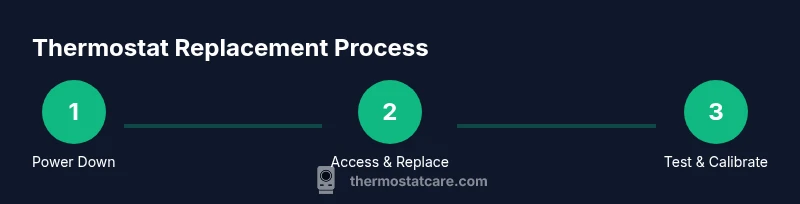
- Confirm power is off and work area is safe. 2) Access the thermostat and photograph or label the wiring connections. 3) Remove the old thermostat and prepare the wiring for the new unit. 4) Install the new thermostat, reconnect wires, and secure the housing. 5) Restore power, fill and bleed the tank, and verify temperature accuracy. This overview primes you for the detailed steps below and helps you anticipate potential pitfalls.
Testing, calibration, and long-term considerations
After installation, re-energize the system and fill the tank completely. Check for leaks around fittings and ensure the thermostat control is set within the recommended range (often around 120°F for homes). Run hot water from a nearby faucet to confirm stable performance and correct cycling. If you notice continued temperature swings, recheck wiring, sensor placement, and the thermostat’s calibration settings. Keeping a log of temperature readings over several days can help you fine-tune performance and identify patterns. The goal is reliable hot water delivery without scalding risk or energy waste.
Tools & Materials
- Replacement water heater thermostat kit(Includes compatible thermostat for your model; verify voltage, mounting style, and temperature range.)
- Screwdriver set (Phillips and flathead)(Have a PH2/PH3 and a flat-head; insulated handles are safer around electrical components.)
- Voltage tester or multimeter(Use to confirm power is off and to verify wiring after installation.)
- Needle-nose pliers(Helpful for wire handling and securing small terminals.)
- Wire nuts (appropriate gauge)(Keep a few sizes on hand for different wire diameters and configurations.)
- Electrical tape(Insulate splices and protect exposed conductors.)
- Gloves and safety glasses(Protect hands and eyes from sharp edges and possible splashes.)
- Bucket or drain pan(Used to catch water if you disconnect lines during replacement.)
Steps
Estimated time: 60-90 minutes
- 1
Power down and verify de-energization
Flip the breaker for the water heater circuit to the OFF position. Use a non-contact voltage tester to confirm there is no power present at the thermostat terminals. This step safeguards you from electrical shock and prevents accidental activation of the heating element while you work.
Tip: Double-check at the breaker panel and test multiple terminals to ensure complete de-energization. - 2
Shut water and drain if needed
Close the cold-water supply to the tank to minimize refilling while you work. If you anticipate water discharge, place a bucket or drain pan under the access area and drain a few gallons to reduce pressure. Draining is optional for some installations but recommended for easier access and safer wiring.
Tip: If your tank is old, do not drain aggressively; drain slowly to avoid a surge when you re-fill. - 3
Access and identify the thermostat
Remove the access panel and insulation to expose the thermostat. Take a clear photo or make notes of wire color and terminal positions. Verify the model compatibility with the replacement unit and confirm you’re replacing the correct thermostat in the control stack.
Tip: Label wires or use colored masking tape to keep track of each connection. - 4
Disconnect the old thermostat
Loosen the terminal screws and gently disconnect the wires. Do not let wires fall back into the tank. Keep track of which wire connected to which terminal, as incorrect reattachment can affect performance.
Tip: Do not pull on wires; detach at the terminal screws to avoid damage. - 5
Install the new thermostat and reconnect wires
Mount the new thermostat in the same orientation as the old unit. Reconnect each wire to the corresponding terminal, secure with screws, and reassemble the housing. Ensure all connections are tight and no bare copper is exposed.
Tip: Double-check the wiring circuit against the label on the new thermostat for correct polarity and terminal placement. - 6
Restore power, re-fill, and test
Turn the power back on at the breaker. If you drained the tank, slowly re-fill and bleed air at a hot-water faucet until steady water flows. Set the thermostat to a safe initial temperature (commonly 120°F) and test to confirm stable operation.
Tip: Run several test cycles with hot water at different taps to ensure temperature consistency.
Questions & Answers
What are common signs my water heater thermostat is failing?
Common signs include water that is too hot or too cold, temperature fluctuations, short cycling, and inconsistent hot water delivery. If these occur, a replacement thermostat is often the fix.
Look for inconsistent water temperatures or unusually hot water as common signs of thermostat issues.
Can I replace a water heater thermostat myself?
Yes, many homeowners perform this replacement with careful safety steps. Ensure you can shut off power and water, identify the correct thermostat, and follow the manufacturer’s instructions for wiring.
Yes, with proper safety steps and the right replacement part, it’s doable for a confident DIYer.
Will replacing the thermostat affect my water heater warranty?
Replacing a thermostat may affect warranties depending on the terms of your appliance and service plan. Check the warranty documentation or contact the manufacturer before starting.
Check your warranty terms before replacing to avoid inadvertently voiding coverage.
What safety precautions are essential for this task?
Always shut off power at the breaker, verify no voltage, disconnect gas supply if applicable, and ensure you’re using insulated tools and protective gear.
Power off, verify no voltage, and wear safety gear before touching anything.
How long does a thermostat replacement typically take?
Most homeowners complete the replacement in about an hour, with additional time for testing and setup.
Usually around an hour, plus extra time to test and adjust.
Should I drain the tank before replacing the thermostat?
Draining is optional but recommended if you expect water to spill or if you need extra clearance to access the thermostat.
You may drain a little water to avoid spills and gain access space.
What if the new thermostat doesn’t regulate temperature after installation?
Recheck wiring against the thermostat diagram, ensure no loose connections, and confirm compatibility with your heater. If issues persist, consult a professional.
Check wiring and compatibility first; if it still misbehaves, seek expert help.
Watch Video
What to Remember
- Identify symptoms of thermostat failure and replace with a compatible unit
- Prioritize safety: cut power, control water flow, and protect yourself
- Test and calibrate to around 120°F for comfort and safety
- Document steps and reseat components securely to prevent leaks