How to Change Thermostat on Water Heater: A DIY Guide
A clear, safety-focused DIY guide to changing your water heater thermostat. Learn tools, wiring basics, calibration tips, and how to test the new setting for reliable hot water.


You’ll learn how to safely change a water heater thermostat and restore accurate water temperature. Gather a screwdriver, multimeter or voltage tester, replacement thermostat compatible with your heater model, and a few minutes of free space to work. This step-by-step approach minimizes the risk of overheating and ensures efficient hot water.
What changing a water heater thermostat accomplishes
A water heater thermostat regulates the upper limit of water temperature and can influence how quickly the tank loses heat. Replacing a malfunctioning thermostat restores accurate temperature control, reduces energy waste, and lowers the risk of scalding. By understanding the thermostat’s role, homeowners can decide whether a replacement is necessary or if calibration or a different part is the better fix.
Safety first: risks and protections
Working on a water heater involves electricity or gas, hot water, and pressurized plumbing. Always turn off power at the circuit breaker for electric units, and shut off the gas supply if you have a gas heater. Stand up straight, wear heat-resistant gloves, and keep a clear path. If you smell gas, hear a hiss, or notice a strong gas odor, evacuate and call emergency services immediately.
Types of water heater thermostats
Electric water heaters often use a bimetal or electronic thermostat wired to heating elements. Gas units rely on a thermostat that controls the burner and can include a high limit switch. Digital thermostats provide precise temperature settings, while traditional dial thermostats offer simple ranges. Identifying your unit type helps you choose the correct replacement part.
Finding a compatible replacement thermostat
Check your water heater’s manual or the manufacturer’s label on the tank for model numbers and thermostat type. Look for a replacement part that matches the same voltage, terminal layout, and temperature range. If you’re unsure, contact the manufacturer’s support or a qualified technician to confirm compatibility.
Before you begin: gather tools and prep
Create a clean, dry workspace. Gather screwdrivers, a voltage tester, electrical tape, wire connectors, and the replacement thermostat. Have a flashlight or headlamp handy, and set aside at least 30 minutes of uninterrupted time. Review the unit’s wiring schematic if available.
Access panels, protective gear, and safety step
Remove the access panel and insulation to expose the thermostat and wires. Keep track of screws and note wire colors. Use a tester to verify there is no voltage present before touching any conductors.
Disconnecting old thermostat safely
Carefully disconnect the thermostat’s leads, labeling each wire with tape to prevent miswiring. If a wire is stubborn, gently pry up the terminal with a small screwdriver. Do not pull on wires directly from the thermostat; remove the whole component first.
Installing the new thermostat
Position the new thermostat in place, connect wires to the corresponding terminals, and ensure tight, secure connections. If the thermostat has a jumper or specific polarity, follow the device’s wiring diagram precisely. Use electrical tape to seal exposed connections for extra safety.
Reassembling and sealing
Replace insulation and secure the access panel. Make sure the panel sits flush and that no wires are pinched. Confirm there are no gaps where heat could escape or moisture could enter.
Testing and calibration after installation
Restore power or gas to the unit. Run hot water for several minutes and measure the outlet temperature with a thermometer. If the water runs hotter or cooler than the target, adjust the thermostat according to the manufacturer’s instructions and retest.
Common mistakes and how to avoid them
Rushing the wiring, mislabeling terminals, or skipping a voltage check are the top causes of post-installation issues. Take your time to double-check connections, confirm the unit’s power state, and test multiple temperatures to ensure stability.
When to call a professional
If you encounter persistent fluctuations, a damaged wiring harness, or uncertainty about gas safety, seek a licensed technician. A professional can verify combustion efficiency, gas shutoff, or electrical safety and prevent bigger problems.
Maintenance and troubleshooting for long-term reliability
Schedule annual checks, keep the area clean and dry, and calibrate the thermostat to a moderate temperature (commonly around 120°F). Periodically inspect wiring for wear and replace faulty components promptly.
Tools & Materials
- Flathead screwdriver(For prying and adjusting components without stripping screws)
- Phillips screwdriver(For removing panel screws and terminal plates)
- Digital multimeter or voltage tester(Confirm power is off before handling any wires)
- Replacement thermostat compatible with your water heater(Check voltage, terminal layout, and temperature range)
- Electrical tape(Protect exposed wire connections and secure loose strands)
- Wire stripper/plier(Useful for trimming or looping wires if needed)
- Insulation and protective gloves(Keep hands safe and prevent heat loss during work)
- Towels or rags(Absorb spills and wipe surfaces)
Steps
Estimated time: 30-45 minutes
- 1
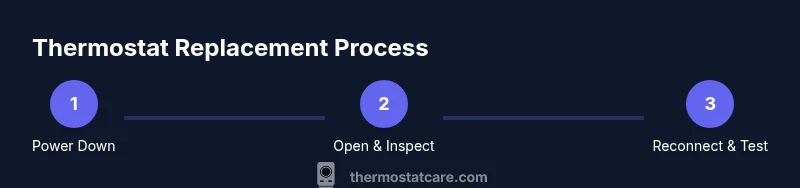
Prepare and power down
Turn off power to the water heater at the circuit breaker. If you have a gas unit, shut off the gas supply as an added safety measure. Wait 5–10 minutes for any residual heat to dissipate before proceeding.
Tip: Always verify power is off with a voltage tester before touching any wires. - 2
Access the thermostat area
Remove the access panel and insulation to expose the thermostat and wiring. Keep screws organized and note the wire colors for future reference.
Tip: Keep the panel nearby in case you need to reseal the space later. - 3
Label and disconnect old wires
Carefully label each wire connected to the thermostat, then loosen and remove them from the terminals. If a wire is stubborn, use a small screwdriver to lift the terminal.
Tip: Labeling wires prevents miswiring during reassembly. - 4
Attach the new thermostat
Connect the labeled wires to the corresponding terminals on the new thermostat. Ensure firm, clean connections and avoid letting bare conductors touch each other.
Tip: Double-check the wiring diagram that accompanies the thermostat. - 5
Reassemble and seal
Replace insulation and the access panel. Make sure nothing is pinched and there are no gaps around the panel.
Tip: A good seal helps improve energy efficiency and reduces moisture risks. - 6
Test and calibrate
Restore power and run the hot water. Check the outlet temperature, and adjust the thermostat according to the manufacturer’s guidance if needed.
Tip: Start at a moderate setting and test multiple temperatures to ensure stability.
Questions & Answers
Is it safe to replace a water heater thermostat myself?
DIY replacement can be safe if you have basic electrical knowledge, turn off power, and follow the wiring diagram. If you encounter gas connections or uncertain wiring, stop and consult a professional.
Yes, it can be safe if you follow safety steps and use the correct part; if in doubt, seek professional help.
What temperature should I set my water heater to?
A common target is around 120°F (49°C) to balance safety and comfort, while reducing energy use. Some applications may require higher or lower settings; adjust carefully based on personal needs and safety considerations.
A typical safe setting is about 120 degrees Fahrenheit.
Do I need to drain the tank before replacing the thermostat?
Usually not required for thermostat replacement, but some installations may be easier with the tank drained. Always check your unit’s manual and avoid releasing hot water uncontrollably.
Draining is not typically required, but check your model’s guidance.
Will replacing the thermostat affect my warranty?
Replacing a thermostat yourself can affect warranty coverage if the work is not performed by an authorized technician. Check the warranty terms for your heater model.
Warranty terms vary; review your manual or contact the manufacturer.
What signs indicate a faulty thermostat?
Inconsistent water temperatures, frequent overheating, or failure to heat water can indicate a faulty thermostat. Use a tester to verify power and inspect connections.
If temperatures are all over the place, that’s a red flag.
Watch Video
What to Remember
- Power down the heater before touching electrical parts
- Match thermostat type and wiring to the replacement part
- Test water temperature after installation and calibrate as needed
- Call a professional if gas safety or wiring concerns arise