How to Reset Thermostat on Water Heater
Learn how to safely reset the thermostat on a water heater with expert guidance from Thermostat Care. This step-by-step guide covers safety, tools, procedures, testing, and maintenance to keep hot water steady and energy use efficient.


By following these steps, you will safely reset the thermostat on a water heater and restore proper hot water temperature. This guide covers safety prerequisites, the exact sequence to reset, and testing tips. Before you begin, gather basic tools and confirm the power is off. Thermostat Care's expertise informs these steps; adjust only to recommended settings.
What resetting the thermostat on a water heater accomplishes
Resetting the thermostat on a water heater can restore correct temperature control, reduce temperature swings, and minimize energy waste caused by a misread sensor or a stuck control. According to Thermostat Care, returning the thermostat to a safe, efficient baseline and testing it under real-use conditions often resolves minor faults without replacing components. This section explains how a reset works, the typical symptoms that indicate a reset might help, and what you should expect after completing the process. When done properly, a reset can bring stability to hot water temperature and improve overall system reliability.
Safety considerations before you start
Working on a water heater involves electricity, hot water, and sometimes gas. Always turn off power to electric units at the breaker before touching wiring, and if you have a gas unit, follow the manufacturer’s shutdown procedure. Use protective gloves and eye protection, and keep towels or a bucket handy to manage leaks or drips. Do not remove access panels while energized, and never bypass safety devices. If you smell gas, hear gas-related hissing, or see damaged wiring, stop immediately and call a licensed professional. This guidance aligns with Thermostat Care’s safety standards and general industry practices.
When a reset is the right move vs other fixes
If your water heater shows cold water, inconsistent temperatures, or fluctuating output, a reset is a sensible first step to clear minor sensor glitches or software hiccups. A reset can help re-establish correct sensor readings and stabilize performance without invasive repairs. If the unit continues to cycle abnormally, trips breakers, or leaks after attempting a reset, contact a professional for a thorough assessment. Remember that resets address symptoms rather than fundamental component failures, so persistent issues may require part replacement.
What you’ll need before you begin
Prepare a compact toolkit and a safe workspace around the heater. You’ll typically need a Phillips-head screwdriver, a flat-head screwdriver, and a non-contact voltage tester (optional for extra safety). Have towels or a shallow bucket to catch any spills, and keep the water heater’s model manual handy. If you don’t have access to the manual, note the model number and search for the manufacturer’s official reset procedure. Organize screws and panels so reassembly is quick and accurate.
Step overview: choosing the reset path
Different water heater designs require different reset approaches. Electric units usually have a thermostat or control panel that can be accessed by removing a side panel; gas units may rely on a temperature dial or a dedicated thermostat. If your thermostat has a dedicated reset button, press and hold it for a few seconds to clear faults. If there is no reset button, a controlled power cycle—switching the breaker off for about 60 seconds and back on—often clears minor faults. Always consult your model’s manual for the correct sequence and temperature targets.
Step-by-step actions overview
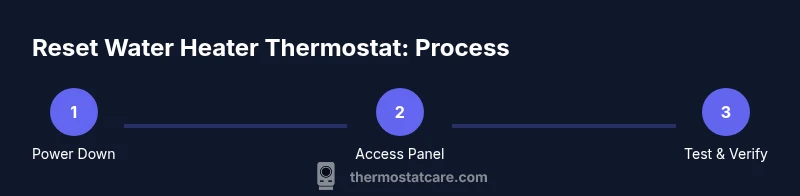
This overview highlights the core actions: 1) safely power down the unit; 2) access the thermostat area; 3) perform the reset or power cycle; 4) reassemble the panel and restore power; 5) test hot water delivery. The exact steps vary by model, so follow your manual for specifics. If you’re unsure at any point, stop and seek professional help. The goal is a clean reset that returns the heater to a stable operating state.
Common mistakes to avoid
Common errors include attempting a reset without cutting power, bypassing safety devices, or using metal tools near wiring. Don’t set the temperature higher than recommended (often around 120°F) in an attempt to compensate for poor performance. Avoid rushing the process, which can miss a step or damage components. Document all changes you make so you can revert them if needed, and never work in a wet area without proper precautions.
How to test and confirm the reset worked
After restoring power, run hot water from a nearby faucet to bring the hottest water to the tap. Use a thermometer to confirm the outlet water temperature aligns with the target range (commonly around 120°F). If the water is still inconsistent, perform the reset again carefully or consult the manual for model-specific guidance. If you notice ongoing instability, leaks, or strange noises, stop and contact a professional.
Maintenance and prevention after reset
Regular maintenance is key to minimizing future resets. Schedule periodic checks of the thermostat setting, flush the tank as recommended by the manufacturer, and verify insulation on pipes and fixtures. Keeping the area around the heater clean and dry helps prevent corrosion and sensor issues. Note any changes in performance so you can detect problems early and act quickly.
Tools & Materials
- Safety gloves and eye protection(Protect hands from hot surfaces and sharp edges.)
- Non-contact voltage tester(Optional tool to verify no live voltage at terminals.)
- Screwdrivers (Phillips #2 and flathead)(Used to remove access panels and adjust screws.)
- Multimeter (optional)(Useful for verifying circuit continuity if needed.)
- Towels or shallow bucket(Catches drips during panel removal.)
- Model manual or guide(Keep handy for model-specific reset steps.)
Steps
Estimated time: 30-60 minutes
- 1
Power down the water heater
Locate the corresponding breaker for the water heater and switch it to the OFF position. For gas units, shut off the gas supply if your manual instructs this step. Confirm the unit is fully de-energized before handling any components.
Tip: Use a breaker labeled explicitly for the water heater to avoid confusion and ensure full power cut. - 2
Remove the access panel
Use the screwdriver to remove the screws securing the access panel on the side of the tank. Gently pry the panel away to expose the thermostat and wiring. Keep screws in a magnetized tray so you don’t lose them.
Tip: Hold the panel parallel to the tank to prevent dropped screws and avoid bending wires. - 3
Locate the thermostat and reset option
Identify the thermostat control or reset button on electric models. If your unit has a reset button, press and hold for 3–5 seconds to clear faults. If there is no reset feature, prepare for a power cycle.
Tip: Consult the manual for model-specific labeling; if uncertain, skip this step and proceed with a breaker cycle. - 4
Reset to the recommended temperature
If your thermostat allows direct temperature adjustment, set it to a safe baseline (commonly around 120°F / 49°C). If the device is electronic but lacks a temperature setting, proceed to step 5 and reset by power cycling.
Tip: Avoid setting temperatures higher than necessary to prevent scalding and energy waste. - 5
Cycle power or activate reset
If you used a reset button, release it after the required duration. If no button exists, toggle the breaker OFF for 60 seconds, then ON to perform a soft reset. This helps recalibrate sensors and memory.
Tip: A full 60-second off period improves the chance of a clean reset. - 6
Reassemble and restore power
Replace the access panel, secure the screws, and switch the power back to ON. If you have a gas heater, re-enable the gas supply following the manufacturer’s instructions and safety checks.
Tip: Avoid overtightening screws; snug is enough to form a seal without stripping threads. - 7
Test hot water and observe
Run hot water from a nearby faucet for several minutes to ensure consistent temperature. Check for any unusual noises, leaks, or travel-time delays. If temperature is still off, repeat the reset or consult a professional.
Tip: Document the final temperature and any observations for future reference.
Questions & Answers
Is it safe to reset a water heater thermostat myself?
Yes, you can reset a thermostat yourself if you follow proper safety steps: cut power, handle components carefully, and follow the manufacturer’s instructions. If you’re unsure at any point, stop and seek professional help.
Yes—you can reset it yourself, but make sure you follow safety steps and the manufacturer’s instructions. If unsure, contact a professional.
What temperature should I set after a reset?
A common safe target is about 120°F (49°C). This balances comfort with energy efficiency and reduces the risk of scalding.
Aim for around 120 degrees Fahrenheit to balance safety and efficiency.
Why would the reset keep failing?
Frequent resets can indicate a failing thermostat, sensor, or heating element. If problems persist after a reset, there may be an underlying hardware issue.
If resets continue failing, there may be a hardware fault and you should call a pro.
Do electric and gas water heaters reset the same way?
Principles are similar—safely power down, access the thermostat, and reset or cycle power. Gas units may rely more on the gas valve and pilot steps; always follow the model’s manual.
Similar safety steps apply, but gas units may have additional pilot or valve steps in their manual.
What if I smell gas during the process?
If you smell gas, do not proceed. Leave the area immediately and call your gas utility or emergency services. This is a serious safety issue requiring professional assistance.
If you smell gas, leave the area and call for help immediately.
How often should I reset the thermostat?
Resets should be occasional diagnostic steps when you notice temperature instability. If issues appear regularly, it indicates a need for professional inspection.
Only reset as needed for troubleshooting; frequent resets mean you should seek a professional check.
Watch Video
What to Remember
- Power down before touching the heater to prevent shocks.
- Set a safe baseline temperature after reset, typically around 120°F.
- Test hot water output at a faucet to confirm proper operation.
- If resets fail repeatedly, contact a licensed professional.
- Regular maintenance reduces the need for future resets.