Where Is the Refrigerator Thermostat? Find It Fast
Discover where the fridge thermostat is located, how it controls cooling, and safe steps to test or adjust it. Thermostat Care guides homeowners with practical, model-agnostic tips and troubleshooting ideas.


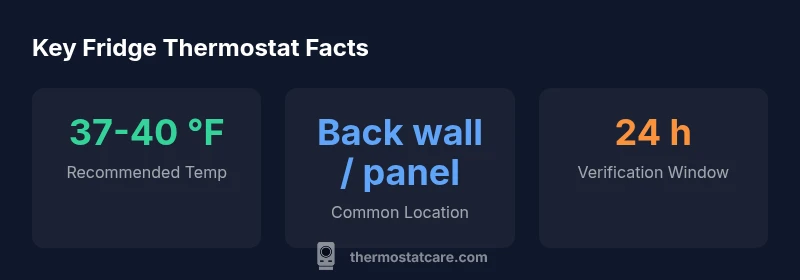
Where is the thermostat in fridge? In most refrigerators, the thermostat isn’t a visible dial on the door. It’s typically hidden behind interior panels or along the back wall near the evaporator, and in some models integrated into the front control panel. To locate it, remove shelves, consult your model manual, and look for a small dial, sensor, or access cover. Once found, follow safe testing steps before making changes.
Where is the thermostat in fridge? A practical orientation
Where is the thermostat in fridge exactly? The short answer is that it varies by model, but most modern refrigerators hide the thermostat behind interior panels or along the back wall near the evaporator coil. Where is the thermostat in fridge? It is typically not a visible dial on the door; it is part of the sensing and control system that coordinates when to run the compressor. To confirm the spot for your model, locate the user manual diagrams or model-specific service sheets. Some designs place the control module behind a small access panel in the interior ceiling, or integrate it into the front control panel. Understanding these patterns helps you avoid unnecessary disassembly and protects wiring. This knowledge is essential when you notice temperature swings, frost buildup, or inconsistent cooling. The goal is to know where it sits so you can test readings safely and avoid premature component replacement.
Fridge designs and thermostat sensing: what changes by design family
Thermostat location is heavily influenced by the design family. A traditional top-freezer often hides the dial behind a rear wall panel or under a removable cover in the interior. French-door and side-by-side models typically integrate controls into a front panel, while domestic budget models may tuck the sensor in tighter spaces behind the crisper drawer or above the top shelf. In all cases, the sensor is the critical element—its job is to detect actual air temperature or evaporator temperature and relay that data to the control board. If your model uses smart controls, the sensor may be less obvious and could be part of a sealed assembly. Knowing the general placement helps you locate the thermostat quickly when troubleshooting uneven cooling or temperature alarms, and it frames the safe steps you take next.
Safe steps to locate the thermostat without damaging panels
- Unplug the fridge before touching any internal components to minimize electrical risk. 2) Remove shelves and crisper drawers to access rear or top interior panels. 3) Look for a removable access cover or a small recessed panel on the back wall or near the front control area. 4) If there is a visible dial, it may be integrated with a microcontroller rather than a traditional knob. 5) For models with hidden sensors, you may find a sensor module mounted on the back wall or inside a panel, which is not intended to be user-adjustable. 6) Take photos or consult the model manual for exact locations before touching wires. Always handle components gently and reassemble in reverse order after inspection.
How to test the thermostat readings with a thermometer
A reliable thermometer is your best friend when validating fridge temperature. Place a calibrated fridge thermometer in the center of the main compartment, away from the door and vents. Allow 24 hours after any adjustment to reach a stable reading. Compare the thermometer with the appliance’s display; if there is a large discrepancy, the thermostat or sensor may be miscalibrated or drifting. Record the temperatures at multiple points (top, middle, bottom) to capture an accurate profile of the cabinet. If readings consistently stay above 40 °F or dip below 34 °F, you should follow up with calibration steps or consult a technician. Recording data helps you decide whether you should adjust gradually or seek professional service.
Interpreting readings and making safe adjustments
Start with small changes and verify over a 24-hour period. If the thermometer reads 37–38 °F, aim to maintain that within ±1–2 °F. Avoid large swings; a 5–6 °F change can impact food safety and energy use. Before adjusting, confirm that door seals are in good condition and that the fridge isn’t overpacked, which can impede air flow. When adjusting, do so via the front panel or the internal control behind a panel, depending on your model. After changing the setting, wait a full day and recheck with your independent thermometer. If the display shows a spot-check that seems inconsistent with the ambient temperature, it might indicate a faulty sensor or a need for recalibration.
Common issues and when to replace vs recalibrate
A misreading can stem from a dirty or miscalibrated sensor, airflow blockage, or a failing control board rather than the main cooling unit. If the fridge never cools enough despite correct settings, or if frost buildup occurs while the compressor cycles irregularly, recalibration or sensor replacement may be necessary. In some cases, the thermostat and sensor are part of a single sealed module that requires professional service if there is any sign of moisture intrusion or damage. Regular cleaning around vents, replacing door seals, and keeping the interior free of obstructions reduces the chance of misreads. If you’re unsure, consult a technician who can verify wiring integrity, sensor health, and firmware status for smart models.
Maintenance tips to keep readings accurate and extend thermostat life
Consistent maintenance improves accuracy. Keep door seals clean and flexible, avoid overloading shelves that block air movement, and clean condensate channels to prevent frost-related distortions. Regularly inspect the interior panels for looseness and ensure that any access covers are securely in place. For smart fridges, ensure firmware is up to date and that the wireless sensor network reports healthy readings. Keep a small log of temperature readings and adjustments to track trends over time. By embedding simple checks into your routine, you improve reliability and extend the life of the thermostat system.
Common thermostat locations by fridge design
| Location Type | Where You Find It | Notes |
|---|---|---|
| Back wall (evaporator area) | Sensor near the evaporator coil on the back wall | May be behind a panel |
| Front control panel | Integrated with external controls | Some models hide behind a cover |
| Under crisper drawer area | Near/behind crisper area | Open drawer to inspect side walls |
Questions & Answers
Where is the thermostat located in a standard refrigerator?
In most refrigerators, the thermostat isn’t on the door. It’s usually behind interior panels or near the evaporator in the back wall, sometimes integrated into the front control panel. Model-specific diagrams in the user manual will show the exact spot.
In most fridges, the thermostat sits behind panels or on the back wall near the evaporator. Check your manual for the exact spot.
Can I adjust my fridge temperature without tools?
Yes. Many models let you adjust the temperature via a front panel or dial. If you access the back panel or internal control, make small 1–2 degree changes and wait 24 hours to evaluate.
You can adjust using the front panel or a small dial. Change 1–2 degrees and test after a day.
What is the recommended fridge temperature?
The general guideline is 37-40 °F (3-4 °C) for the refrigerator compartment and 0 °F (-18 °C) for the freezer. These ranges help ensure food safety and energy efficiency.
Aim for about 37 to 40 degrees Fahrenheit in the fridge and zero in the freezer.
How can I tell if the thermostat is faulty?
Look for inconsistent temperatures, frost buildup, or an always-running compressor. If readings don’t match the thermometer even after calibration, consider professional inspection.
If temps are unreliable or the compressor runs constantly, the thermostat may be faulty.
When should I call a professional?
If you cannot locate the thermostat, or if there are electrical concerns or repeated incorrect temperatures, contact a qualified technician. Some models require specialized tools.
If you can't locate it or see electrical issues, get a pro.
“Locating and interpreting your fridge thermostat reduces temperature swings and energy waste. Small misreads can lead to large cooling differences.”
What to Remember
- Know where to look before you touch
- Use a thermometer to verify temps
- Make small changes and wait 24 hours
- Consult your model manual for exact location