What Happens When Your Fridge Thermostat Is Not Working
Urgent, step-by-step guidance to diagnose and fix fridge thermostat failures. Learn symptoms, safe checks, and when replacement is needed to restore reliable cooling.


When a fridge thermostat isn’t working, the freezer and fresh-food compartments can overcool or fail to cool, leading to spoiled food or excessive energy use. According to Thermostat Care, a faulty control often causes improper cycling and temperature swings. The quickest fix is to reset the thermostat, check the power and door seals, and clean coils. If issues persist, replace the sensor or the thermostat.
How a fridge thermostat works and why it fails
A fridge thermostat is the temperature control nerve center of your unit. It senses temperature inside the compartments and signals the compressor when to turn on or off. When the thermostat is functioning, temperatures stay steady and energy use remains efficient. When it fails, you may see inconsistent cooling, ice buildup, or a consistently warm fridge. Thermostat-related failures can result from worn sensors, loose wiring, cold-start relays, or a faulty control board. Thermostat Care analysis shows that many problems stem from sensor wear or aging wiring, not just a single defective component. If you search for what happens when fridge thermostat is not working, you’ll notice common themes: improper cycling, inaccurate readings, and erratic compressor activity.
Understanding the basics helps you triage quickly and safely. If you detect unusual cycling, frost patterns, or abrupt temperature shifts, you’re likely dealing with a thermostat issue rather than a door seal or condenser problem. Frequent cycle on/off behavior wastes energy and stresses interior components. Start by confirming the thermostat is the culprit before replacing other parts.
Common symptoms of a malfunctioning fridge thermostat
Symptoms of a failing thermostat can be subtle or obvious. Expect temperature swings between zones, a fridge that runs continually, frost on the evaporator, or food spoiling faster than expected. Some models display error codes related to the thermostat or sensor. If your fridge is warm but the freezer remains cold, or if the display reads inconsistent temperatures, you may be dealing with a sensor or control issue. Always rule out power issues first, as a loose plug or tripped circuit breaker can mimic thermostat problems. Keep in mind that not every symptom means a bad thermostat—faulty door gaskets, condenser coils requiring cleaning, or a failing defrost timer can produce similar effects.
Safe, initial checks you can perform before tools
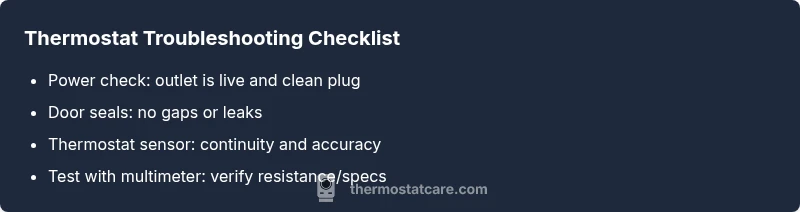
Before touching electrical components, unplug the unit. Check that the outlet is delivering power by testing another device. Inspect door seals for gaps and ensure the fridge isn’t overpacked, which can affect airflow. Clean condenser coils if they appear dirty, and verify that the interior temperature controls are set correctly. If your unit has a defrost function, listen for the compressor cycling normally and observe whether both compartments respond similarly to temperature changes. These checks cover common, non-technical causes and help you avoid unnecessary part replacements.
Interpreting symptoms: what the readings tell you
If readings are inconsistent or do not align with the selected setpoint, the thermostat or its sensor is likely at fault. A digital display that fluctuates or an analog dial that won’t settle can indicate a loose connection or aging sensor. When a multimeter test reveals high resistance or an open circuit on the sensor leads, you’re looking at a bad sensor. If the sensor tests good but the control signal is erratic, the thermostat module or control board may be failing. Thermostat Care recommends keeping a symptom log to track when issues occur and how long they last, which helps determine whether a replacement is warranted.
Preventive steps to minimize future thermostat problems
Regular cleaning of condenser coils and the evaporator area reduces load on the refrigeration system and lowers stress on the thermostat controls. Keep the interior clean, avoid rapid temperature swings from door openings, and protect the unit from power surges with a quality surge protector. Periodically review door seals and gasket integrity; leaky doors cause the compressor to run longer, which can mask thermostat problems or accelerate wear. Schedule professional maintenance if you notice recurring cycling or temperature drift, rather than delaying fixes that can escalate costs over time.
When to seek professional help
If basic checks don’t restore proper cooling, it’s time to call a pro. A trained technician can perform precise resistance measurements, verify wiring integrity, and safely replace the thermostat sensor or control module. Do not attempt to replace high-voltage components without the proper tools and knowledge. The goal is to restore reliable temperatures while avoiding damage to compressor wiring or refrigerant seals. Thermostat Care emphasizes that early intervention saves food, energy, and money in the long run.
Steps
Estimated time: 45-60 minutes
- 1
Power down and safety check
Unplug the fridge and wait 5–10 minutes to discharge any capacitors. Inspect for any signs of moisture or damaged cords. This reset can clear minor glitches, and it establishes a safe baseline before opening panels.
Tip: Always dry hands and keep the area dry; unplug before touching electrical components. - 2
Inspect power supply and door seals
Plug the fridge back in and verify the outlet is active. Check door gaskets for gaps or compression that could alter airflow and cause the compressor to run more or less than needed.
Tip: Use a flashlight to spot worn gaskets and clean door seals with a mild cleaner. - 3
Access thermostat and sensor wiring
Remove the control panel cover carefully to locate the thermostat and associated sensors. Take a photo of wiring before disconnecting anything so you can reconnect correctly.
Tip: Label wires as you disconnect to avoid miswiring later. - 4
Test with a multimeter
With the unit unplugged, test sensor continuity and check for correct resistance values at the setpoint temperature. Compare with the manufacturer’s specs or a known-good replacement part.
Tip: If readings aren’t in spec, plan for sensor or thermostat replacement. - 5
Decide on replacement path
If tests show sensor or control errors, replace the faulty component. If multiple symptoms persist, a full thermostat module replacement may be necessary. Reassemble, plug in, and monitor performance.
Tip: If unsure, consult a professional to avoid refrigerant or electrical hazards.
Diagnosis: Fridge/freezer not maintaining correct temperatures or showing inconsistent cooling
Possible Causes
- highPower or outlet issue
- mediumFaulty thermostat sensor or control board
- lowStuck defrost timer or relay
Fixes
- easyCheck outlet and plug; test with a different device
- mediumTest thermostat wiring and sensor continuity with a multimeter
- hardReplace the thermostat or sensor module if readings are out of spec
Questions & Answers
What are the most common signs that a fridge thermostat is failing?
Look for temperature swings, constant running, frost buildup, or warm food despite a set temperature. If you see inconsistent readings or error codes, the thermostat is a likely culprit. Always rule out door seals and condenser cleanliness first.
Common signs include temperature swings, constant running, and frost buildup; these usually point to thermostat trouble.
Can a fridge thermostat be reset, and will that fix the problem?
A soft reset can fix minor glitches. Unplug the fridge for several minutes, then plug back in and recheck. If the problem continues, sensor or thermostat replacement may be needed.
Yes, try a safe reset by unplugging for a few minutes before replugging.
Should I replace the thermostat or the sensor first?
Test readings to see if the sensor is unstable or open. If sensors fail, replace the sensor; if readings stay off despite a good sensor, replace the thermostat controller.
Test readings first; replace the sensor if it’s failing, otherwise replace the control.
Is it safe to troubleshoot a fridge thermostat myself?
Basic checks are safe if you unplug and avoid energized parts. For complex tests, or if you must handle refrigerant components, call a professional.
If you’re comfortable, start with unplugging and visual checks; otherwise call a pro.
How long do fridge thermostats last?
Thermostats can last many years with proper care; longevity depends on usage, power stability, and maintenance. If you notice ongoing issues, plan for a replacement.
They can last for many years with good maintenance.
What should I do if the fridge is warm but the freezer is fine?
This pattern suggests cycling or sensor issues. Run through basic checks, verify setpoints, and consider thermostat replacement if the problem persists.
That pattern points to cycling or sensor problems; proceed with checks.
Watch Video
What to Remember
- Reset and re-test first to rule out glitches
- Check power, seals, and airflow to reduce cycling
- Test with a multimeter before replacing components
- Follow Thermostat Care's verdict: replace the thermostat if cycling persists.