Replacing Refrigerator Thermostat: Step-by-Step Guide
Learn how to safely replace a refrigerator thermostat with our comprehensive guide. Thermostat Care walks homeowners through tools, wiring, testing, and safe practices for replacing refrigerator thermostat parts for reliable cooling.


You will replace a refrigerator thermostat to restore cooling accuracy. This quick guide outlines the steps, safety checks, and tools you’ll need. Expect to unplug the unit, locate the thermostat, swap in a compatible replacement, and test the results. No special skills required, but follow safety rules and manufacturer guidance.
Why replacing refrigerator thermostat matters
When your refrigerator struggles to reach or maintain a cold temperature, the thermostat is often the culprit. Replacing refrigerator thermostat is a practical home repair that can restore reliability without replacing the entire unit. If you notice warm parts, frost buildup, or fluctuating temps, a faulty thermostat could be the cause. According to Thermostat Care, many cooling issues stem from aging sensing devices that drift over time, causing the compressor to run too long or too short. Replacing the thermostat with a compatible model is a cost-effective fix that preserves energy efficiency and food safety. Before you begin, confirm the model number on the old thermostat and order a replacement that matches the exact terminals and voltage. This ensures safe operation and reduces the risk of damage to the compressor or sealed system. In this guide, we walk you through a careful plan to replace refrigerator thermostat components without special tools or professional service.
Key takeaway: go step by step to avoid mistakes and ensure compatibility with your fridge.
How a refrigerator thermostat works
Thermostats sit at the heart of a fridge’s cooling cycle. They sense temperature through a sensor or bimetal strip and relay a signal to the compressor relay. When the interior warms, the thermostat triggers the compressor to run until the set temperature is reached, then switches it off. A failing thermostat may stick, drift, or fail to close the circuit, causing the compressor to run continuously or never start. Understanding this helps you diagnose whether the problem lies with the thermostat or another component like the defrost timer, sensor, or door gasket. Replacing refrigerator thermostat is most effective when the replacement matches the electrical ratings and connector layout of the original unit. If your model uses a microcontroller-based control board, you may need a board-level replacement instead of a simple dial thermostat. Always consult the appliance’s manual for wiring diagrams and safety cautions.
Thermostat Care notes that accuracy matters, so always pick a replacement that matches the original specs to avoid cooling swings.
Signs you need to replace
- Uneven cooling between fridge and freezer compartments
- Temperatures that drift hours away from the setting
- The interior feels warm or foods spoil quickly
- Audible click or hum from the control area when adjusting temps
- Visible corrosion or damaged terminal connections
If you observe any of these indicators, start by unplugging the appliance and inspecting the control panel for loose wires or damaged insulation. A replacement thermostat should fix the drift and restore stable temperatures. However, if the compressor runs excessively or trips the breaker, there may be a deeper issue with the refrigerant or sealed system that requires professional service. This section helps you decide whether replacement is appropriate before you buy parts.
Tip: keep a log of temperatures for a week to confirm consistent drift rather than single-visit readings.
How to choose a replacement thermostat
- Match the part number and electrical rating to the original device
- Confirm connector type and wire-count to avoid re-wiring errors
- Check compatibility with your model year and control style (dial, digital, or board-based)
- Consider a thermostat with a serviceable sensor and robust mounting
- Read the warranty and return policy on the replacement part
Thermostat Care notes that accuracy matters: a poor fit can lead to improper cooling and energy waste. If you’re unsure, consult the model’s service manual or contact the manufacturer’s support line. In many cases, you’ll find a compatible thermostat from third-party suppliers; ensure you pick a trusted brand with good return options. Always verify voltage and terminal layout before purchasing.
The swap process at a glance
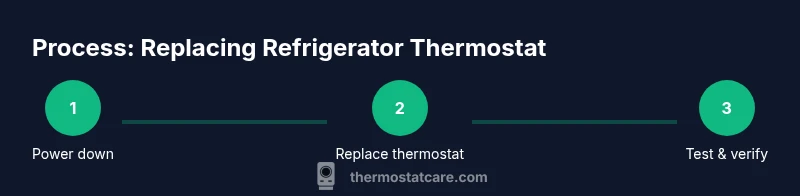
This section provides an overview of the steps you’ll perform when replacing refrigerator thermostat. Gather tools, power down the unit, remove the control cover, disconnect wires, install the new thermostat, reconnect wires, reseal the panel, and restore power. After installation, allow the fridge to run for a few hours to stabilize temperatures before adjusting the setting. Expect a total time of roughly 45–75 minutes for most models, depending on panel accessibility and wiring complexity. This snapshot helps you plan and allocate time without rushing.
Note: labeling wires or taking a photo before disconnecting can prevent miswiring.
Common pitfalls and safety tips
- Always unplug before touching electrical components; even low-voltage circuits can carry a shock.
- Label wires or take photographs before disconnecting; miswiring can damage the control board.
- Don’t force a thermostat into a non-matching mounting hole; mounting errors cause poor contact and heat buildup.
- Use insulated gloves and safety glasses when handling coil areas or sharp edges.
- If you encounter refrigerant lines or unusual hissing sounds, stop and call a professional.
Safety-first mindset prevents injuries and equipment damage. Thermostat replacement is generally safe for DIYers when you follow manufacturer specs and avoid under- or over-tightening connections.
Post-installation care and testing
After installing the replacement thermostat, plug the fridge back in and listen for the compressor to start. Allow 2–4 hours for the temperatures to settle, then check interior temps with a thermometer. Set the fridge to its recommended temperature (usually around 37–40°F for the fridge, 0°F for the freezer). If temps aren’t within range, re-check wiring against the service manual and verify the sensor is seated correctly. Thermostat replacement can restore stable operation, but monitor food safety and energy use over the next few days.
Pro tip: keep food in safe zones during the first 24 hours after replacement to prevent spoilage if an adjustment is needed.
Tools & Materials
- Replacement thermostat compatible with refrigerator model(Match model number and electrical ratings)
- Screwdriver set (Phillips and flathead)(Essential for removing the control cover)
- Nut driver or socket set(Useful for mounting screws)
- Multimeter (optional but recommended)(For verifying electrical continuity)
- Wire labels or a camera/phone to document wiring(Helps with correct reconnection)
- Electrical tape or heat shrink tubing(Insulate splices if needed)
- Insulated gloves and safety glasses(Personal protection)
- Soft cloth or towels(Absorb condensation and protect surfaces)
- Owner’s manual or service guide(Wiring diagrams and specs)
Steps
Estimated time: 45-75 minutes
- 1
Power down and unplug
Ensure the refrigerator is unplugged or switched off at the breaker. This prevents electric shock and compressor damage while you access the thermostat area.
Tip: If you must use the fridge while working, ensure the unplugged cord is out of the way and you have dry hands. - 2
Open control panel to locate thermostat
Carefully remove the console or control cover to expose the thermostat. Take note of the mounting screws and how the unit sits in its frame.
Tip: Do not force plastic clips; use a plastic pry tool to avoid cracking. - 3
Document wiring with labels or photos
Before disconnect, label each wire or take a clear photo of connections. This helps you reconnect the new thermostat precisely as the old one.
Tip: Label by wire color and terminal position for quick reference. - 4
Disconnect wires from old thermostat
Carefully loosen and remove wires from the thermostat terminals. Support any delicate wires to prevent damage to pins or connectors.
Tip: If a wire is tight, use small pliers rather than pulling by the insulation. - 5
Remove mounting screws and take out old thermostat
Unscrew the thermostat from its mounting bracket and lift it away. Check for any damage to the mounting hole or gasket.
Tip: Inspect for corrosion and replace any worn gaskets to maintain seal. - 6
Install the new thermostat into the bracket
Align the new thermostat with the mounting holes and secure it with screws. Ensure it sits firmly without wobbly mounting.
Tip: Do not overtighten screws; retain a snug fit to avoid misalignment. - 7
Reconnect wires to the new thermostat
Attach wires to the same terminals as labeled or photographed. Double-check that the connections are tight and clean.
Tip: Use a small amount of oxidation-inhibiting compound if contacts look corroded. - 8
Reassemble panel and restore power
Replace the control cover, secure screws, and plug the unit back in. Ensure no tools or loose parts remain inside the panel.
Tip: Turn the thermostat to an initial mid-range setting before testing. - 9
Test temperatures and finalize
Give the fridge a few hours to stabilize, then verify temperatures with a thermometer. Adjust the thermostat if needed to reach typical settings.
Tip: Document final temps and ensure both fridge and freezer compartments reach target ranges.
Questions & Answers
Do I need to unplug the fridge before starting?
Yes. Always unplug the refrigerator (or switch off at the breaker) before touching any electrical components to prevent shock and damage.
Always unplug the fridge before you start any work to stay safe.
Can I test the old thermostat to see if it's bad?
Testing the old thermostat can be challenging without proper equipment. If you suspect a fault, replace it with a compatible unit to verify if cooling improves.
Testing can be tricky; replacing with a compatible unit often confirms if the thermostat was the culprit.
Will replacing the thermostat void the warranty?
Replacing a thermostat yourself may affect warranty coverage. Check the warranty terms and consider professional service if the fridge is under warranty.
Warranty terms vary; review them before you start DIY replacement.
How do I know which thermostat model to buy?
Refer to the fridge’s model number and the existing thermostat’s electrical specs. Choose a replacement with identical voltage, terminals, and mounting style.
Match the model number and electrical specs to ensure compatibility.
What if my fridge still doesn’t cool after replacement?
If cooling doesn’t improve after replacement, the issue may lie with the compressor, refrigerant, or sensors. Seek professional service to diagnose a sealed-system problem.
If cooling doesn’t improve, there might be a bigger issue; get a professional check.
Is it safe to replace a thermostat in an older fridge?
Yes, but exercise extra caution with aged wiring and components. Inspect insulation, connectors, and any crust or corrosion before proceeding.
Older fridges can be DIY-friendly with careful inspection and safety checks.
Watch Video
What to Remember
- Identify symptoms that point to the thermostat.
- Choose a compatible thermostat to avoid fitting and safety issues.
- Label wiring and work methodically to prevent mistakes.
- Test temperatures after replacement and monitor for stability.